Seals, sunfish and the story of Yuki at Kaiyukan
The ringed seal Yuki, the Arctic tank's other residents, and the ocean sunfish of the Pacific tank at Osaka Aquarium Kaiyukan, plus how to time a visit around feedings.
Seals, sunfish and the story of Yuki at Kaiyukan
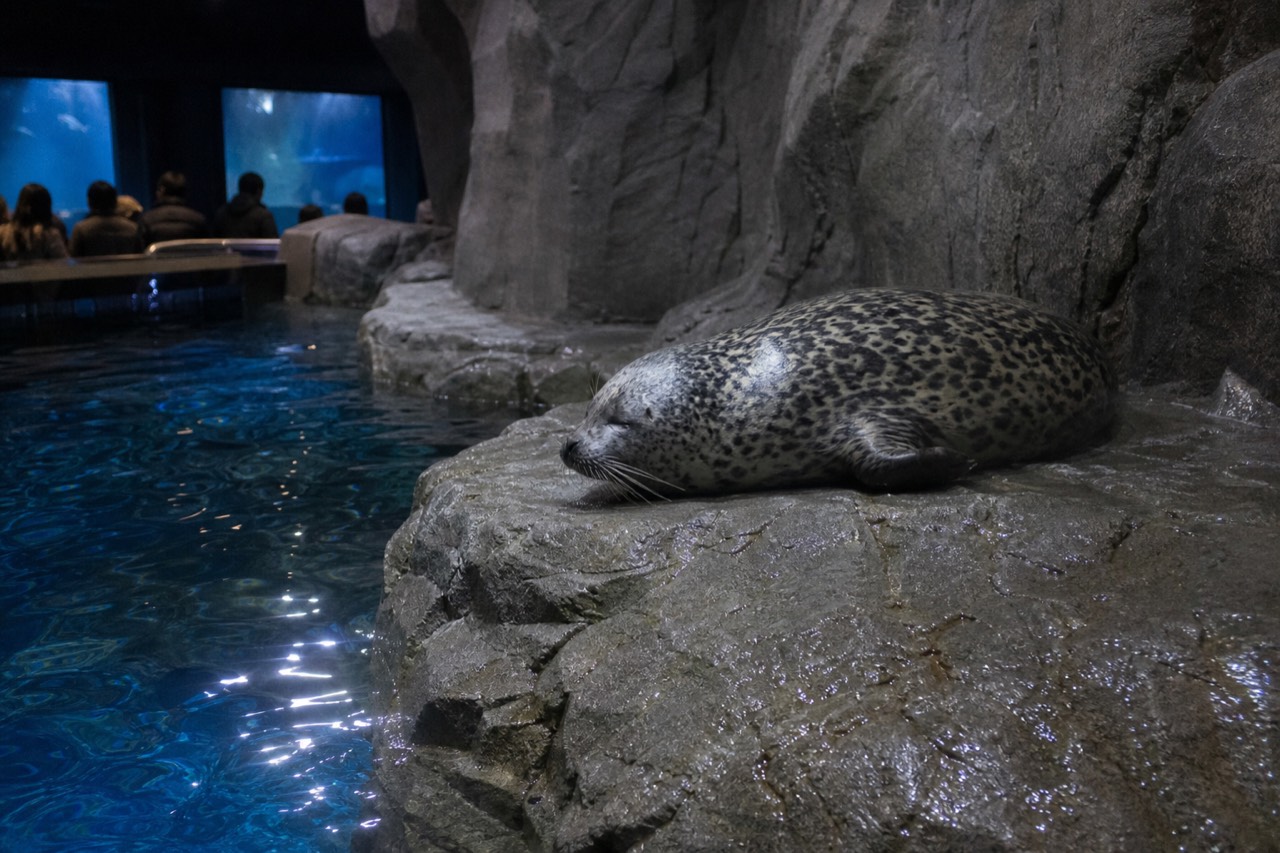
Yuki is a female ringed seal living in the Arctic Region tank on the 4th floor of Osaka Aquarium Kaiyukan, and she was alive and on exhibit when Kaiyukan last wrote about her, in a keeper post dated 21 June 2026. The same post names her tankmates as Arare and Moya. She shares the building with an ocean sunfish, a male that arrived on 4 July 2025 measuring 97 cm, which now swims in the 5,400-ton Pacific Ocean tank. Together they are two of the most photographed animals in a collection of about 620 species and 30,000 individuals.
Yuki's fame is a genuinely recent phenomenon. The aquarium has kept ringed seals in its Arctic zone since it opened on 20 July 1990, but a run of viral posts turned this particular seal into the tank's star, to the point that visitors now plan whole trips around catching her awake. Kaiyukan's own keeper blog is the best source on her day-to-day life, and the newest official word on her remains that June 2026 post, which describes her eating well and playfully bothering Arare. This piece pulls together what is actually documented about her, the sunfish, and the other animals in their orbit, without leaning on rumor.
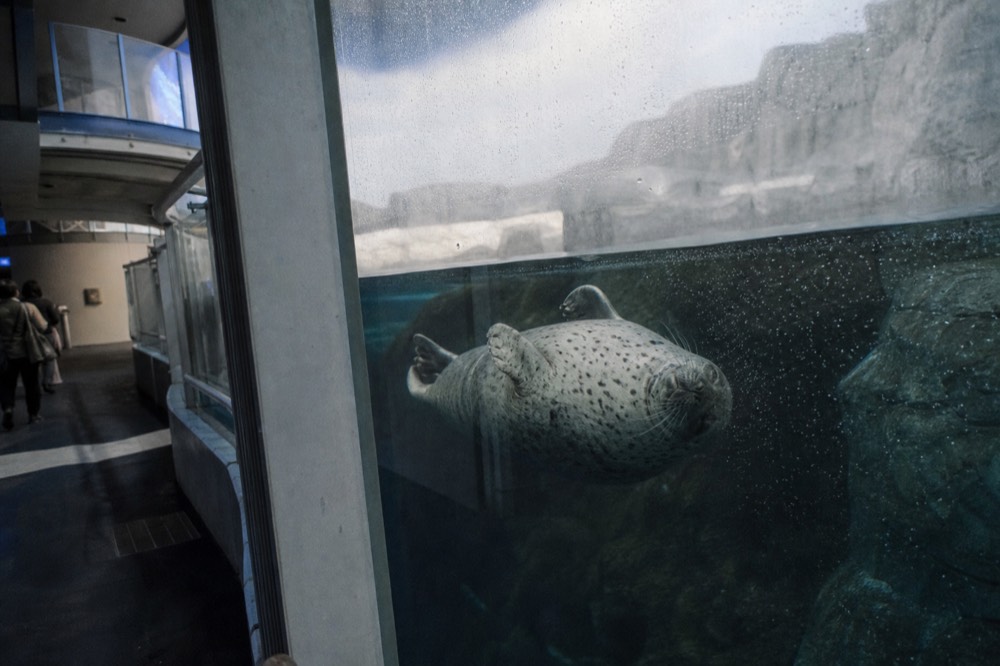
The building itself shapes how you meet these animals. Osaka Aquarium runs top-down: an escalator lifts you from the entrance to the 8th floor, and you spiral downward around the central Pacific tank until you reach the Arctic zone near the bottom. That means the sunfish appears early and often, at several depths on the way down, while the seals wait until you are deep in the descent. If Yuki is your priority, the route works in your favor, since you arrive at her tank already warmed up on the rest of the collection. Kaiyukan itself budgets 90 to 120 minutes for a full visit, which is enough time to pass every zone at least once.
Tickets are sold in 15-minute timed slots with a cap on each slot, so a little planning goes a long way on busy days.
Who is Yuki, the ringed seal everyone photographs?
Yuki is a female ringed seal (Pusa hispida) who lives in the Arctic Region tank at Kaiyukan in Osaka, and she was alive and on exhibit when the aquarium last wrote about her, in a keeper post dated 21 June 2026. She is the seal visitors most often photograph at the tank. The post, on the aquarium's own keeper blog, reports that she was eating well, curling her hind flippers as she swims, and playfully interfering with her tankmates. It names three ringed seals in the tank: Arare, Moya and Yuki. Because that June 2026 post is the newest official statement about her, any claim stronger than that would be guesswork, and this site does not trade in guesswork.
The June post is worth reading in the aquarium's own words. Kaiyukan's keeper notes describe Yuki's habit of rolling her hind flippers into a curl mid-swim, which the keeper traced to her positioning during feeding, and record her generally energetic condition. Earlier official posts about her run back through January 2026 and June 2025, so she has a documented history at the aquarium rather than a single viral moment. You can read the primary source yourself in the keeper blog post on the Arctic tank on Kaiyukan's own site, which is where every fact in this section comes from.
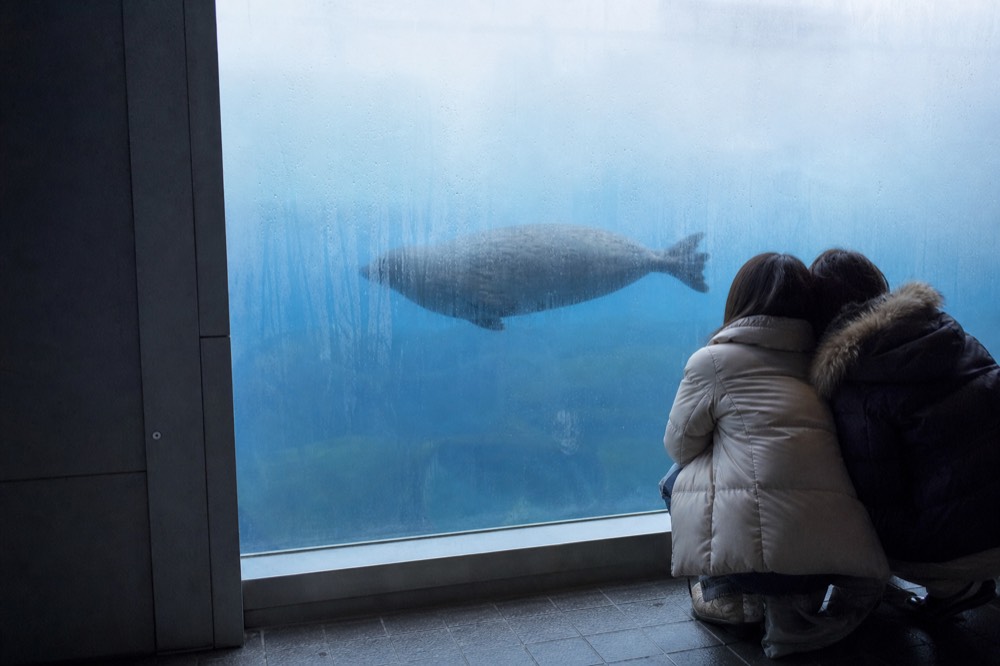
Ringed seals as a species are Arctic animals, the smallest of the true seals, and Kaiyukan's Arctic Region zone is built around that habitat: cold water, rocky haul-out ledges and dim light that mimics polar latitudes. The tank sits on the 4th floor of the spiral route, and its viewing windows sit low enough that a resting seal on the ledge is often at eye level with children. Yuki's rotund shape, a normal feature of a well-fed ringed seal carrying insulating fat, is a large part of why photographs of her travel so well. Nothing about her roundness signals a health problem according to the aquarium's own reporting, and the keeper blog consistently describes her as energetic.
A practical note for photographers: ringed seals spend long stretches hauled out and still, which makes them easy subjects, but the Arctic zone's low light rewards a steady hand or a fast lens. Visitors hoping for motion should target the feeding window, which the timetable section below covers in detail. The rest of the time, patience beats luck. If you are mapping the whole descent in advance, the Kaiyukan floors and map guide lays out every zone by level, and the question of how long to spend at Kaiyukan matters more than most visitors expect when feedings are the goal.
When are the seals, penguins and dolphins fed at Kaiyukan?
Ringed seals in the Arctic Region tank are fed at 10:50 and 15:35, southern rockhopper penguins in the Falkland Islands tank at 10:50 and 15:10, and Pacific white-sided dolphins in the Tasman Sea tank at 11:40, 14:00 and 16:30, according to the published timetable. The aquarium's own caveat applies: times can be cancelled or changed without notice depending on the animals' condition. The full published schedule, read from Kaiyukan's own feeding-time data, looks like this.
| Floor | Zone | Animal | Feeding times |
|---|---|---|---|
| 7F | Japan Forest | Otter | 11:30, 13:30, 15:30 |
| 7F | Monterey Bay | Sea lion and seal | 09:50, 13:20, 14:50 |
| 7F | Gulf of Panama | Coati | 11:15, 15:30 |
| 7F | Antarctica | Penguins | 10:00, 14:20 |
| 7F | Tasman Sea | Pacific white-sided dolphin | 11:40, 14:00, 16:30 |
| 6F | Pacific Ocean | Pacific fish | 10:30, 15:00 |
| 4F | Arctic Region | Ringed seal | 10:50, 15:35 |
| 4F | Falkland Islands | Southern rockhopper penguin | 10:50, 15:10 |
The timetable carries no day-of-week variation; it is a single published schedule, so a Tuesday visit and a Sunday visit follow the same feeding pattern. Two windows deserve special mention for seal fans. The 10:50 Arctic feed lands early in the day, when the aquarium is at its quietest, and pairs neatly with the 10:50 rockhopper penguin feed one zone over, effectively a two-for-one on the 4th floor. The 15:35 feed is the last major event of the afternoon and tends to draw a crowd, since it coincides with families finishing their circuit of the spiral.
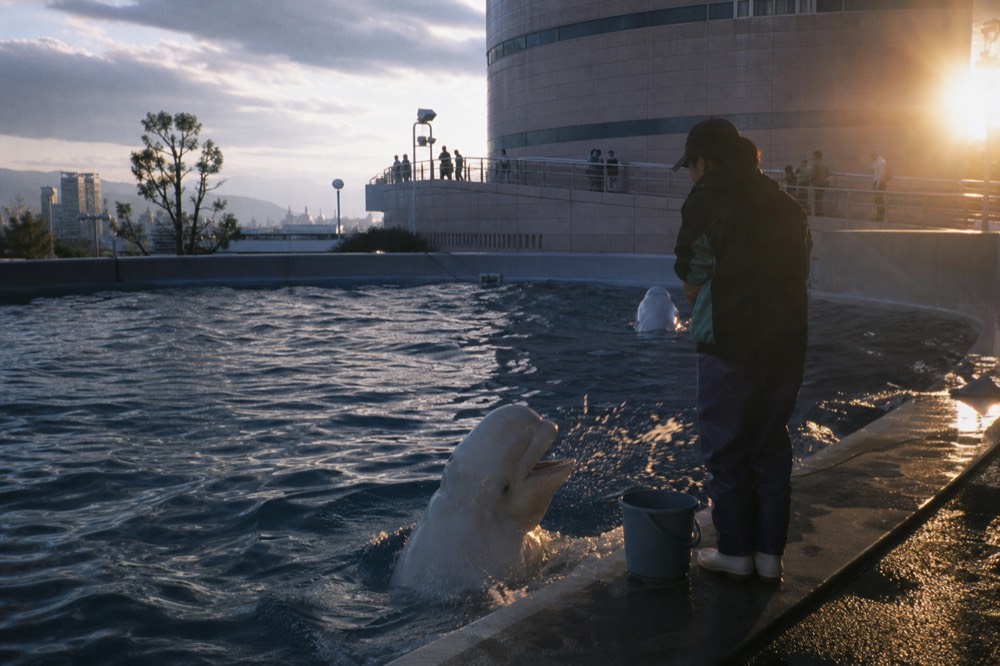
If you would rather read the official viewing guidance straight from the aquarium, Kaiyukan publishes its own advice for deeper enjoyment of the exhibits, including the tip that the whale sharks are fed at the surface, which makes the upper floors the better viewpoint for that particular spectacle. The same logic does not apply to the seals: their feed happens at the tank's ledge and waterline, so the standard 4th-floor viewing windows are already the best seats.
Planning the day around a feeding means planning your entry slot too, and that is where a ticket decision comes in.
What is the ocean sunfish at Kaiyukan, and where did it come from?
The ocean sunfish on display at Kaiyukan is a male living in the Pacific Ocean tank. He arrived at the aquarium on 4 July 2025 from the Iburi Center, Kaiyukan's own biological research institute located in Tosashimizu, Kochi, and measures 97 cm in length. The aquarium announced the arrival in a behind-the-scenes note dated 17 July 2025, making the sunfish one of the newest large residents in the building. It lives in the central Pacific tank, which holds 5,400 tons of water, reaches a depth of 9 metres and has a maximum length of 34 metres, figures Kaiyukan publishes on its own school-visit pages and that few other sources carry.
The Iburi Center connection is the interesting part of the story. Kaiyukan does not simply buy large animals; it runs its own collection and research facility on the Pacific coast of Shikoku, opened in September 1997, where animals are acclimated and studied before transfer to Osaka. Seawater itself comes from the same region: the sea directly in front of the aquarium, at the mouth of the Aji River, swings too much in salinity and turbidity to use, so roughly 350 tons of natural seawater is trucked in per delivery run. The sunfish, in other words, swam into a tank of ocean water hauled from hundreds of kilometres away, a logistics detail almost nobody mentions in visitor guides.
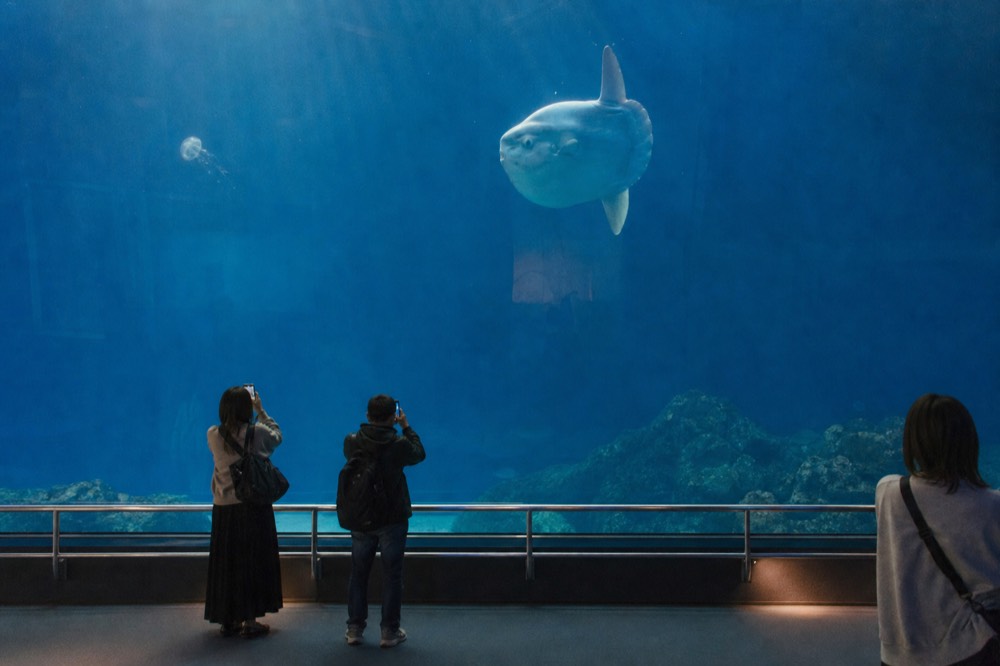
Ocean sunfish are odd, slow, sideways-flapping swimmers, and the Pacific tank's multi-level design suits them. Because the route spirals down around the central tank, you see the sunfish from at least six different floor levels, each time at a different depth band of the same water column. On the 6th floor, at the 10:30 and 15:00 Pacific fish feeds, the tank's residents rise toward the surface, and the sunfish's silhouette against the 9-metre drop below is one of the most distinctive sights in the building. You can verify the arrival details in the official behind-the-scenes note on the sunfish from Kaiyukan's news archive.
One honest caveat: sunfish are delicate animals in captivity, and aquariums rotate them more often than seals. Kaiyukan's announcement describes this individual and its arrival; it does not promise a permanent residency, so if the sunfish is a priority, checking the aquarium's current news page before your visit is the sensible move. The whale sharks offer a contrast here: at the last official measurement, dated 31 October 2025, the Pacific tank held exactly two, Kai (male, 5 m 30 cm, about 1,100 kg) and Yu (female, 6 m 20 cm, about 1,800 kg), a count the aquarium printed itself.
How do the seals and the sunfish fit into the wider collection?
Kaiyukan holds about 620 species and 30,000 animals across 14 large and small tanks recreating 10 regions of the Pacific Rim, with about 11,000 tons of water in total, and the seals' Arctic tank and the sunfish's Pacific tank anchor opposite ends of that journey. The Arctic Region is the coldest stop on a route that begins in a Japan Forest, passes Monterey Bay, the Gulf of Panama, an Ecuador rainforest, Antarctica and the Tasman Sea, and descends past the Great Barrier Reef into the Pacific tank itself. The spiral exists so that each region is viewed at its own depth.
| Animal | Zone | Floor | Nearest published feeding |
|---|---|---|---|
| Yuki, Arare and Moya (ringed seals) | Arctic Region | 4F | 10:50, 15:35 |
| Ocean sunfish (male, 97 cm) | Pacific Ocean | 6F-8F views | 10:30, 15:00 (Pacific fish) |
| Whale sharks Kai and Yu | Pacific Ocean | 6F-8F views | Surface feeding, upper floors best |
| Southern rockhopper penguins | Falkland Islands | 4F | 10:50, 15:10 |
| Pacific white-sided dolphins | Tasman Sea | 7F | 11:40, 14:00, 16:30 |
Two current caveats keep this picture honest. The Aleutian Islands tank is closed for renovation, with its animals moving to Aquaworld Ibaraki Oarai Aquarium, so a listed zone is temporarily missing from the circuit. And same-day re-entry ended on 15 June 2026, meaning once you walk out of the exhibition area, your visit is over; plan the feeding windows before you enter rather than expecting to pop out and return. Both changes are published on the aquarium's own news pages, and both catch out visitors working from older guides.
Do you need a ticket in advance to see Yuki and the sunfish?
Yes, advance purchase is what Kaiyukan itself recommends: admission runs on designated date-and-time tickets sold in 15-minute slots with a capped number per slot, and the official e-ticket's date and time can be changed later from the ticket holder's My Page. The aquarium states this policy on its own ticket page, and it exists precisely to control crowding on the busiest days, when walk-up counter queues can eat an hour you would rather spend at the Arctic tank. Under-2s enter free, and the purchasable tiers are adults aged 16 and over, children aged 7 to 15, and young children aged 3 to 6.
On the dates you can currently book, adult admission runs from ¥2,800 to ¥3,500 under the aquarium's demand-based price calendar, and more than three quarters of bookable dates sit at the ¥2,800 level. Past the end of the currently published calendar, nobody outside the aquarium knows the prices, because Kaiyukan only publishes them about two months ahead. A timed e-ticket, bought through a legitimate channel, locks your slot and your price together. The listing this site carries is rated 4.8 across about 14,894 reviews, and entry works by QR code at the gate.
The ticket itself is the same product whatever draws you: the seal fan, the sunfish hunter and the whale shark pilgrim all walk the same spiral. If Yuki is the reason for the trip, aim your timed slot at the 10:30 to 10:50 window, walk the upper floors quickly on the way down, and be at the Arctic tank ledge for the 10:50 ringed seal feed.
For families, the tier structure matters more than the headline price. A child aged 7 to 15 pays less than an adult on every date in the calendar, a young child aged 3 to 6 less still, and under-2s pay nothing. The visit itself is family-friendly in ways the ticket price does not show: a baby care room with nursing and diaper facilities on the Entrance Building 2F, a nursing room behind the Aqua Gate tank inside the paid area, and a route built mostly on slopes rather than stairs. Kaiyukan asks visitors to leave strollers at the outdoor parking area near the ticket counter and view on foot, for safety and sightlines, with staff on hand to help at elevators.
Whether you go adult solo or with the whole tier ladder, the booking mechanics are identical: pick a date, pick a 15-minute slot, scan the QR code at the gate.
Yuki is a female ringed seal in the Arctic Region tank, alive and on exhibit when Kaiyukan last wrote about her in a keeper post dated 21 June 2026, and the Pacific tank's ocean sunfish arrived on 4 July 2025 measuring 97 cm. The questions below cover the details visitors ask most: her current status, the feeding timetable, the sunfish's location, the Arctic tank's floor, and whether a timed ticket is needed to see any of it.
Common questions about seals, sunfish and Yuki at Kaiyukan
Seals, sunfish and the story of Yuki
Yuki is a female ringed seal in Kaiyukan's Arctic Region tank on the 4th floor, alive and on exhibit when Kaiyukan last wrote about her, in a keeper post dated 21 June 2026 that also names tankmates Arare and Moya. The ocean sunfish in the Pacific tank is a male that arrived on 4 July 2025 from the Iburi Center, measuring 97 cm.
Is Yuki the seal still alive at Kaiyukan?
She was alive and on exhibit when Kaiyukan last wrote about her, in a keeper post dated 21 June 2026, which describes her eating well and behaving energetically. That post is the newest official word on her, so this site phrases it exactly that way rather than claiming an undated present-tense status.
What time are the ringed seals fed at Kaiyukan?
The published timetable lists ringed seal feeds in the Arctic Region tank at 10:50 and 15:35, with no day-of-week variation. The aquarium cautions that feeding times can be cancelled or changed without notice depending on the animals' condition.
Where is the ocean sunfish in the aquarium?
It lives in the central Pacific Ocean tank, the 5,400-ton tank that the whole spiral route descends around. Because you view that tank from multiple floors at multiple depths, you pass the sunfish several times during a visit. The current individual is a male that arrived on 4 July 2025 from the Iburi Center, measuring 97 cm.
Which floor is Yuki's Arctic tank on?
The Arctic Region tank is on the 4th floor of the spiral route, near the bottom of the descent, alongside the Falkland Islands rockhopper penguin tank. The two zones feed within minutes of each other in the published timetable, at 10:50 and 15:10 or 15:35.
Do I need to book a timed ticket to see the seals?
Kaiyukan itself recommends advance purchase. Admission runs on designated date-and-time tickets in 15-minute slots with a cap per slot, and the official e-ticket's date and time can be changed later from My Page. Same-day re-entry is no longer permitted, so plan your feeding windows before you enter.