What is the best time of day to visit Kaiyukan?
Concrete hours for visiting Osaka Aquarium Kaiyukan: the real opening patterns, the feeding timetable, Night Kaiyukan after 17:00, and when the crowds and prices are lowest.
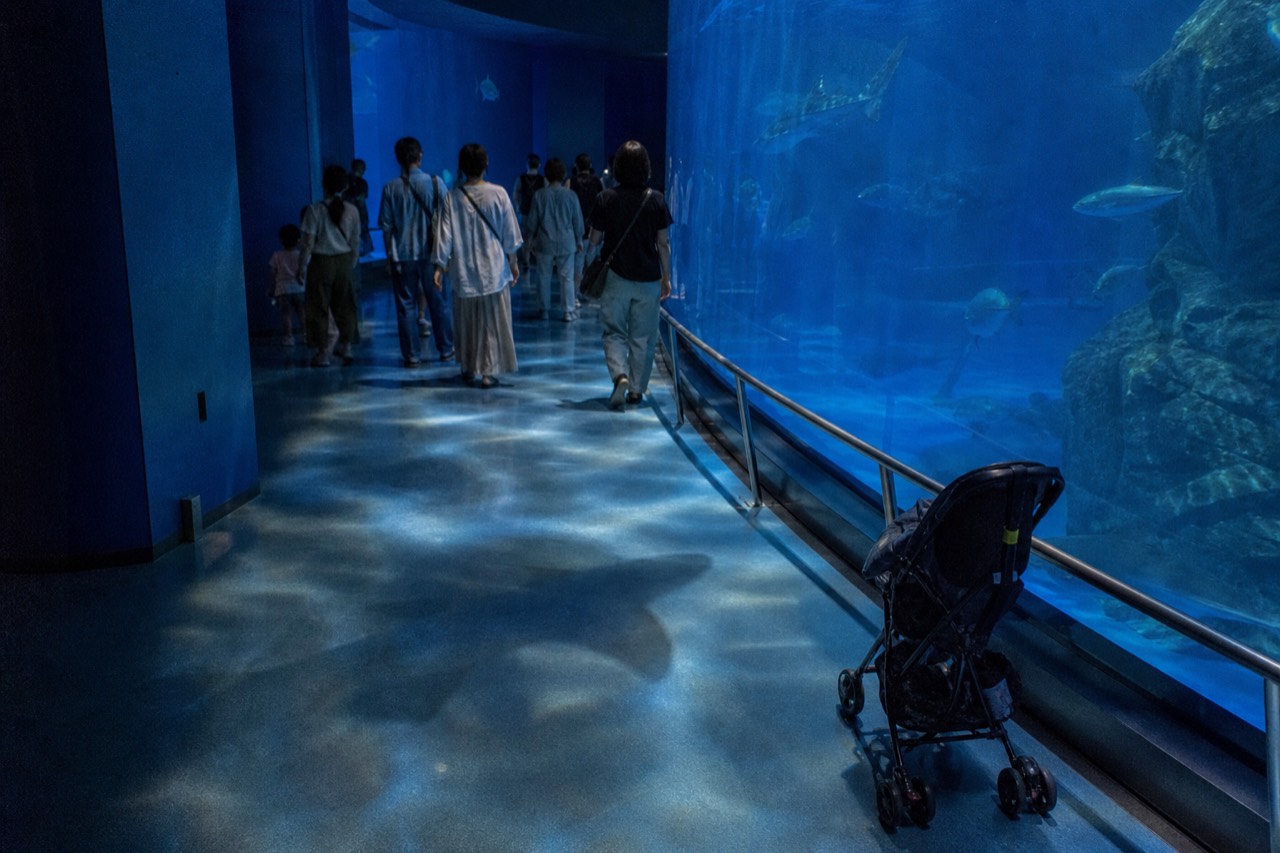
What is the best time of day to visit Kaiyukan?
The best time of day is the first hour after opening, and the second best is after 16:00 on a weekday. Kaiyukan's own schedule data shows seven different opening times, from 08:00 on peak September days to a typical 10:30 on autumn weekdays, so "go early" means checking your date first. A visit needs 90 to 120 minutes, and last admission is always exactly one hour before closing.
Those two facts, the moving opening time and the fixed last-admission rule, are what most timing advice gets wrong. A tip that says "arrive at 9am" is useless on a day the aquarium opens at 10:30, and it is equally useless on 20, 21 or 22 September, when Kaiyukan opened at 08:00 and closed at 21:00. The aquarium publishes its calendar roughly two months ahead, so the only reliable move is to look up your specific date before you plan your morning.
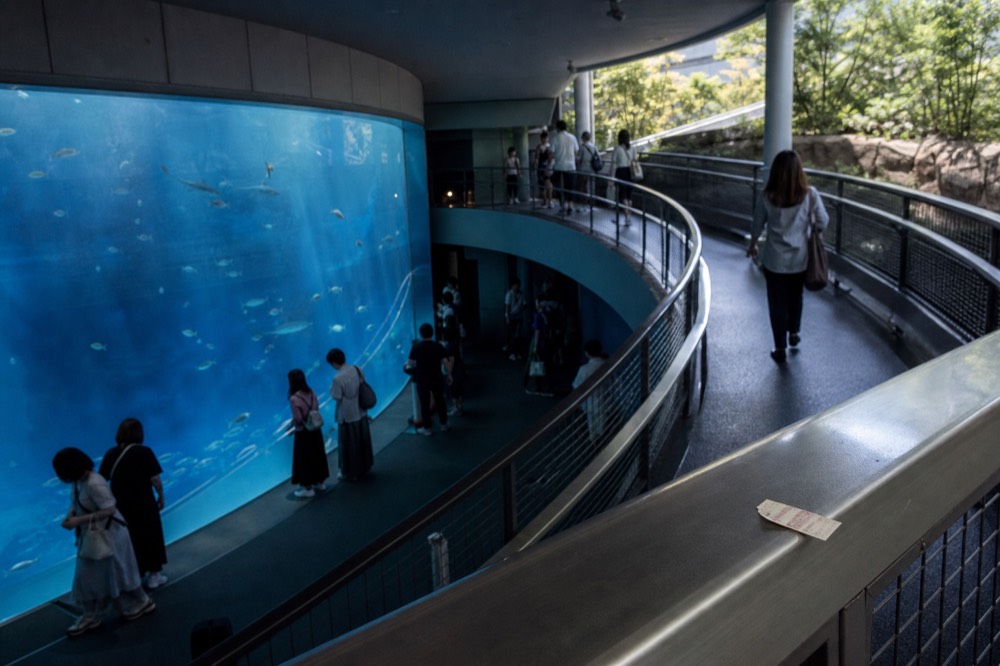
The reward for getting it right is real. The building's route is a one-way spiral from the 8th floor down around the central Pacific Ocean tank, which means crowds cannot thin out mid-route the way they do in a free-flow museum: everyone who enters ahead of you is somewhere below you on the same path. Entering in the first slot of the day puts you at the front of that column rather than the back of it.
There is also a timing rule that changed recently and catches people out. Same-day re-entry ended on 15 June 2026, so you can no longer pop out to Tempozan Marketplace for lunch and walk back in on the same ticket. Whatever time of day you choose, you are choosing it for one continuous visit, which makes the entry hour matter more than it used to.
What time does Kaiyukan actually open?
Kaiyukan does not have one opening time. The published calendar shows seven daily patterns: 10:30-20:00, 09:30-20:00, 10:00-20:00, 09:00-20:00, 08:30-20:30, 08:30-20:00 and 08:00-21:00. A typical autumn weekday opens at 10:30, a typical weekend at 09:30, and peak days as early as 08:00. Closing is 20:00 on most dates.
The distribution matters more than the extremes. Across the calendar the aquarium has published, the 10:30 start and the 09:30 start together cover the overwhelming majority of days, with the early openings clustered around school holidays and the late-September weekend rush. If you are visiting on an ordinary Tuesday in October, you are almost certainly looking at a 10:30 opening with a 19:00 last admission.
| Daily pattern | How it reads | When it tends to appear |
|---|---|---|
| 10:30-20:00 | The late morning start | Typical weekday, autumn term time |
| 09:30-20:00 | The weekend start | Typical Saturday and Sunday |
| 10:00-20:00 | The middle option | Scattered weekdays |
| 09:00-20:00 | Early start | Busy periods, shoulder days |
| 08:30-20:30 | Very early, late finish | Peak-season edges |
| 08:30-20:00 | Very early, standard finish | Peak-season weekdays |
| 08:00-21:00 | Earliest start, latest finish | Peak days such as 20-22 September |
Because the calendar is published only about two months ahead, dates beyond the current window show no hours at all. That is worth knowing before you build an itinerary: if you are booking a trip four months out, the aquarium genuinely cannot yet tell you what time it opens on your date, and anyone who claims otherwise is guessing. Our Kaiyukan opening hours guide goes deeper on the schedule mechanics.
One more habit worth building: check the closure dates too. The aquarium closes for maintenance two days each January, and the next scheduled closures are 13 and 14 January 2027, with no other closure days in the published twelve months. A day-trip plan built around a January visit should clear those two dates first.
When is Kaiyukan least crowded?
The quietest hour is the first admission slot of the day, every time, because the one-way spiral route puts early visitors ahead of everyone else. Tuesday and Wednesday are typically the lightest days. Weekday afternoons after 16:00 are the second-best window, when families with young children have started leaving and the last-admission cutoff, one hour before close, limits how many new arrivals can join.
The logic of the building does half the work here. Because the route descends around the central tank rather than branching, the crowd you enter with is the crowd you stay with. Arriving in the first 15-minute slot means you walk the 8th floor and the Japan Forest zone before the day's second wave arrives, and by the time they reach the mid floors you are already past them.
The second window works differently. Late afternoon is not empty, but it is lighter, and it comes with a bonus: at 17:00 the interior lighting and music shift into the Night Kaiyukan program, a moonlit, deep-blue treatment of the same tanks. Visitors who enter after 16:00 on a weekday effectively get two atmospheres for one ticket, the tail of the standard day and the night version, in the 90 to 120 minutes the aquarium itself budgets for a visit.
The times to avoid are equally predictable: weekends, Japanese school holidays, Golden Week in late April and early May, Obon in mid-August, and the New Year holidays. One visitor posting in early September described the crowd level as manageable rather than extreme, comparable to a busy zoo day, which is a fair calibration: Kaiyukan's timed-entry system with capped slots per 15 minutes has visibly softened the worst of the historical crush. It has not eliminated it.
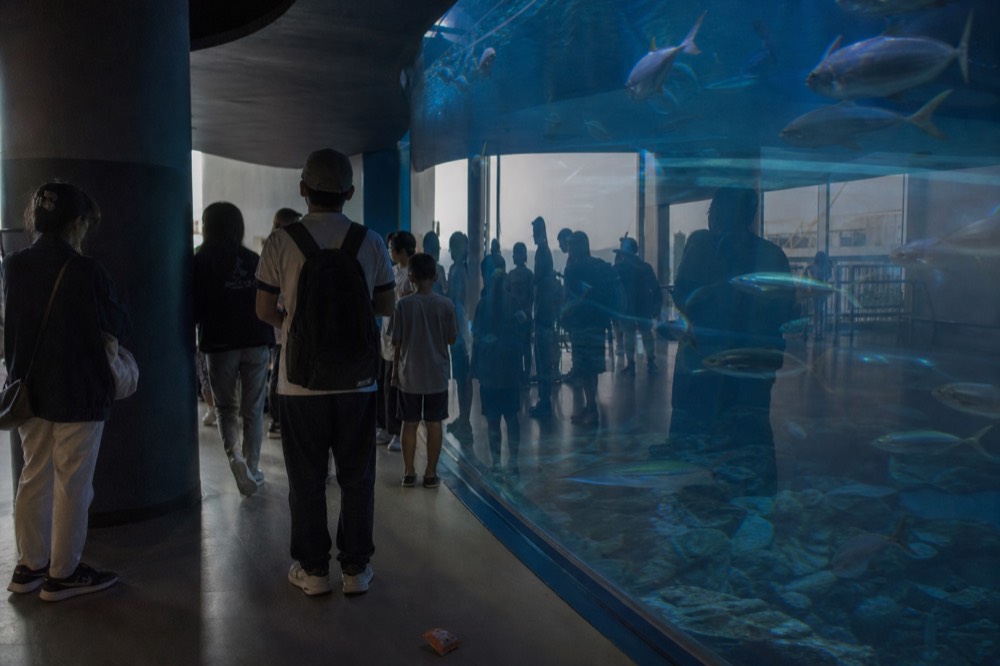
If quiet is your priority, the winning combination is a Tuesday or Wednesday, the first slot of the day, and a date outside the school holidays. If atmosphere is your priority, a weekday after 16:00 gives you Night Kaiyukan with a thinner crowd than the evening weekend equivalent. The worst of both worlds is a mid-morning weekend arrival, when you queue behind the opening wave and ahead of the lunch wave.
Adult tickets on the dates currently bookable run ¥2,800 to ¥3,500, with more than three quarters of those dates at ¥2,800. The peak-priced dates, ¥3,500, are exactly the days the early-opening 08:00 schedule appears, which tells you something useful: the aquarium charges the most on the days it expects to be fullest. Check availability for the adult tier to see how your preferred date is priced.
The feeding timetable: the case for late morning
Kaiyukan publishes a fixed feeding timetable, and it is the strongest argument for a mid-to-late morning entry. Feedings cluster between 09:50 and 11:40: sea lions and seals at 09:50, penguins at 10:00, Pacific fish at 10:30, otters at 11:30, coatis at 11:15 and dolphins at 11:40. The afternoon block runs from 13:20 to 16:30.
Feeding time turns a passive tank into a five-minute performance, and the aquarium's own viewing advice is specific about where to stand: whale sharks are fed at the surface, so the upper floors give the better view when one upends into a vertical position to suck in food. If you enter in the first slot of the day and walk the spiral at a normal pace, you arrive at the mid and lower floors just as the morning feedings begin above you, which is why a slightly later entry, timed to the schedule, can beat the very first slot for pure spectacle.
| Floor | Zone | Animal | Feeding times |
|---|---|---|---|
| 7F | Japan Forest | Otter | 11:30, 13:30, 15:30 |
| 7F | Monterey Bay | Sea lion / seal | 09:50, 13:20, 14:50 |
| 7F | Gulf of Panama | Coati | 11:15, 15:30 |
| 7F | Antarctica | Penguins | 10:00, 14:20 |
| 7F | Tasman Sea | Pacific white-sided dolphin | 11:40, 14:00, 16:30 |
| 6F | Pacific Ocean | Pacific fish | 10:30, 15:00 |
| 4F | Arctic Region | Ringed seal | 10:50, 15:35 |
| 4F | Falkland Islands | Southern rockhopper penguin | 10:50, 15:10 |
Two caveats belong next to that table. First, the timetable carries no day-of-week variation in the published data, so there is no "best day for feedings"; the same schedule runs daily. Second, the aquarium warns that feedings may be cancelled or changed without notice depending on the animals' condition, which is standard animal-husbandry honesty and worth holding loosely when you plan around a specific feeding.
Notice what the schedule implies about the two entry windows. A first-slot visitor catches the 09:50 and 10:00 feedings on the 7th floor early in the route and can loop back up mentally for nothing, since the route is one-way. A late-afternoon visitor entering after 16:00 catches only the 16:30 dolphin feeding. The morning window is decisively better for feedings; the afternoon window is better for atmosphere. Pick which of those you want, because with re-entry gone you cannot have both on one ticket.
Is Night Kaiyukan worth it after 17:00?
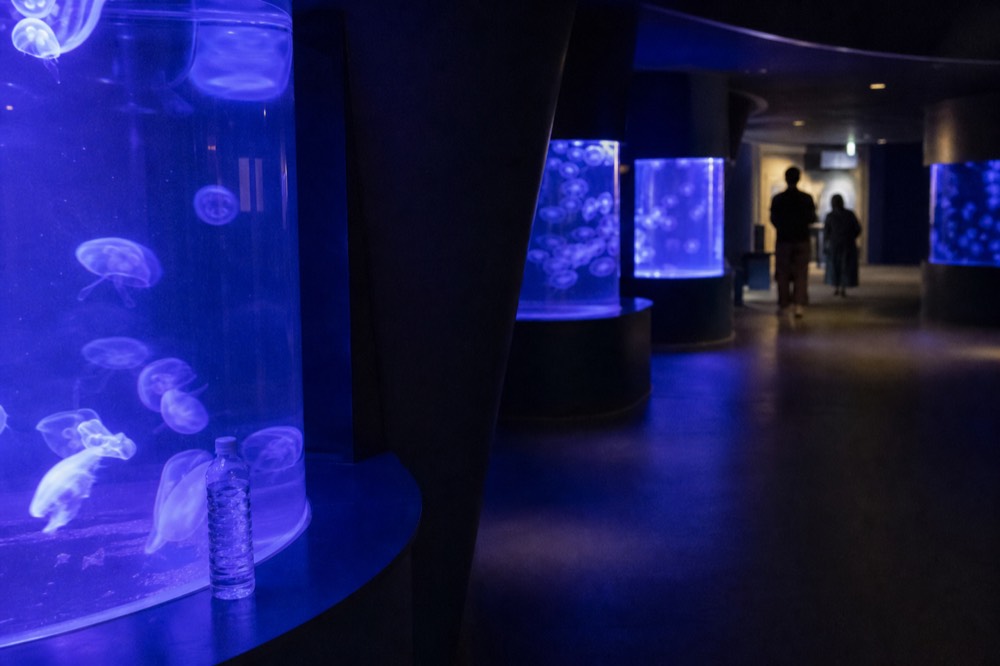
Night Kaiyukan is the strongest reason to choose a late visit. From 17:00 the interior lighting and music shift to a moonlit, deep-blue sea effect, and the timed-entry system means the evening crowd stays capped even as the atmosphere changes. Entry after 17:00 still gives you the full 90-to-120-minute route before the 19:00 or 20:00 last admission cutoff, depending on the day's closing time.
The program is an official, daily one rather than a seasonal event, though the aquarium notes times may vary by season. What it does not change is the route or the animals: you see the same 19 exhibition zones, the same two whale sharks, Kai and Yu, at the aquarium's last measurement, and the same 5,400-ton Pacific Ocean tank. What changes is the light, and a deep-blue aquarium at night photographs and feels quite different from the same tanks under the working lights of midday.
The practical risk with a night visit is the closing-time arithmetic. Last admission is always exactly one hour before closing, so on a standard 20:00 close you must enter by 19:00, and 19:00 is a tight start for a 90-to-120-minute visit: you would be walking out with the lights, at best. A 17:00 or 17:30 entry is the comfortable night slot, giving you the transition hour plus the full descent. Our guide to how long to spend at Kaiyukan covers the pacing in detail.
| Closing time that day | Last admission | Comfortable night entry | What you get |
|---|---|---|---|
| 20:00 | 19:00 | 17:00-17:30 | Full night atmosphere, unhurried route |
| 20:30 | 19:30 | 17:30-18:00 | Extra half hour at the lower floors |
| 21:00 | 20:00 | 18:00-18:30 | Longest night window, peak days only |
One caution for photographers: the night lighting is dim by design, and moving animals in low light will test a phone camera. If your goal is sharp whale shark photos rather than atmosphere, the morning window with its brighter working light is the better choice.
Weekends, prices and the calendar you should check first
The time of day and the price of the day are linked. Kaiyukan runs demand-based pricing, and on the currently bookable dates adult admission is ¥2,800 on about three quarters of days, rising to ¥3,500 on the busiest dates, the same days that carry the early 08:00 openings. A weekday morning is therefore both the quietest and usually the cheapest visit you can build.
This is the part of the timing question most visitors never connect. The cheapest dates in the bookable window are ordinary weekdays, and those are also the days with the 10:30 opening and the lightest crowd. The most expensive dates are the public-holiday clusters, where the aquarium simultaneously opens earliest and expects the most visitors. You pay more for the privilege of needing the early start.
| Adult price | Child (7-15) | Preschool (3-6) | How often it comes up |
|---|---|---|---|
| ¥2,800 | ¥1,400 | ¥700 | The most common level, 83% of the 59 bookable dates |
| ¥2,900 | ¥1,500 | ¥700 | A handful of moderately busy dates |
| ¥3,200 | ¥1,650 | ¥800 | A few high-demand dates |
| ¥3,500 | ¥1,800 | ¥900 | Peak dates only, clustered on public holidays |
Under 2 enters free, and holders of the relevant disability booklets plus one carer pay half price. The one line to hold in mind when comparing: past the end of the currently published calendar, nobody knows the prices, because Kaiyukan has not published them yet. Any source quoting a firm price for a date beyond that window is making it up. The official ticket page carries the live calendar, and the Night Kaiyukan program page confirms the 17:00 start.
Booking mechanics also shape your day. E-tickets go on sale roughly 30 days before the visit date, and the 15-minute admission slots each carry a cap, so the first slot of a popular day can sell out before the cheap dates even appear. Booking as soon as your date opens its window is the only reliable way to secure a first-thing entry on a weekend. Our Kaiyukan tickets guide walks through the whole purchase process.
The ticket the aquarium's own news page lists among its legitimate sales routes is the Osaka Aquarium Kaiyukan Ticket, rated 4.8 across about 14,894 reviews. It is sold by Osaka Aquarium partner listings and covers all three purchasable age tiers, adult 16 and over, child 7 to 15 and young child 3 to 6, with under 2 entering free. Once booked, the date and time can be changed later from the operator's My Page, which is useful when your plans shift after you have locked a slot.
A sample day, hour by hour
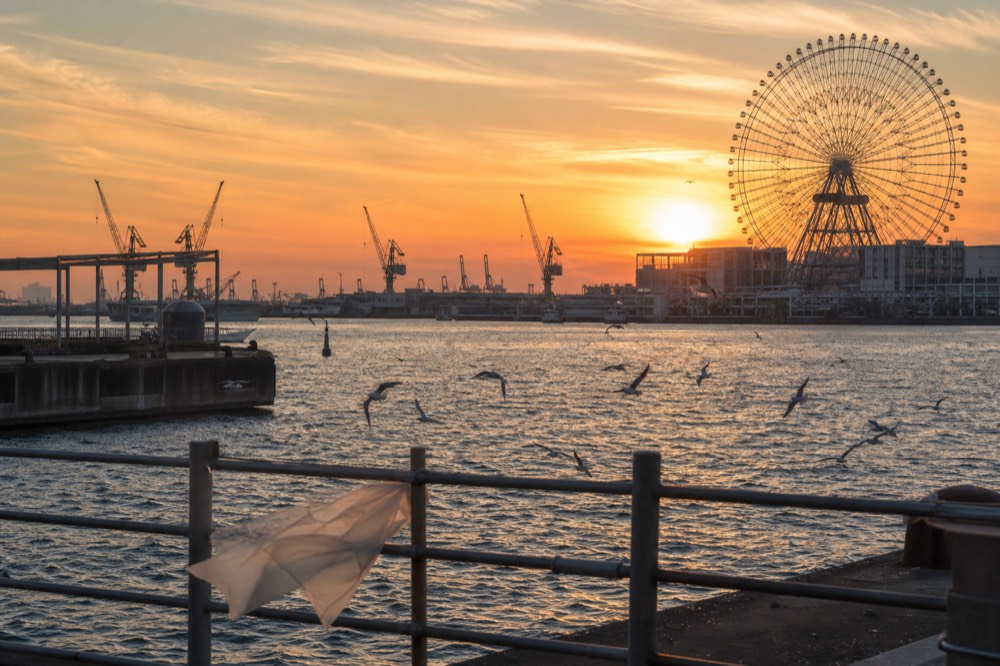
On a standard 10:30-to-20:00 weekday, the model morning is a 10:30 first-slot entry, the spiral walked at a relaxed pace, the mid-morning feedings caught around 11:30, and an exit near 12:30 after the aquarium's own budgeted 90 to 120 minutes. The model night is a 17:00 entry into the blue-lit Night Kaiyukan atmosphere, finishing at 19:00 with Tempozan Harbor Village waiting outside.
Putting it all together, here is what a well-timed weekday visit looks like on paper. Assume a 10:30 opening and a 20:00 close, the most common autumn weekday pattern, with entry at the first slot.
Enter at 10:30 and ride the escalator to the 8th floor while the building is at its emptiest. Walk the spiral at a relaxed pace: the Japan Forest otters feed at 11:30, the Monterey Bay sea lions at 09:50 and 13:20, and the penguins at 10:00 and 14:20. You cannot catch everything from one entry, and that is the honest arithmetic of a one-way route with no re-entry. A first-slot visitor catches the mid-morning feedings, reaches the Pacific Ocean tank around the 11:30 to 12:00 mark, and exits around 12:30, having spent the aquarium's own budgeted 90 to 120 minutes at the quietest hour of the day.
A night visitor flips the plan. Enter around 17:00 on the same weekday, catch the 16:30 dolphin feeding only if you move fast, otherwise skip the schedule entirely and let the blue lighting carry the visit. Walk out at 19:00 into Tempozan Harbor Village, where the Ferris wheel, the Santa Maria cruise and the food stalls of Naniwa Kuishinbo Yokocho pick up exactly where the aquarium leaves off. Both are good days. The only genuinely bad plan is arriving mid-morning on a peak-priced weekend with no pre-booked slot, which combines the biggest crowd, the highest price and the longest counter queue in one visit.
The short answers: enter in the first slot of the day for the quietest visit, after 16:00 on a weekday for the Night Kaiyukan atmosphere, and never later than one hour before closing, because that is the hard last-admission cutoff on every date. The questions below cover the opening patterns, the feeding timetable, the night program and the re-entry rule that changed in June 2026.
Common questions about the best time of day to visit Kaiyukan
What is the best time of day to visit Kaiyukan?
The first admission slot of the day, on a Tuesday or Wednesday outside the Japanese school holidays. Weekday afternoons after 16:00 are the second-best window, adding the Night Kaiyukan lighting from 17:00 with a thinner crowd than the evening weekend equivalent.
What time does Kaiyukan open?
It depends on the date: seven daily patterns exist, from a typical 10:30 weekday start and 09:30 weekend start to an 08:00 opening on peak days such as 20 to 22 September. Check the official calendar for your specific date, published about two months ahead.
When is last admission at Kaiyukan?
Exactly one hour before closing, on every dated day in the published record, with no exceptions. On a standard 20:00 close that means 19:00; on the rare 21:00 close it means 20:00.
What time are the animals fed at Kaiyukan?
Feedings run from 09:50 to 11:40 in the morning block and 13:20 to 16:30 in the afternoon, across otters, sea lions, coatis, penguins, dolphins, Pacific fish, ringed seals and rockhopper penguins. Times may be cancelled or changed without notice depending on the animals' condition.
Is Night Kaiyukan worth it?
For atmosphere, yes: from 17:00 the lighting and music shift to a moonlit, deep-blue sea effect. Enter by about 17:00 to 17:30 on a 20:00 day so the 90-to-120-minute route is not rushed against last admission.
Can you leave Kaiyukan and come back the same day?
No. Same-day re-entry ended on 15 June 2026, part of the same crowd-control scheme as the capped 15-minute entry slots. Plan one continuous visit, with lockers available in the entrance building and Tempozan Marketplace for bags you cannot take inside.