Kaiyukan map and floor guide: the full Kaiyukan route explained
Kaiyukan has no corridors and no choices to make: an escalator lifts you to the 8th floor and one spiral path carries you down around a 5,400-ton central tank to the 3rd. Here is the whole route, zone by zone, with the floors the aquarium itself publishes.
Short answer
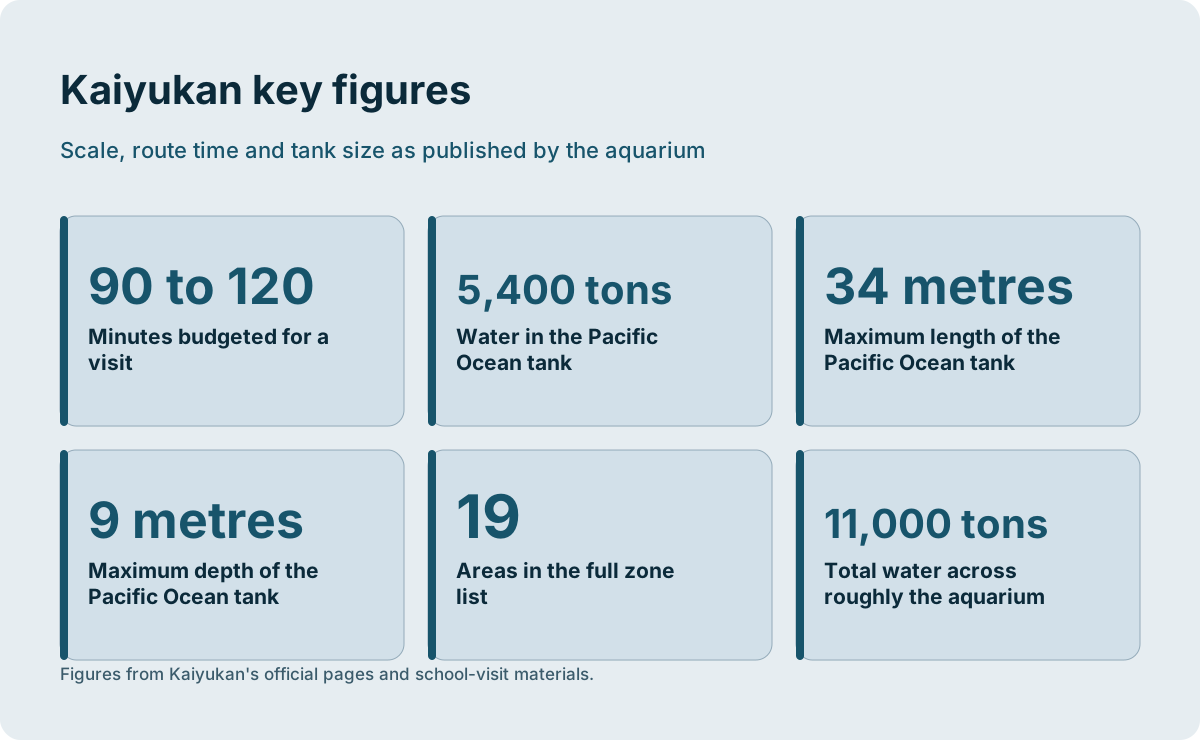
The Kaiyukan route runs one way only: enter at the Entrance Building 3F, walk the Aqua Gate tunnel, ride the escalator to 8F, then spiral down past 19 zones to 3F and out. The Pacific Ocean tank sits at the centre on 6F, holding 5,400 tons of water and two whale sharks. Most visits take 90 to 120 minutes.
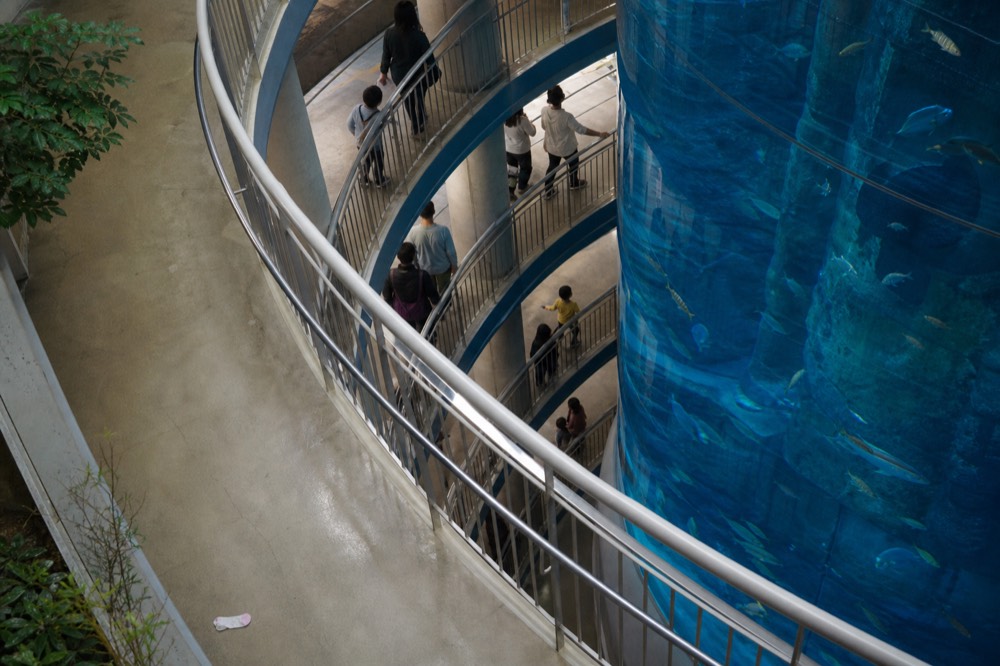
Kaiyukan does not work like a normal museum. There is no lobby with branches off it, no decision about which wing to see first, no risk of doing the building "wrong". An escalator lifts every visitor to the 8th floor of a 30-metre building, and a single spiral path descends around a central tank holding 5,400 tons of water until you surface at the 3rd floor exit, about 90 to 120 minutes later if you follow Kaiyukan's own budget for a visit.
That single design decision is why the official facility map looks the way it does: a stack of rings, one per floor, each ring a slightly different window onto the same Pacific Ocean tank at the middle. This guide walks the route in order, names every zone the aquarium lists, and gives a floor number only where Kaiyukan itself publishes one. Where the floor is not officially stated, the zone is described by its position in the descent instead, which is how you will actually experience it anyway.
How does the Kaiyukan route work from entrance to exit?
The route is strictly one-way and top-down: you enter through the Entrance Building 3F, pass through the Aqua Gate tunnel tank, take an escalator to the 8th floor, then walk a spiral descent around the central Pacific Ocean tank through 8F, 7F, 6F, 5F, 4F and 3F, exiting at Entrance Building 3F. There are no branches and no way to skip ahead, so the order below is the order everyone gets.
The aquarium describes its own structure plainly: a building you descend while circling, following the route around and around as you go down. Because the same central tank sits at the heart of every ring, you see the whale sharks, the schooling fish and the two sand tiger sharks that share the tank at several different depths and from several different angles without ever retracing your steps.
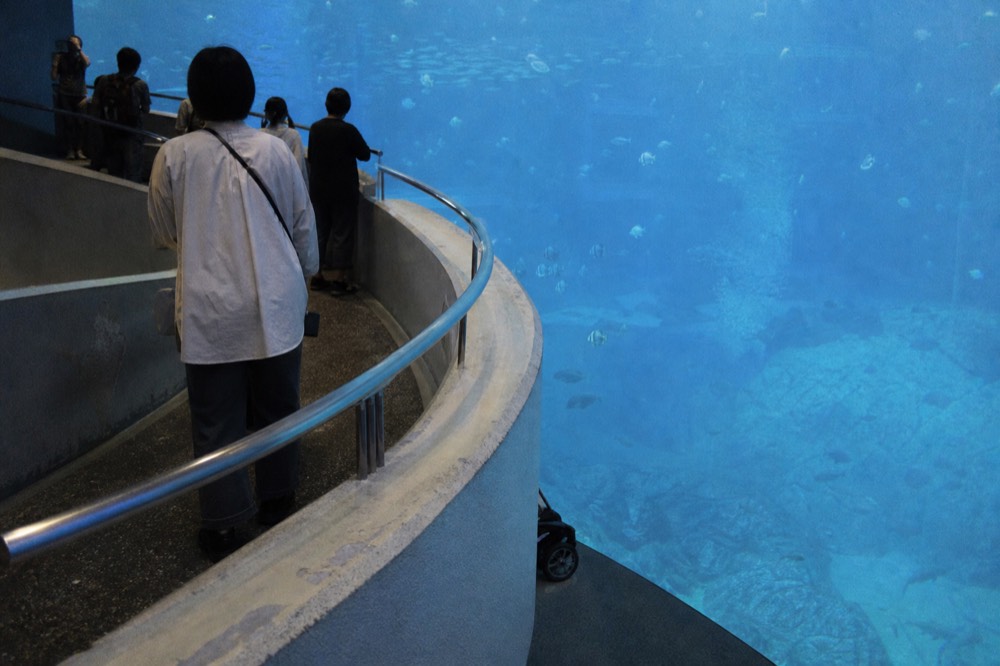
Two practical consequences follow from the one-way design. First, you cannot pop back up to something you liked: same-day re-entry ended on 15 June 2026, so once you are out, you are out. Second, pace yourself on the upper floors, because the route only gets better lit and less crowded as you descend and the crowds thin after the 8F photo stops. Our how long to spend at Kaiyukan guide breaks the timing down in more detail.
What is on each floor of the aquarium in Osaka Bay?
Only eight of the zone floors are officially published: Japan Forest, Monterey Bay, Gulf of Panama, Antarctica and Tasman Sea all sit on 7F, the Pacific Ocean tank is viewed from 6F, and the Arctic Region and Falkland Islands zones are on 4F. The remaining zones are confirmed parts of the route but Kaiyukan does not print a floor number for them on its English pages, so they are listed by route position below rather than given a guessed floor.
The full zone list, in the aquarium's own encyclopedia order, runs to 19 areas: 18 permanent zones plus the current temporary show. Kaiyukan also describes the building's scale in its own school-visit materials as 14 tanks of varying sizes recreating 10 world regions, with about 620 species and some 30,000 animals across roughly 11,000 tons of water in total.
Here is the route with the floors that are verified, and route positions for the rest:
| Order | Zone | Verified location |
|---|---|---|
| Start | Aqua Gate tunnel tank | Entrance Building, before the escalator to 8F |
| 1 | Japan Forest | 7F |
| 2 | Aleutian Islands | Closed for renovation |
| 3 | Monterey Bay | 7F |
| 4 | Gulf of Panama | 7F |
| 5 | Ecuador Rainforest | Early descent, after the 7F cluster |
| 6 | Antarctica | 7F |
| 7 | Tasman Sea | 7F |
| 8 | Great Barrier Reef | Mid-descent, reopened after renovation on 28 November 2024 |
| 9 | Pacific Ocean (central tank) | 6F, the core of the whole route |
| 10 | Seto Inland Sea | After the Pacific Ocean views |
| 11 | Seasonal Exhibits | Rotating, later in the descent |
| 12 | Coast of Chile | Lower half of the route |
| 13 | Cook Strait | Lower half of the route |
| 14 | Japan Deep | Near the bottom of the descent |
| 15 | Jellyfish gallery | Later in the route, a dedicated area |
| 16 | Arctic Region | 4F |
| 17 | Falkland Islands | 4F |
| End | Temporary exhibition | Entrance Building 4F, on the way out |
What is in the Pacific Ocean tank, and where do you see it?
The Pacific Ocean Tank is the building's core: 5,400 tons of water, a maximum length of 34 metres and a depth of up to 9 metres, holding two whale sharks named Kai and Yu at Kaiyukan's last official measurement, taken on 31 October 2025. You view it on 6F and then again at changing depths as the spiral carries you past it on the way down.
Kaiyukan's own tip for this tank is worth repeating: the whale sharks feed at the surface, upending into a vertical position to suck in food, so the upper floors give the better view of a feeding. When one is happening, go up the ramp rather than down. The tank also gained two sand tiger sharks, a 2.7-metre female and a 2.5-metre male, in May 2025, the first time the species has been exhibited here, plus a 97-cm ocean sunfish that arrived from the aquarium's own Ibuki Center research facility in July 2025.
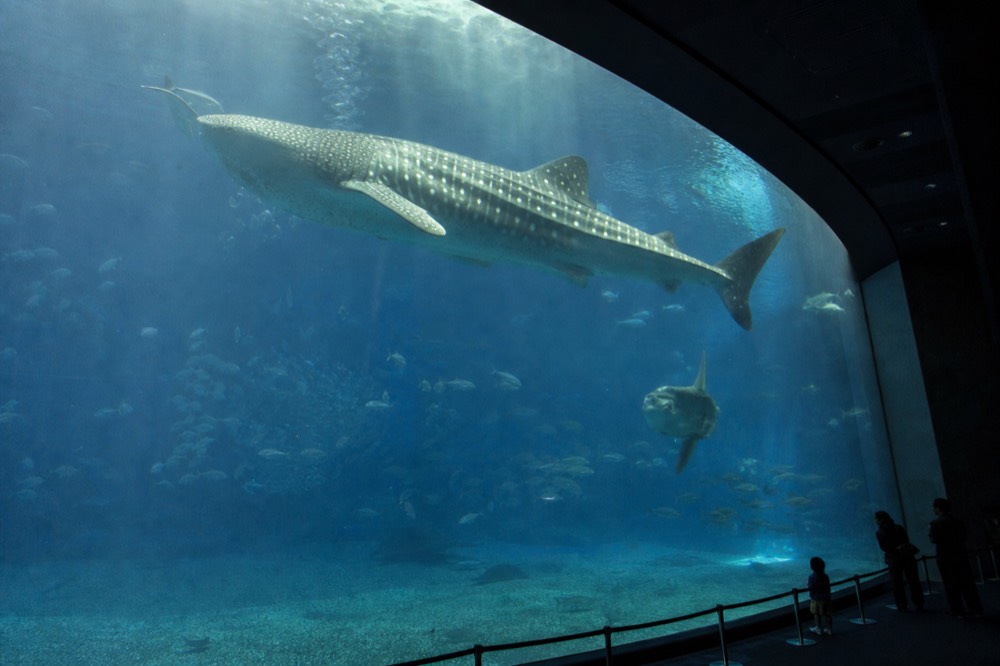
One detail almost no guide mentions: the seawater in front of Kaiyukan is the mouth of the Aji River, and its salinity and turbidity swing too much to use. Every drop in those tanks is trucked in, roughly 350 tons per delivery run, by the aquarium's own facilities team. Our whale sharks at Kaiyukan guide covers Kai and Yu, their measurements and their history in full.
Which zones are closed or easy to miss?
The Aleutian Islands tank is closed for renovation, with its animals moving to Aquaworld Ibaraki Oarai Aquarium, and no reopening date has been announced; the Aqua Gate tunnel at the start and the jellyfish gallery near the end are the two zones most visitors underestimate. Nothing else on the route is currently closed.
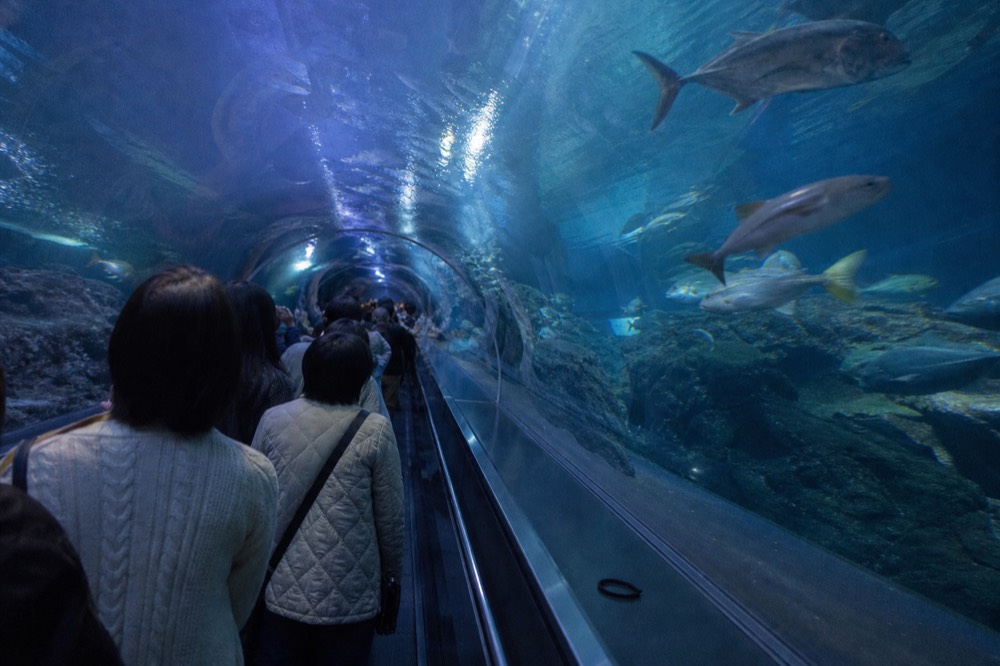
The Aqua Gate, a walk-through tunnel tank you pass through before the escalator, opened on 17 April 1998 and is the quiet star of the entrance sequence: fish move over and beside you on all sides, and it is the only place on the route where water surrounds you rather than sitting behind glass. The jellyfish gallery, listed as its own area, is a low-lit dedicated space late in the descent, and it is where the aquarium rotates its display animals, recently including large Ariake jellyfish with bells around 60 cm.
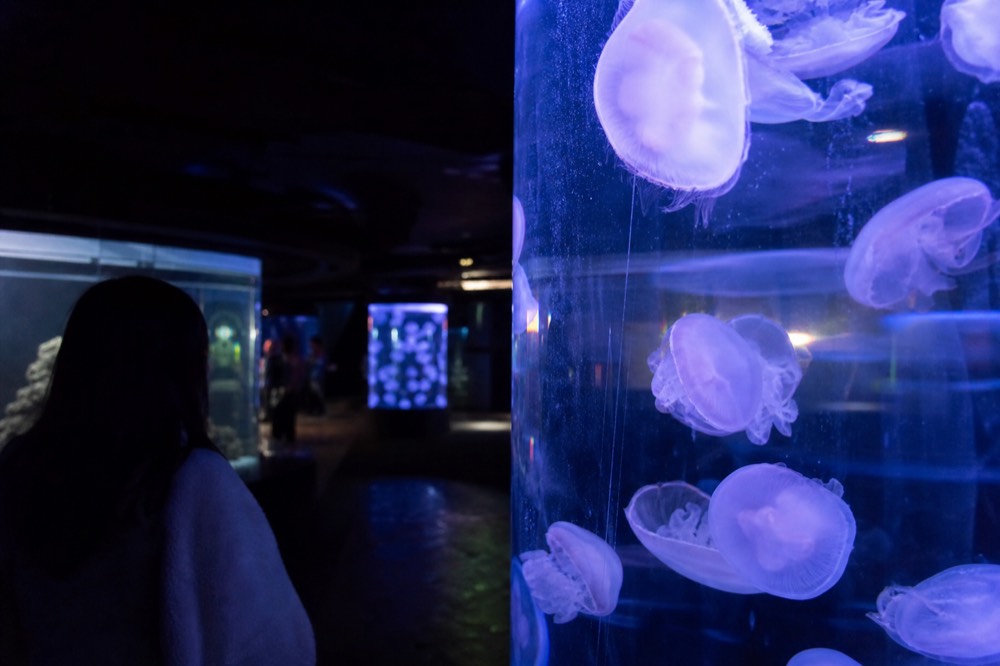
The Seasonal Exhibits slot works the same way: it is a permanent place on the route with rotating contents, so two visits months apart can look genuinely different in that zone and in the temporary show on Entrance Building 4F near the exit. Check the aquarium's news page before you go if a specific animal matters to your visit.
How long does the spiral descent take, and where does it slow down?
Kaiyukan itself budgets 90 to 120 minutes for a visit, published on its official school-group FAQ, and the slowest points are the 8F arrival overlook, the Pacific Ocean feedings on 6F, and the touch pool in the Maldives area, where lines form on busy days. Families with small children or photographers should plan for the top of that range.
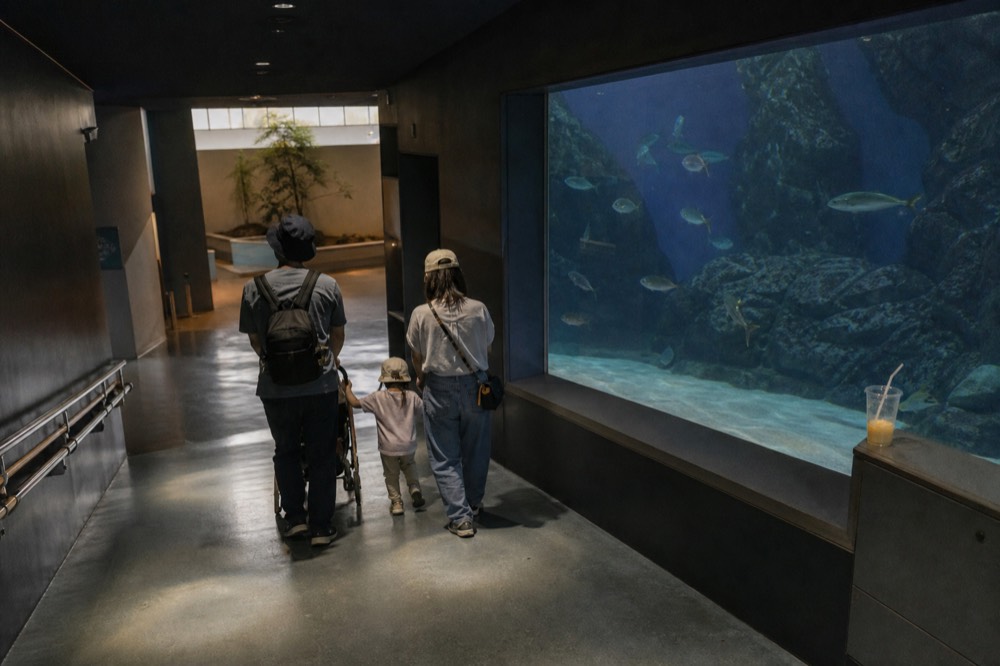
The descent is gentle: the aquarium's accessibility notes point out that most of the route uses slopes rather than stairs, with elevators and staff guidance available where steps or escalators exist. That is also why the building works so well for strollers and wheelchairs, both of which are handled at the entrance (no stroller rental, but a parking area beside the ticket counter).
Timing your slot against closing matters more than pacing. Last admission is exactly one hour before closing on every date the aquarium publishes, and closing time varies day by day, anywhere from 20:00 on most days to 21:00 on peak dates. A 19:00 last-admission ticket on a 20:00 day gives you the short end of that 90-to-120-minute budget.
What do the feeding times tell you about the map?
The published feeding timetable clusters around the 7F zones and the Pacific Ocean tank, which tells you the upper floors are richest in the late morning and mid-afternoon, while 4F feeds happen around 10:50 and again after 15:00. Times can be cancelled or changed without notice depending on the animals' condition, so treat this as a planning grid, not a promise.
| Floor | Zone | Animal | Feeding times |
|---|---|---|---|
| 7F | Japan Forest | Otter | 11:30, 13:30, 15:30 |
| 7F | Monterey Bay | Sea lion and seal | 09:50, 13:20, 14:50 |
| 7F | Gulf of Panama | Coati | 11:15, 15:30 |
| 7F | Antarctica | Penguins | 10:00, 14:20 |
| 7F | Tasman Sea | Pacific white-sided dolphin | 11:40, 14:00, 16:30 |
| 6F | Pacific Ocean | Pacific fish | 10:30, 15:00 |
| 4F | Arctic Region | Ringed seal | 10:50, 15:35 |
| 4F | Falkland Islands | Southern rockhopper penguin | 10:50, 15:10 |
Because the route is one-way, you cannot chase feedings backwards. The practical play is to pick the two or three that matter most to you and choose an entry slot that puts you on the right floor at the right time: an 11:00 entry, for example, catches the 11:30 otter feed on 7F almost exactly, since the 8F overlook and photo stops typically take twenty to thirty minutes.
Where do you exit, and what is in the Entrance Building?
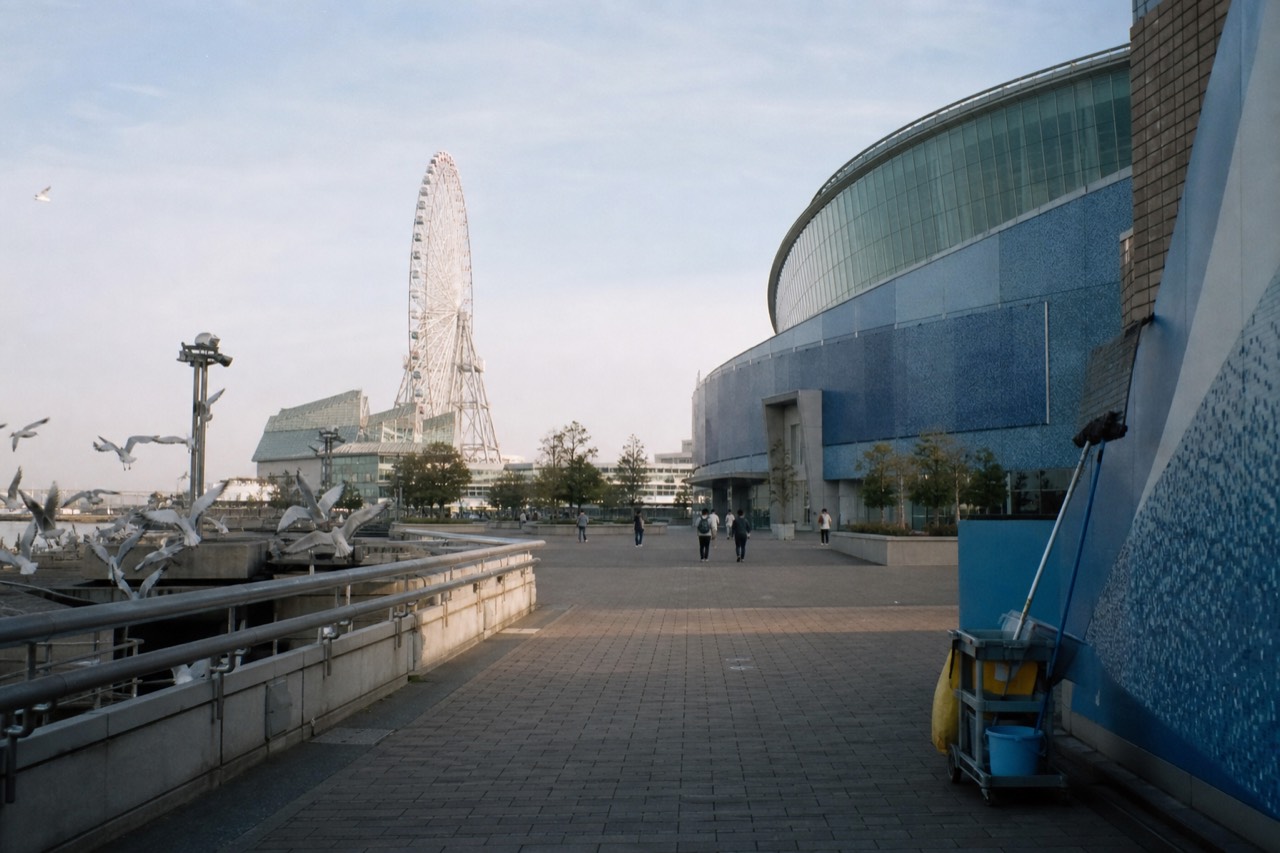
The route ends at Entrance Building 3F, passing through Entrance Building 4F on the way, where the temporary exhibition and special shows sit; the Santa Maria sightseeing ship boards from Entrance Building 2F, and the museum shop and lockers wrap around the exit. Nothing after the 3F exit is ticketed, so the end of the spiral flows straight into the retail and harbour layer of the building.
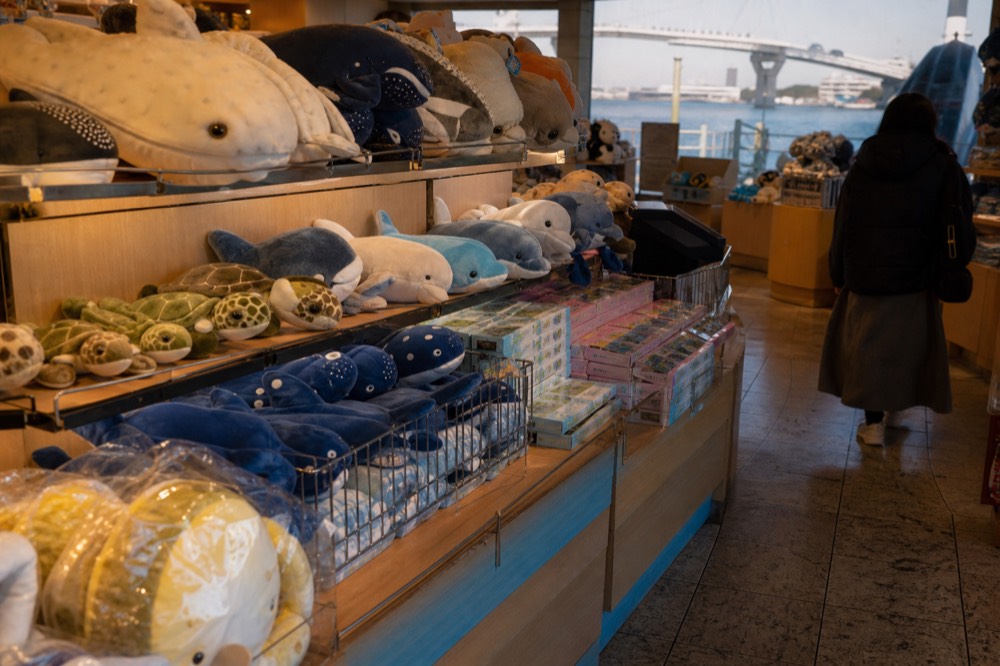
The 4F stopping point deserves five minutes even when you are tired: the current temporary exhibitions there include the sand tiger shark special show running from 17 July 2026 onward, with its end date undecided, alongside coral-themed displays continuing into autumn 2026. The aquarium's shop, renovated and reopened in December 2025, sits by the 3F exit.
From Entrance Building 2F, the Santa Maria replica sailing ship runs 45-minute day cruises around Osaka Port, and Kaiyukan sells a set ticket combining admission with the cruise. Two other set tickets exist, pairing admission with LEGOLAND Discovery Center Osaka and with the Captain Line shuttle boat to Universal City Port. Our things to do near Kaiyukan guide covers the whole Tempozan Harbour Village layer.
How do tickets, timed slots and the route fit together?
Admission runs on a date-and-time ticket system with 15-minute entry slots and a capped number of tickets per slot, so your ticket fixes when you start the spiral, not how long you stay; you can stay until closing from any slot, and same-day re-entry ended on 15 June 2026. The date also fixes the price, because Kaiyukan runs demand-based variable pricing.
On the dates currently bookable, adult admission runs ¥2,800 to ¥3,500, and more than three quarters of bookable dates sit at the ¥2,800 level. Child tickets (ages 7 to 15) run ¥1,400 to ¥1,800, preschool tickets (ages 3 to 6) run ¥700 to ¥900, and under-2s enter free. Past the end of the published calendar nobody knows the prices yet, because Kaiyukan only publishes about two months ahead.
| Tier | Ages | Bookable price range |
|---|---|---|
| Adult | 16 and over | ¥2,800 to ¥3,500 |
| Child | 7 to 15 | ¥1,400 to ¥1,800 |
| Young child | 3 to 6 | ¥700 to ¥900 |
| Infant | Under 2 | Free |
Bag rules matter at the entrance, before the Aqua Gate. Since 24 April 2026, suitcases and cart-type luggage are banned inside, along with anything whose three sides total 120 cm or more or with any single side over 70 cm; anything wider than 85 cm may be refused because some corridors will not take it. Coin lockers sit at the entrance, in Kaiyukan Hall, near the museum shop, in Tempozan Marketplace and under the ferris wheel, and the aquarium's advice is to leave oversized bags at your hotel.
Do you need a paper map, or can you just follow the spiral?
You do not need a map: the spiral is self-guiding, the zone sequence is fixed, and the only navigation choice you actually face is which side of the ramp to stand on at each Pacific Ocean pass; pick up the floor map at the entrance only if you want the feeding timetable on paper. The building was certified a museum-equivalent facility by the Osaka Prefectural Board of Education in 1994, and its wayfinding reflects that: signage is ordered along the route, not across it.
The one genuine fork in the whole visit is at the start: whether to linger at the 8F overlook or move straight into the 7F zone cluster. Linger if a whale shark feeding is due, per the official advice that surface feeding is best seen from above; move on if your slot is late in the day and you want unhurried time at the jellyfish gallery and 4F before closing.
Kaiyukan turned 36 in July 2026 and passed 90 million cumulative visitors on 1 October 2025, and the 15-minute slot caps are the building's answer to those numbers: crowds are managed at the door, not inside the spiral. For dates, prices and booking mechanics in more depth, see our Kaiyukan tickets guide. This site, Osaka Aquarium, keeps the whole picture: hours, access, exhibits and the live price calendar as it shifts month to month.
What about visiting with young children along the route?
The spiral suits small children well: most of the route is sloped rather than stepped, the baby care room with nursing, nappy-changing and formula facilities is on Entrance Building 2F, a second nursing-only room sits inside the paid area behind the Aqua Gate, and a third care room is in Tempozan Marketplace 3F. Strollers are parked outside, not rented, so plan to carry or walk little ones.
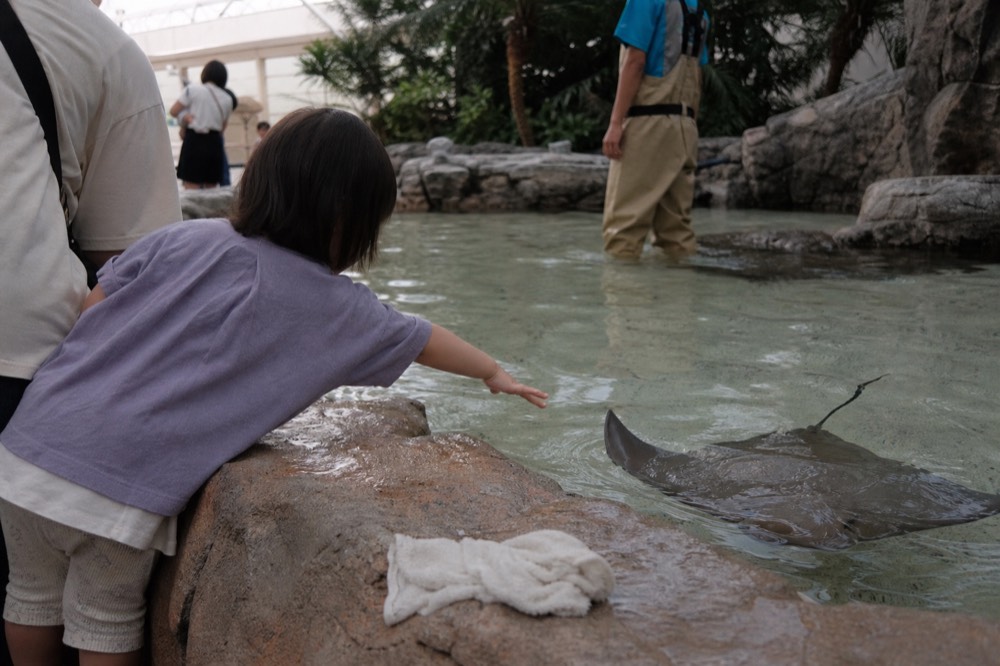
The touch pool in the Maldives area, one of the larger shark-and-ray touch pools in Japan, is the natural midpoint reward for a child who is flagging, with hand-washing stations beside it. An audio guide and the "Expedition team stamp notebook" are the two official add-ons aimed at keeping children engaged through the 19 zones, and both are optional extras rather than necessities.
One last scheduling note for families: the aquarium closes entirely on 13 and 14 January 2027, the only closure days in the twelve months the aquarium publishes, so a mid-January visit needs to work around those two dates. The information line, 06-6576-5501, is staffed from opening until 19:00 for anything the online calendar does not answer.
If you would rather sort the ticket first and the route second, the operator's live listing for the Kaiyukan ticket shows the current date-based price for each age tier, and the 15-minute slot choices still open.
With the ticket settled, the rest is simply a matter of choosing an entry time that lines up with the feedings you care about and letting the building carry you down.
The Kaiyukan route covers floors 8 down to 3 in a fixed one-way spiral around the central Pacific Ocean tank, with entrance, shop and exit functions on the Entrance Building's 2F, 3F and 4F levels. The questions below cover the details readers ask most often: how many floors there are, which direction you travel, where the whale sharks are, how long the walk takes, and what happens if you miss something, which under the one-way design and the end of re-entry you cannot recover from.
Common questions about the Kaiyukan floors and route
How many floors does Kaiyukan have?
The visitor route covers 8F down to 3F, with the Entrance Building layers at 2F, 3F and 4F. The building itself is 30 metres tall, or 50 metres including the glass upper section.
Do you go up or down at Kaiyukan?
Down. An escalator takes you from the entrance to the 8th floor, and you spiral downward around the central Pacific Ocean tank until you exit at the 3rd floor. The route is one-way and cannot be reversed.
What floor is the Pacific Ocean tank on?
The central Pacific Ocean tank is viewed on 6F, and then again at different depths as the spiral descends past it. It holds 5,400 tons of water, with a maximum length of 34 metres and a depth of up to 9 metres.
How long does the Kaiyukan route take?
Kaiyukan budgets 90 to 120 minutes for a visit on its official FAQ. Allow the top of that range with children or if you want to watch feedings.
Can you go back to a floor you missed?
No. The route is one-way, and same-day re-entry ended on 15 June 2026. Once you pass a zone or exit the building, you cannot return to it on the same ticket.
Is any part of Kaiyukan closed?
The Aleutian Islands tank is closed for renovation, and its animals are moving to Aquawworld Ibaraki Oarai Aquarium. No reopening date has been announced. All other zones on the route are open.