Is Kaiyukan ethical, and is it accredited?
A fair-minded look at the animal-welfare debate around Osaka Aquarium Kaiyukan, its JAZA accreditation, why it is not a WAZA member, and what its own record shows.
Is Kaiyukan ethical, and is it accredited?
Kaiyukan is a member of the Japanese Association of Zoos and Aquariums (JAZA), Japan's main industry body for animal facilities, and it is not a member of the World Association of Zoos and Aquariums (WAZA). Both facts are checkable against the two associations' own member directories, and together they frame the ethical debate rather than settle it.
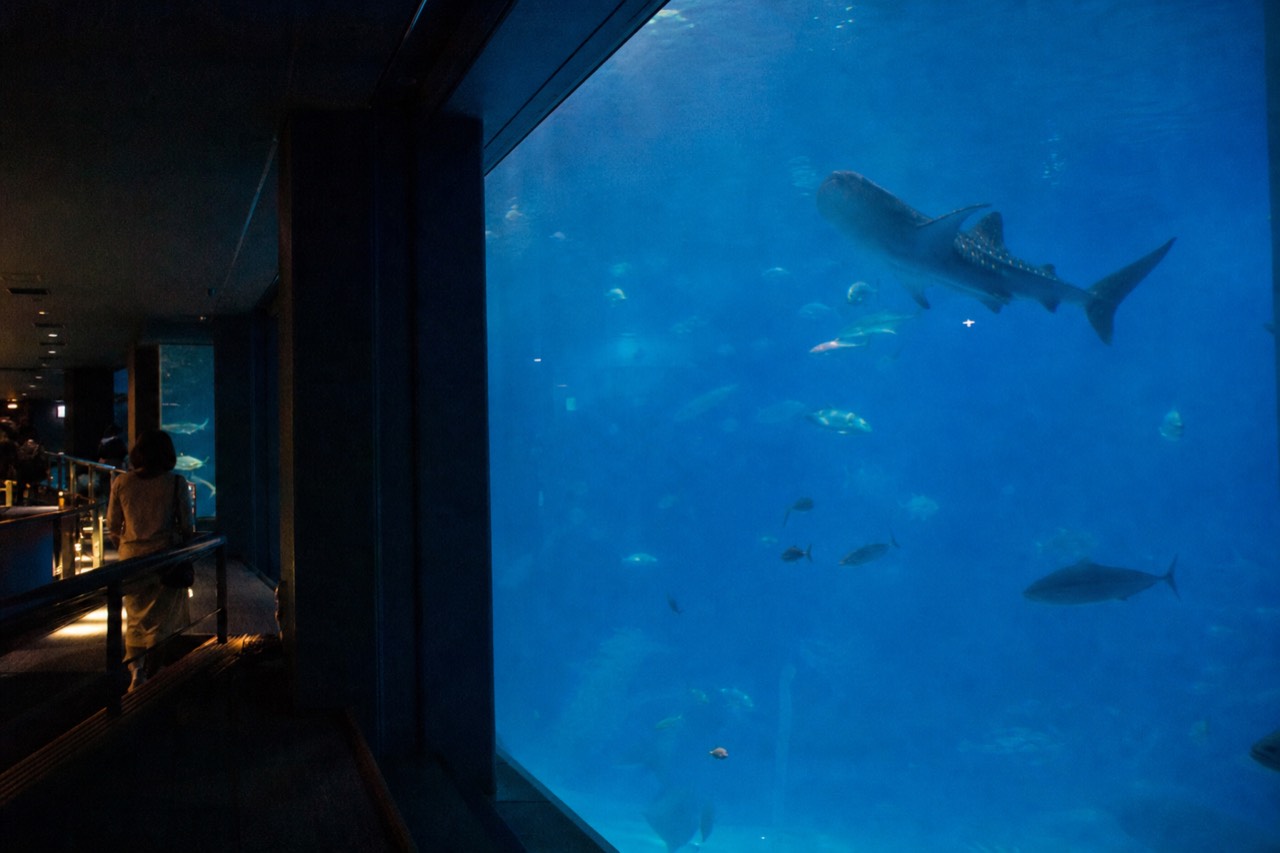
That debate is real. Kaiyukan is one of a small number of aquariums worldwide that keep whale sharks, the largest fish in the sea, and it does so in a building whose entire design, a spiral descent around a central tank, exists to display large marine animals at scale. Some visitors conclude that no tank is big enough for that. Others point to the aquarium's research arm, its breeding programs and its published animal measurements as evidence of serious husbandry. This page lays out both sides, along with the accreditation record and the aquarium's own verifiable practices, so you can make your own call.
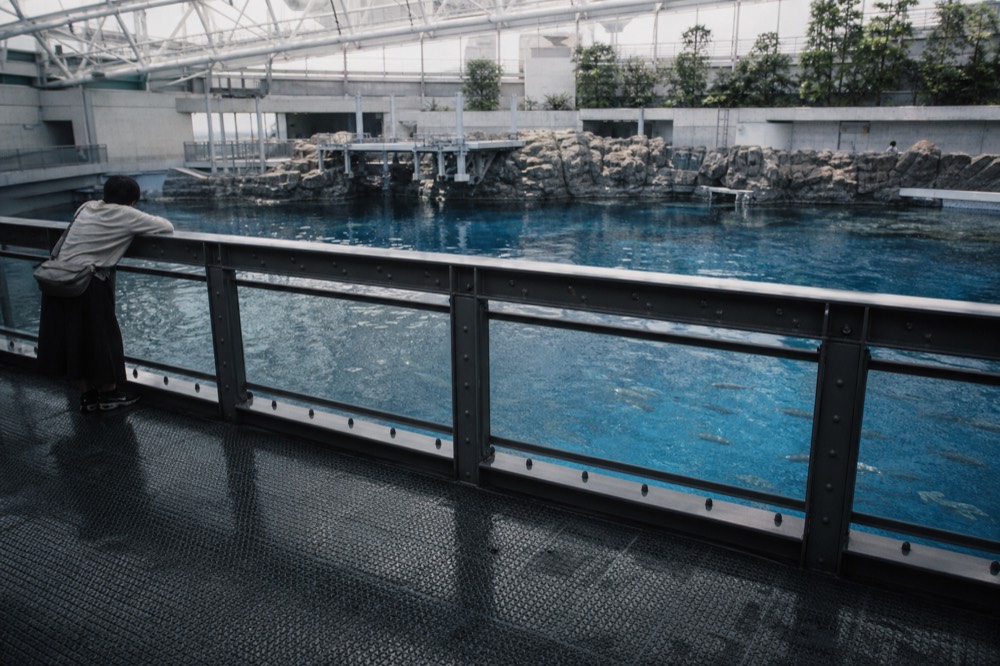
The starting point matters. Osaka Aquarium Kaiyukan opened on 20 July 1990 and passed 90 million visitors on 1 October 2025, its newest milestone, which makes it one of the most-visited aquariums in the world. Scale is exactly what its critics and its defenders both point to. The aquarium holds about 620 species and roughly 30,000 animals across 14 tanks holding about 11,000 tons of water, in Kaiyukan's own published figures. The central Pacific Ocean tank alone holds 5,400 tons, runs to a maximum length of 34 m and reaches 9 m deep.
If you are weighing a visit and want a ticket sorted before you go, the three purchasable age tiers are compared below.
Is Kaiyukan accredited, and by whom?
Kaiyukan appears in the Japanese Association of Zoos and Aquariums member directory under both its Japanese name, 海遊館, and its English name, and it does not appear anywhere in WAZA's 358-entry member list. JAZA is itself a WAZA association member, so Kaiyukan's link to the global body is real but indirect, through its national association rather than direct membership.
The JAZA claim is verifiable first-hand: the association's own member search and its English address list both name the facility, though neither listing publishes a joining date. You can check the English list yourself at the JAZA English address list. The WAZA non-membership is equally verifiable: the association's member directory, viewable at WAZA's member list, contains no entry for Kaiyukan. Japan has eleven WAZA entries, and Kaiyukan is not among them.
What the two bodies actually demand differs, and that difference is worth understanding before treating accreditation as a verdict. The table below sets out the record plainly.
| Body | Kaiyukan's status | What the body does | Confidence |
|---|---|---|---|
| JAZA (Japanese Association of Zoos and Aquariums) | Member, listed in Japanese and English directories | Japan's national zoo and aquarium association; sets member standards for husbandry and ethics | Verified against JAZA's own directories |
| WAZA (World Association of Zoos and Aquariums) | Not a member | The global umbrella body; JAZA belongs as an association member | Verified against WAZA's 358-entry list |
One more credential belongs in this section because it is often missed. On 1 July 1994 the Osaka Prefectural Board of Education certified Kaiyukan as a museum-equivalent facility, which placed it under Japan's museum standards rather than only commercial entertainment law. It is not an animal-welfare badge, but it is part of the regulatory picture. Kaiyukan also runs its own research institute, the Osaka Aquarium Biological Research Institute Ibuki Center in Tosashimizu, Kochi, opened in September 1997, which collects and studies marine animals and is the source of some of the aquarium's exhibit animals.
What is the case against keeping large animals in aquariums?
The core criticism is that a tank, however large, is not an ocean, and that species which naturally travel thousands of kilometres, whale sharks foremost, cannot have their needs met in captivity. Critics add that aquariums fuel demand for wild-caught specimens and that display is fundamentally entertainment dressed as education. These arguments are made in good faith by marine biologists and welfare organisations, not only by activists.
It would be dishonest to pretend the criticism is fringe. The whale shark is a plankton feeder that grows to over 12 m in the wild, per the official species description, and is classified as endangered. Kaiyukan's own husbandry record shows the difficulty: its current male whale shark, Kai, measured 5 m 30 cm and an estimated 1,100 kg at the aquarium's last published measurement on 31 October 2025, having grown 60 cm and about 400 kg since arriving on 2 October 2024. An animal that grows that fast, that large, in a 9 m-deep tank is the central tension of the whole enterprise.
The counter-position, which Kaiyukan and bodies like JAZA advance, is that aquariums fund research and conservation that free-swimming animals benefit from, and that the 90 million visitors who have come through Kaiyukan's doors since 1990 include a great many people whose interest in marine life began at a tank. Both things can be true. A facility can run genuine conservation programs and still keep an animal that some biologists believe should not be in any tank. This page does not resolve that for you; it gives you the record.
There is also a practice-based line of criticism that is worth separating from the philosophical one, because it is checkable. Repeating wild captures, unexplained deaths, and closed-off tanks with no husbandry disclosure would be evidence of poor practice. Transparency, published measurements and named animals are not proof of good welfare, but their absence is usually the tell that something is wrong. Kaiyukan publishes feeding timetables, animal measurements and keeper notes, which is more disclosure than most large aquariums offer.
What does Kaiyukan's own animal-care record show?
Kaiyukan publishes a per-zone feeding timetable, dated animal measurements, and regular keeper notes, and its husbandry record includes both practices critics praise and facts that cut the other way: seawater is trucked in rather than drawn from the bay, animals rotate through from its own research center, and the whale shark count changes over time as individuals are returned to the sea.
Start with something almost nobody mentions: the water. The sea directly in front of Kaiyukan is the mouth of the Aji River, and its salinity and turbidity swing too much to use. Seawater is instead trucked in, roughly 350 tons delivered per run, per the aquarium's own facilities team blog. That is a genuine husbandry cost, and it shows the aquarium is not simply pumping dirty harbor water into its tanks.
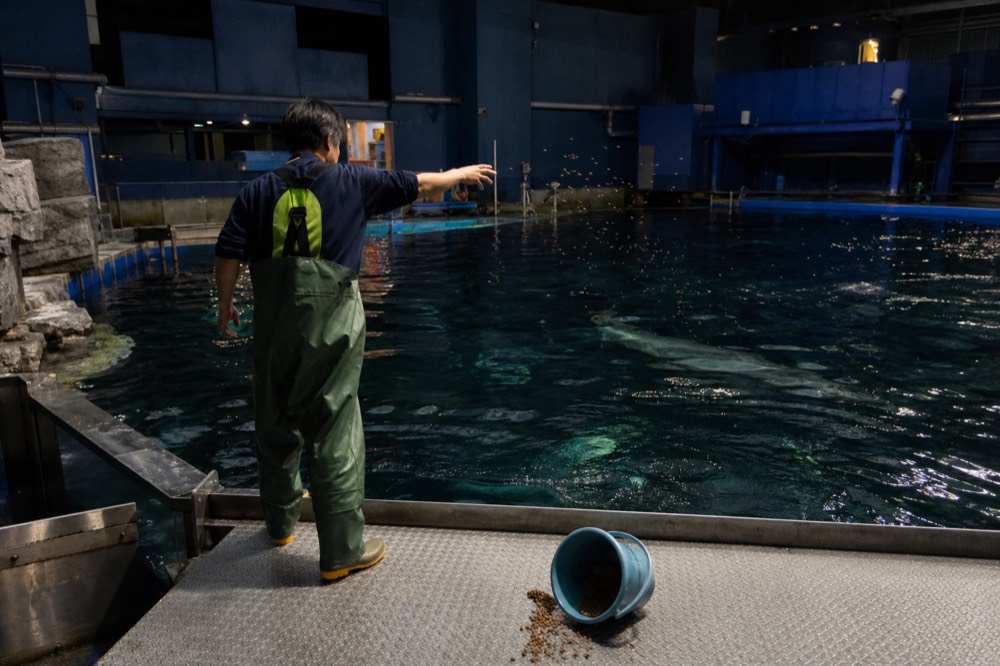
The feeding schedule is published per zone and per animal, from the otters in the Japan Forest zone at 11:30, 13:30 and 15:30, to the ringed seals in the Arctic zone at 10:50 and 15:35. The aquarium's own caveat is that times may be cancelled or changed without notice depending on the animals' condition, which is itself a welfare-first framing: the animals' needs govern the schedule, not the visitors'. The published feeding timetable carries no weekday or weekend variation, which matches a consistent daily routine rather than a show-driven one.
| Zone | Animal | Published feeding times |
|---|---|---|
| Japan Forest (7F) | Otter | 11:30, 13:30, 15:30 |
| Monterey Bay (7F) | Sea lion and seal | 09:50, 13:20, 14:50 |
| Antarctica (7F) | Penguin | 10:00, 14:20 |
| Tasman Sea (7F) | Pacific white-sided dolphin | 11:40, 14:00, 16:30 |
| Arctic Region (4F) | Ringed seal | 10:50, 15:35 |
| Falkland Islands (4F) | Southern rockhopper penguin | 10:50, 15:10 |
The keeper notes are where the record becomes personal rather than institutional. A June 2026 post describes Yuki, the ringed seal that went viral online, eating well and curling her hind flippers during feeding, and names her tankmates Arare and Moya. No death notice for her appears anywhere in Kaiyukan's 2026 news archive. Honest phrasing matters here: she was alive and on exhibit when Kaiyukan last wrote about her, in June 2026, and that is the most that can be said without inventing a present-tense guarantee.
Recent arrivals are also disclosed. Two sand tiger sharks, a 2.7 m female and a 2.5 m male, arrived in May 2025 from Tokai University Marine Science Museum, the first time Kaiyukan has exhibited the species. A 97 cm male ocean sunfish arrived on 4 July 2025 from the aquarium's own Iburi Center. Transfer between a research institute and a display tank is normal practice in the industry, and critics and defenders read it in opposite ways: as a closed and transparent supply chain, or as the machinery of capture. Both readings are fair.
The 2026 news archive also shows an uncomfortable fact reported plainly: the Aleutian Islands tank is closed for renovation and its animals are being moved to Aquaworld Ibaraki Oarai Aquarium. Animal moves happen, and Kaiyukan discloses them, which is the transparency pattern again rather than a welfare verdict.
What about the whale sharks specifically?
At Kaiyukan's last published measurement, on 31 October 2025, the Pacific Ocean tank held two whale sharks: Kai, a male at 5 m 30 cm, and Yu, a female at 6 m 20 cm. Kaiyukan rotates whale sharks, returning individuals to the sea, so the count is date-scoped and the aquarium does not present its whales as a permanent collection.
Kaiyukan's measurement article is the newest official statement of the count. If a future news item announces an arrival, a release or a transfer, that item supersedes this page.
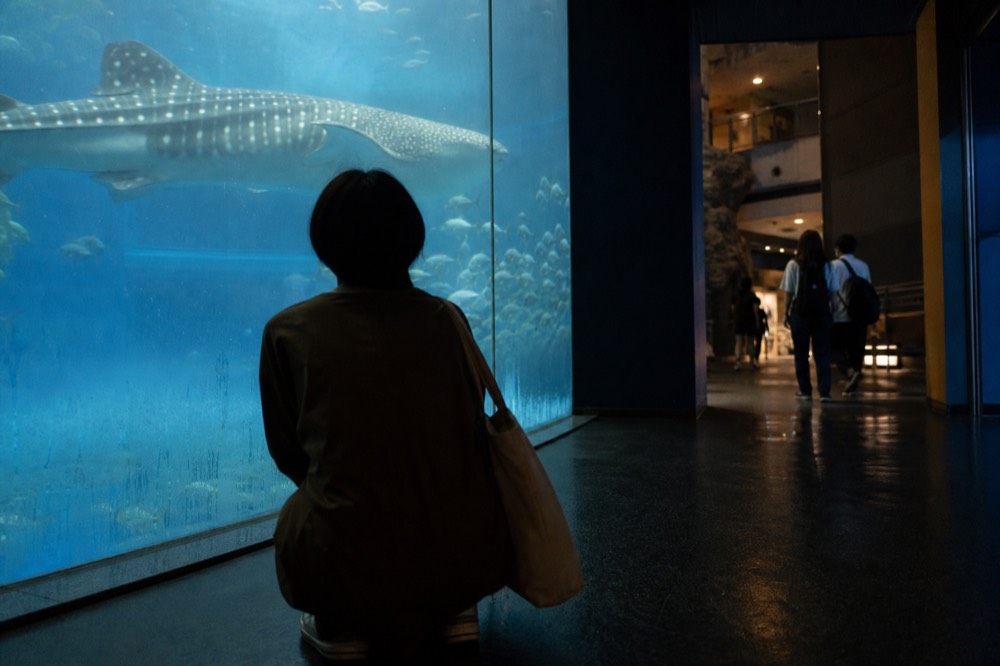
On the welfare question, the honest position is that no published measurement settles it. A 5,400-ton tank with a 34 m maximum length and 9 m depth is enormous by aquarium standards, the largest class of tank in Japan, and it is still a vanishingly small fraction of the range a whale shark uses in the open ocean. Kaiyukan's own published viewing tip, that the whale sharks feed at the surface and upend vertically to suck in food, describes a natural feeding posture reproduced in the tank. Whether reproduction of a posture is reproduction of a life is the question, and it is a values question, not a data question.
There is a paid add-on that bears on the ethics of viewing itself: the Jinbei Backyard ticket, which takes holders behind the Pacific Ocean tank to see the whale sharks from above the water on scheduled dates only. If observing husbandry from the staff side appeals to you, it is the closest a general visitor gets, and its existence, priced and scheduled rather than unrestricted, suggests the aquarium limits above-water access deliberately.
How should an ethically minded visitor decide?
Decide on three checkable things rather than on mood: the accreditation gap (JAZA yes, WAZA no), the disclosure record (published measurements, feeding timetables, keeper notes and animal moves), and your own position on large-animal display, which no aquarium can settle for you. Then, if you go, go at times and in ways that put less pressure on the animals.
If the accreditation question is your main gate, the answer is a mixed one and you should know it before buying. JAZA membership means Kaiyukan sits inside Japan's standards framework for zoos and aquariums. The absence from WAZA means it does not hold the global body's direct endorsement, even though JAZA itself belongs to WAZA. Anyone who tells you Kaiyukan "is WAZA accredited" is wrong; anyone who tells you it is outside every standards body is also wrong. The verifiable position is in between.
Practical choices matter too. Re-entry ended on 15 June 2026 and admission now runs in 15-minute capped time slots, both explicitly to control crowding, so a timed ticket is not just a convenience, it is the mechanism the aquarium itself chose to reduce visitor pressure on the tanks. Quieter weekday mornings give you more viewing space at the glass and fewer people pressed against it. The touch pool in the Maldives zone, where visitors can touch sharks and rays, has hand-washing stations beside it, and skipping it is a legitimate personal choice if hands-on animal contact is outside your ethics.
Visitors who want the ticket handled in advance can compare the three age tiers on the live listing, since Kaiyukan's own gate prices move with its demand-based calendar.
For a deeper look at the animals themselves, the site's guide to the whale sharks at Kaiyukan covers the measurement record in full, and is Kaiyukan worth visiting? weighs the experience on its own terms. If the accreditation question has sharpened your interest in how Kaiyukan compares with its peers, the best aquariums in Japan guide includes several that, unlike Kaiyukan, charge a single flat adult price with no demand-based calendar, a contrast worth knowing about before you judge any of them.
So is Kaiyukan ethical?
The honest answer is that Kaiyukan is a well-documented, transparently run facility inside a practice, large-animal aquarium display, whose ethics remain genuinely contested. Its JAZA membership, published husbandry record and disclosed animal moves are verifiable strengths. Its non-membership in WAZA and the whale shark question are verifiable gaps. Neither side of this debate is being dishonest, and your decision should name which evidence you weight more heavily.
If you go, two things are within your control. First, buy a timed e-ticket rather than queuing at the counter, because the capped-slot system is the aquarium's own crowding control and it works better when visitors use it. The Osaka Aquarium Kaiyukan Ticket is rated 4.8 across about 14,894 reviews and, per the aquarium's own ticket-seller warning, the operator's listing route is one of the small number of legitimate ways to buy, a real consumer-protection point in a market where a fake Kaiyukan site was defrauding overseas visitors in 2026. Second, spend the time the building asks for: Kaiyukan itself budgets 90 to 120 minutes for a visit, and the quiet upper floors at the start of the route give the best view of the whale sharks feeding at the surface, which is both the aquarium's most defended practice and its most criticized one, in a single moment.
However you decide, decide on the record rather than on the marketing, because the record here is unusually public for a facility of this kind.
The short answers: Kaiyukan is a JAZA member but not a WAZA member, it holds a 1994 museum-equivalent certification from Osaka Prefecture, and its last published whale shark count, from 31 October 2025, is two animals. Its welfare record is unusually well disclosed through feeding timetables, keeper notes and dated measurements, while the underlying debate about large-animal display remains open. The questions below cover the specifics.
Common questions about Kaiyukan's ethics and accreditation
Is Kaiyukan ethical, and is it accredited?
Kaiyukan is a member of the Japanese Association of Zoos and Aquariums (JAZA) and is not a member of WAZA, the global body, though JAZA itself belongs to WAZA. Its animal-care record is unusually well disclosed, with published measurements, feeding timetables and keeper notes, while the ethics of keeping whale sharks in any tank remain genuinely contested. Both facts should shape your decision.
Is Kaiyukan a member of WAZA?
No. WAZA's own member directory, which runs to 358 entries, contains no mention of Kaiyukan. Anyone claiming direct WAZA accreditation for Kaiyukan is mistaken. The accurate wording is that Kaiyukan is a JAZA member, and JAZA is itself a WAZA association member, making the link indirect.
Does Kaiyukan have any official certification?
Yes, two kinds. It has been a JAZA member since at least its current directory listings, which publish no joining date, and on 1 July 1994 the Osaka Prefectural Board of Education certified it as a museum-equivalent facility. The museum designation is regulatory rather than an animal-welfare credential.
How many whale sharks does Kaiyukan keep?
At Kaiyukan's last published measurement, taken on 31 October 2025, the Pacific Ocean tank held exactly two: Kai, a male of 5 m 30 cm, and Yu, a female of 6 m 20 cm. Kaiyukan rotates whale sharks over time and returns individuals to the sea, so the count is date-scoped rather than permanent.
What animal-welfare practices can visitors actually verify?
The published per-zone feeding timetable, dated animal measurements, keeper notes naming individual animals, and disclosed moves such as the Aleutian Islands tank animals transferring to Aquaworld Ibaraki Oarai during renovation. Seawater is also trucked in, about 350 tons per delivery run, because the adjacent river mouth is too variable to use.
Do ethical visitors need to book differently?
Timed e-tickets help rather than hinder. Since 15 June 2026 Kaiyukan has sold admission in 15-minute capped slots and ended same-day re-entry, both explicitly to reduce crowding inside the building, so advance booking is the mechanism the aquarium itself chose for visitor-pressure control.