Kaiyukan tickets: prices, tiers and how timed entry works
There is no single Osaka Aquarium ticket price. Kaiyukan runs demand-based pricing on a date-by-date calendar, sells entry in capped 15-minute slots, and splits admission into three age tiers. Here is what each of those things means for the ticket you actually buy.
Short answer
An adult Osaka Aquarium ticket costs ¥2,800 to ¥3,500 depending on the date, with more than three quarters of currently bookable dates at ¥2,800. Children aged 7 to 15 pay ¥1,400 to ¥1,800, ages 3 to 6 pay ¥700 to ¥900, and under 2 enters free. Every ticket is for a specific 15-minute admission slot.
Kaiyukan sells admission the way an airline sells seats: the same building costs different amounts on different days, entry is tied to a specific 15-minute window, and the cheapest tier is not the adult ticket most people assume they are buying. Most ticket pages get at least one of those facts wrong, usually by printing a single "gate price" that no visitor is actually charged on the dates they can book.
This guide lays out the numbers the aquarium itself publishes: the price levels and how often each one occurs, what the three age tiers cover, how the timed-entry system works in practice, where tickets can legitimately be bought, and which discounts genuinely apply.
What does a Kaiyukan ticket actually include?
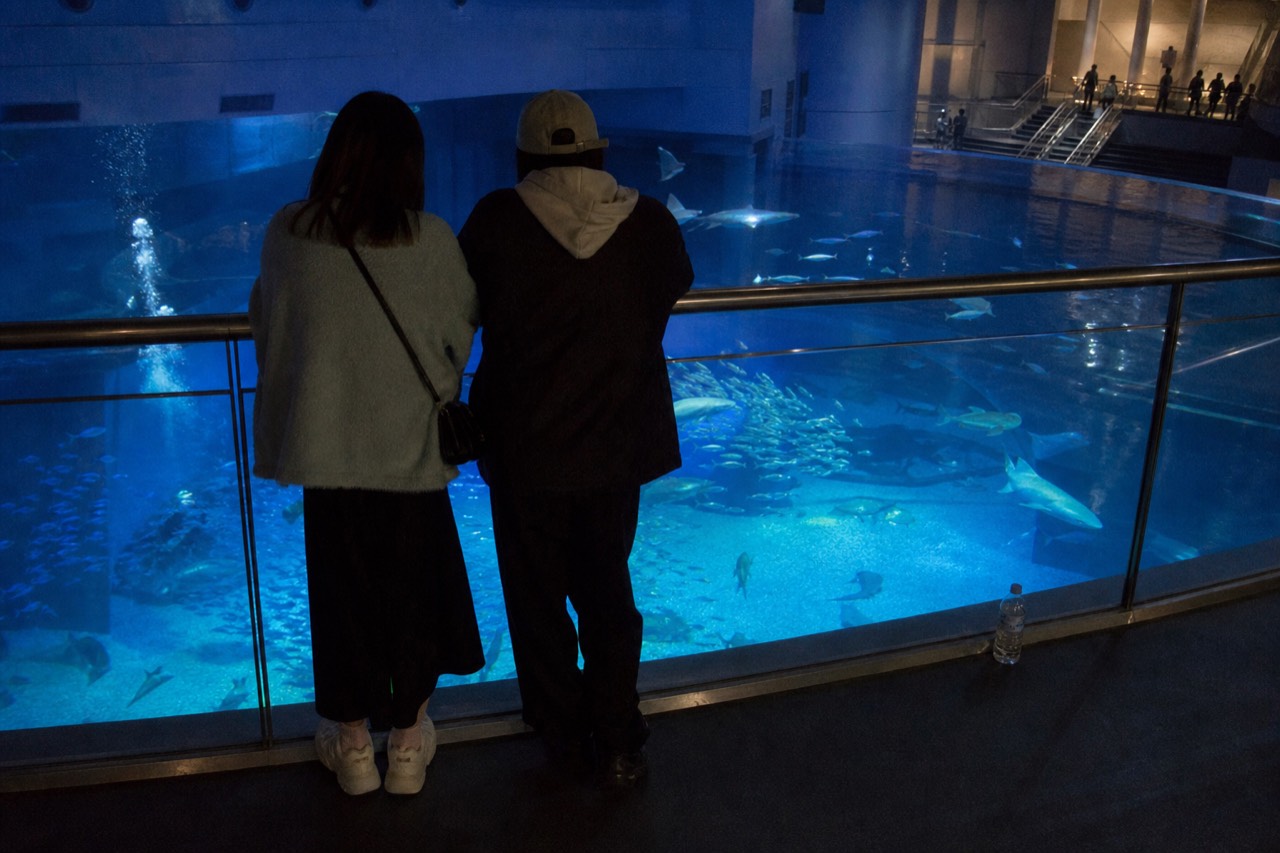
A Kaiyukan ticket buys one timed entry to all 19 exhibition areas of the aquarium, following the spiral route from the 8th floor down around the 5,400-ton Pacific Ocean tank, with no time limit inside and no re-entry once you leave the exhibition area. It covers roughly 620 species and 30,000 animals across 14 tanks in a building that holds about 11,000 tons of water in total. What it does not include is anything at Tempozan Marketplace, the Ferris wheel, or the boat attractions, which are separate operators with separate tickets.
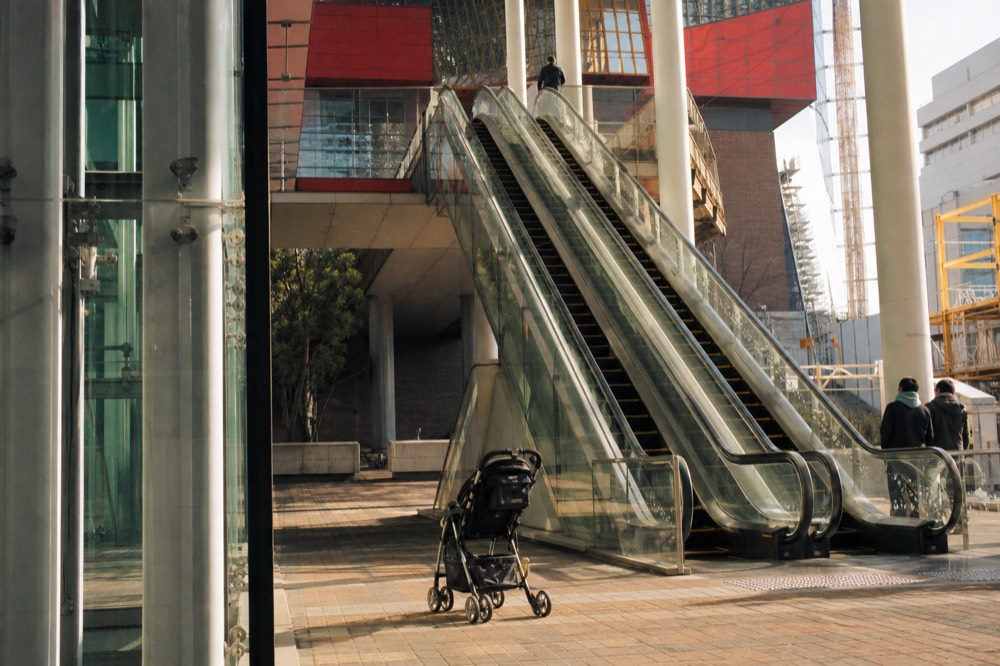
The ticket also buys a fixed structure rather than a free wander. You enter through the Entrance Building 3F, pass the Aqua Gate tunnel tank, ride an escalator to the 8th floor, then walk down floor by floor, 8F to 3F, circling the central Pacific Ocean tank and seeing it at different depths. The route ends at the Entrance Building 4F and out at 3F. Kaiyukan itself budgets 90 to 120 minutes for a visit, which matches what the time-to-spend question usually resolves to for most parties.
Two inclusions are easy to miss. First, the current ticketed special exhibition counts as one of those 19 areas, so it is part of admission, not an upcharge. Second, the Jinbei Backyard ticket, which takes you behind the Pacific Ocean tank to see the whale sharks from above the water on scheduled dates, is a paid extra sold separately, not something a standard ticket grants.
One exclusion matters more than the rest: re-entry ended on 15 June 2026, so a ticket is a single pass through. Once you exit the exhibition area, that ticket is finished. Planning a full day around Osaka Aquarium means treating the visit as one block, with the rest of Tempozan before or after.
How much do Osaka's Kaiyukan tickets cost?
Adult admission runs ¥2,800 to ¥3,500 on the dates you can currently book, and more than three quarters of those bookable dates sit at the ¥2,800 level, which makes the date you choose the single biggest factor in what you pay. Children aged 7 to 15 pay ¥1,400 to ¥1,800, and ages 3 to 6 pay ¥700 to ¥900, all moving together on the same calendar. Under 2 enters free. The price depends entirely on the date, because Kaiyukan runs demand-based variable pricing on a calendar published roughly two months ahead.
The aquarium explains the system in its own words on its official ticket page: it sets prices at a level appropriate to demand so that as many visitors as possible can come. In practice that means a price ladder, and only certain rungs appear in the bookable window. Here is the distribution across the 59 dates currently on sale:
| Adult (16+) | Child (7-15) | Young child (3-6) | How often it comes up |
|---|---|---|---|
| ¥2,800 | ¥1,400 | ¥700 | The most common level, 83% of the 59 dates on sale |
| ¥2,900 | ¥1,500 | ¥700 | A handful of moderately busy dates |
| ¥3,200 | ¥1,650 | ¥800 | A few high-demand dates |
| ¥3,500 | ¥1,800 | ¥900 | Peak dates only, clustered on public holidays |
Two consequences follow. First, if you can pick your date, a weekday on a cheaper rung saves a family real money, because every tier moves up together on the dearer dates and the differences compound across a party. Second, past the end of the published calendar nobody outside the aquarium knows the price, because Kaiyukan simply has not published those dates yet. Any page quoting a single firm price for "Kaiyukan" is quoting a level that may not be bookable at all: the ¥2,700 level that appears in older guides does not occur on any currently bookable date.
The dearest dates cluster around Japanese public holidays and school breaks, which is where demand pushes the ladder to its top rung. The cheapest strategy is therefore the same as the quietest strategy described in the best time to visit question: a midweek date away from holiday clusters.
On the resale side, the ticket this site carries, the Osaka Aquarium Kaiyukan Ticket, is rated 4.8 across about 14,894 reviews and is sold by one of the few resellers the aquarium itself names as authorized. Its headline "from" price belongs to the young-child tier, ages 3 to 6, not the adult ticket; the adult version lists at about $18, which tracks the ¥2,800 gate level at current exchange rates.
What are the three age tiers and which does your party need?
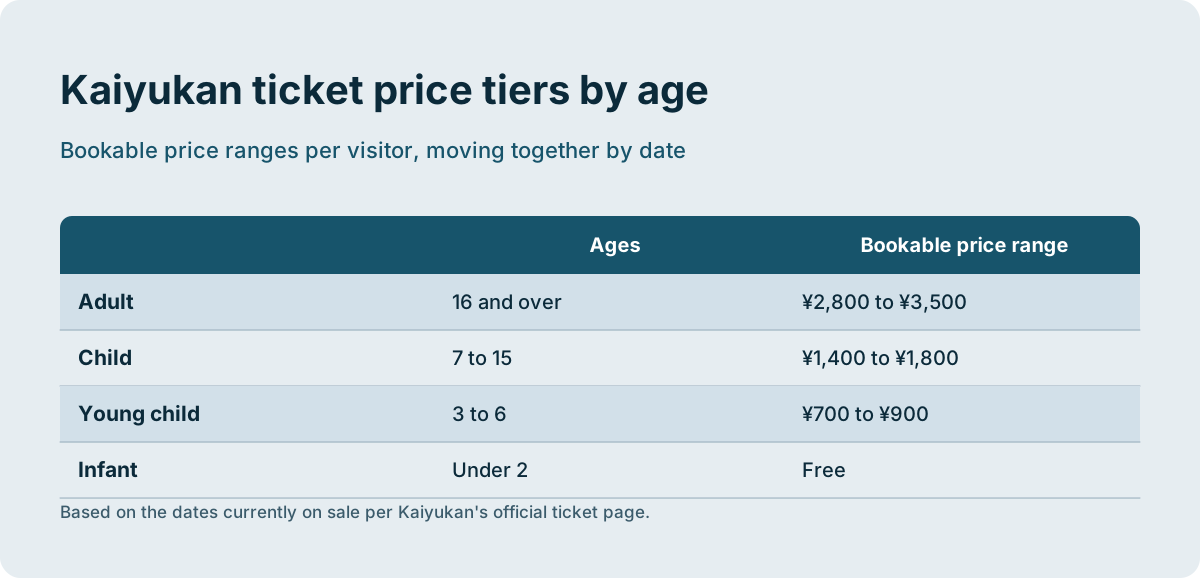
Kaiyukan sells exactly three purchasable age tiers: adult at 16 and over, child at 7 to 15, and young child at 3 to 6. Children under 2 enter free and need no ticket at all. To pick the right tier for your party, simply match each visitor's age to these bands: anyone 16 or older needs an adult ticket, ages 7 to 15 need a child ticket, and ages 3 to 6 need a young child ticket. The boundaries are strict, they differ from what many other attractions use, and a 16-year-old counts as an adult here even while other venues in the same city still class them as a child. It is worth checking each person in your party against them before buying rather than at the gate.
| Tier | Ages | Bookable price range | Notes |
|---|---|---|---|
| Adult | 16 and over | ¥2,800 to ¥3,500 | High school students count as adults here, not as children |
| Child | 7 to 15 | ¥1,400 to ¥1,800 | Covers elementary and junior-high ages |
| Young child | 3 to 6 | ¥700 to ¥900 | The tier behind the lowest "from" prices seen online |
| Infant | Under 2 | Free | Not a purchasable ticket, no booking needed |
The two boundaries that catch visitors out are the top and the bottom. A 16-year-old high school student is an adult for Kaiyukan pricing purposes, even if other attractions in the city still class them as a child. And a child who turns 7 before the visit date needs the child tier, not the young-child tier, so book against the age on the day of the visit, not the age at booking.
For mixed parties, the arithmetic is simple once you have your date: count adults at the date's adult price, count 7-to-15-year-olds at the child price, count 3-to-6-year-olds at the young-child price, and add nothing for anyone under 2. On a ¥2,800 day, a family of two adults, one 10-year-old and one 4-year-old pays two adult tickets at ¥2,800 each, one child ticket at ¥1,400, and one young-child ticket at ¥700, four line items in total.
What is a timed-entry slot and how does it work?
Every Kaiyukan ticket carries a specific 15-minute admission window with a capped number of tickets sold per slot, a system the aquarium introduced explicitly to control crowding and cut queueing, and you enter within your assigned window rather than whenever you happen to arrive. The slot is printed on the ticket, official e-tickets go on sale roughly 30 days before the visit date, and same-day counter tickets are sold only from opening until last admission if the day has not sold out.
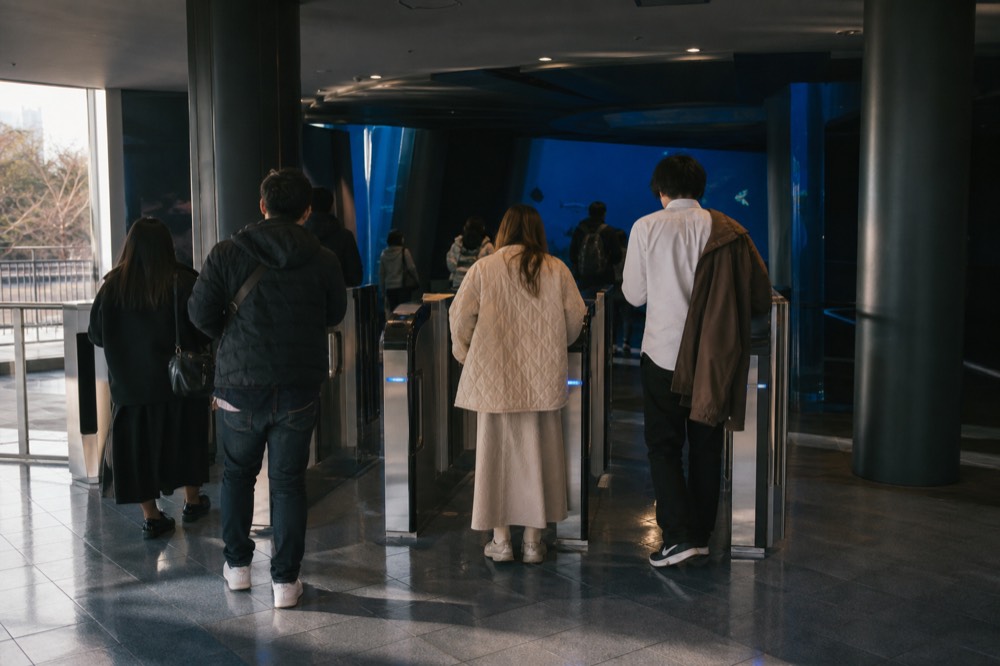
In practice the system is forgiving in one direction only. Arriving inside your 15-minute window gets you in with a scan of the ticket's QR code; arriving late is the risk, because the cap exists precisely to spread arrivals, and a missed slot on a sold-out day can mean a long wait for the next available window. Official e-tickets let you change the date and time later from your booking page, which is the escape hatch worth knowing about if your plans shift.
The 30-day sales horizon sets your planning rhythm: for a specific date, especially a weekend or a holiday-cluster day, booking inside that window is the reliable route. The advance-booking question covers when this genuinely matters, but the short version is that weekday visits outside peak season are the least likely to sell out.
One structural detail follows from the slots: because entry is metered in 15-minute blocks, the queue at the gate moves in waves rather than as a continuous line. A slot early in the morning or late in the afternoon tends to mean a shorter scan-in wait than a mid-morning slot, whatever the price level of the day.
Where should you buy your ticket?
Buy either from the aquarium's own site or from one of the small number of resellers it officially names as authorized, because Kaiyukan has publicly warned that tickets from unauthorized resellers, auctions and non-official travel agencies will not admit you. The aquarium's news page names its legitimate routes as its own website plus three authorized travel sellers, and it warns specifically about a fraudulent lookalike site targeting overseas visitors, so the source of the ticket matters as much as the price.
The warning is not boilerplate. Tickets bought through unauthorized resale channels can be refused at the gate, and the aquarium states plainly that it takes no responsibility for them. The safe options are the official site, the authorized resellers, or the gate counter on the day, accepting the risk that a popular day has sold out.
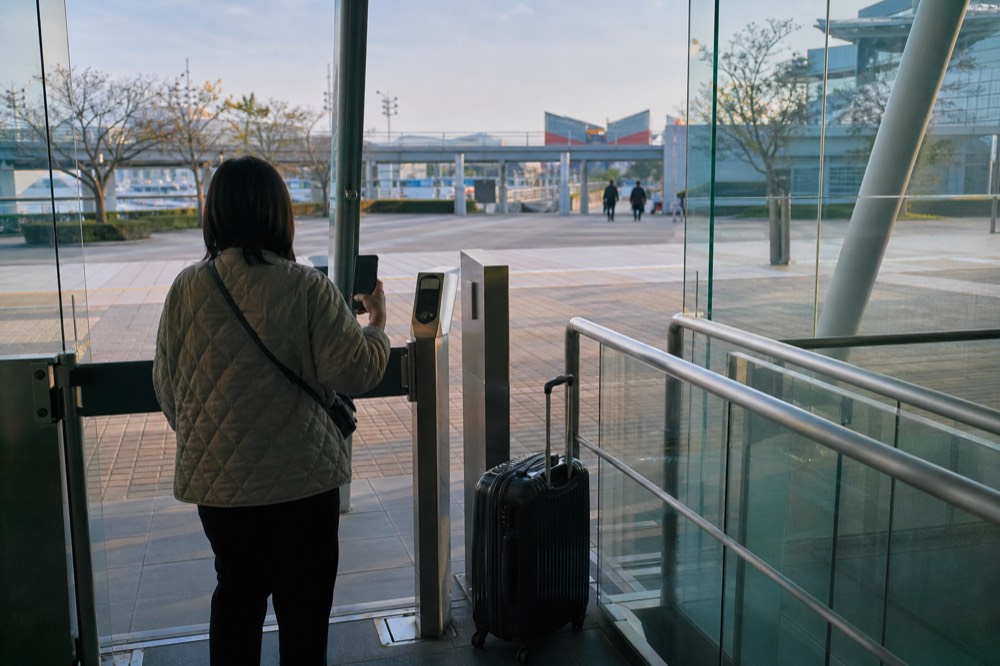
Why buy ahead from a reseller at all, when the official site exists? Two practical reasons. Resale tickets are priced in your own currency and can be held in one app alongside everything else in your trip, and on busy days a pre-purchased timed ticket means walking past the purchase queue entirely. The price is comparable to the gate level for the date, so the choice is about convenience rather than savings.
Whichever route you choose, the ticket that arrives should carry a date, a 15-minute time window, and a QR code. If a listing shows none of those three things, it is not a Kaiyukan timed-entry ticket and you should treat it with suspicion regardless of how official the site looks.
Do combo tickets save money?
Kaiyukan sells exactly three official set tickets, pairing admission with the Santa Maria cruise ship, LEGOLAND Discovery Center Osaka, or the Captain Line shuttle ferry, and each one adds a fixed amount to that day's admission price rather than offering a flat bundle rate. Because the set price moves with the admission calendar, a combo is cheapest on a ¥2,800 day and dearest on a ¥3,500 day, so the saving itself depends on the date you pick. Run the numbers for your own date before assuming a bargain.
| Set | Adult add-on | Notes |
|---|---|---|
| Kaiyukan + Santa Maria | ¥1,500 | 45-minute day cruise from the Kaiyukan West Wharf; elementary add-on ¥750 |
| Kaiyukan + LEGOLAND Osaka | ¥2,800 | Same add-on for all tiers, ¥3,000 on four peak days |
| Kaiyukan + Captain Line | ¥900 | Shuttle ferry from Universal City Port; elementary ¥500, preschool ¥400 |
Run the arithmetic before assuming a saving. On a ¥2,800 adult day, the Santa Maria set totals ¥4,300, and with the standalone adult cruise fare at ¥1,800 the set comes in below buying the two separately. The LEGOLAND set, which totals ¥5,600 on most October days, is the biggest-ticket combo and only pays off if the whole party genuinely wants both venues, and LEGOLAND requires adults to enter with a child. The Captain Line set mostly appeals if you are staying on the Universal Studios Japan side of the harbour and want the roughly 10-minute ferry crossing included.
One combo that does not exist, despite what some listings imply: there is no Kaiyukan plus Ferris Wheel set ticket. Kaiyukan's own ticket page lists exactly three sets, and the wheel's operator sells no such pairing either. The wheel is a separate fare, covered along with the rest of the harbour in the Tempozan guide.
Do passes or discounts apply?
The Osaka Amazing Pass does not include Kaiyukan and gives no discount on it, so a pass holder still pays the full gate price; the only standing price reduction is the disability discount, which halves admission for qualifying booklet or app holders plus one carer. The pass does cover the Tempozan Giant Ferris Wheel next door and the metro ride to Osakako Station, which makes it additive to a Kaiyukan ticket rather than a substitute for one. There is no student rate, no senior rate and no online-only saving at the gate.
The pass question comes up constantly because the pass covers 41 facilities, and Kaiyukan's absence surprises people. The pass's own free-admission list and its special-offer list both omit Kaiyukan entirely, so the honest framing is that a 1-day pass at ¥3,500 and a Kaiyukan ticket at ¥2,800 to ¥3,500 stack on top of each other. The full picture, including the NIFREL comparison, is in the Amazing Pass guide.
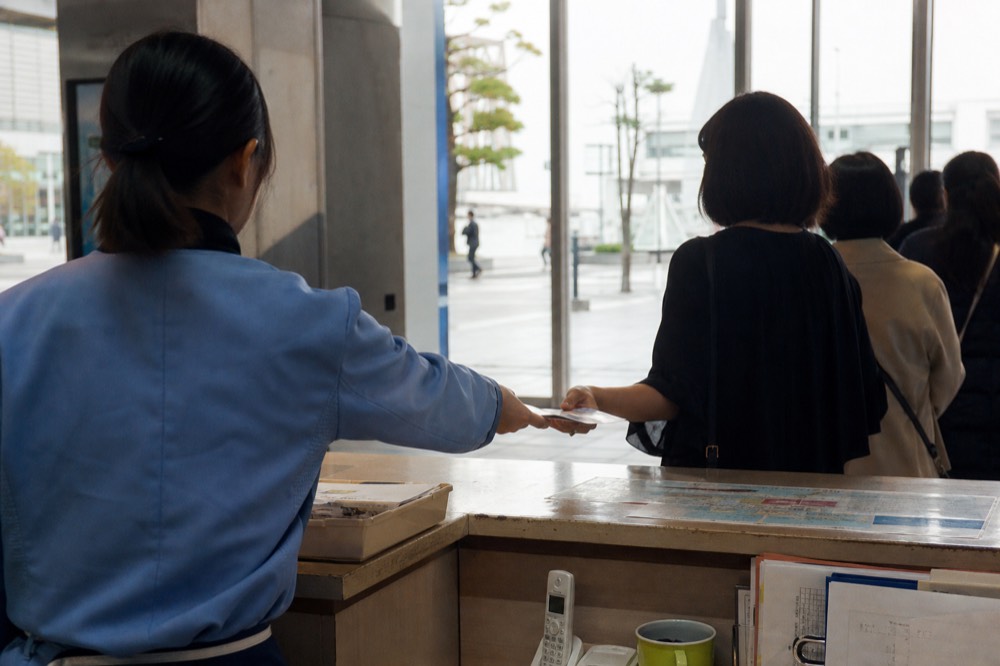
The disability discount is the one genuine standing reduction: holders of the relevant Japanese disability booklets, or the Mirairo ID app or MynaPortal record, plus one accompanying carer, each pay half the day's price. Physical booklet or app record is required, and screenshots or printouts are not accepted. A My Number card alone does not qualify.
Beyond that, there is no student discount, no senior rate and no online-only saving at the gate itself. The only lever that reliably changes what you pay is the date you choose, which is why the price ladder earlier in this guide matters more than any discount hunt.
Which rules changed in 2026 and how do they affect your ticket?
Three 2026 changes affect ticket holders directly: same-day re-entry ended on 15 June, timed 15-minute slots with per-slot caps became the standard admission system, and a bag-size rule took effect on 24 April banning suitcases and any item whose three sides total 120 cm or more. Each one changes how a visit plays out more than most advance planning accounts for, and two of the three have no workaround once you are at the gate.**
The re-entry change is the one that reshapes a day at Tempozan. Before June 2026 you could leave for lunch at the Marketplace food alley and come back in; now the aquarium is a single continuous visit. Eat before you enter, or plan the visit as one block with the rest of Tempozan before or after. The official announcement of the change cites the timed-entry system and crowding control as the reasons.
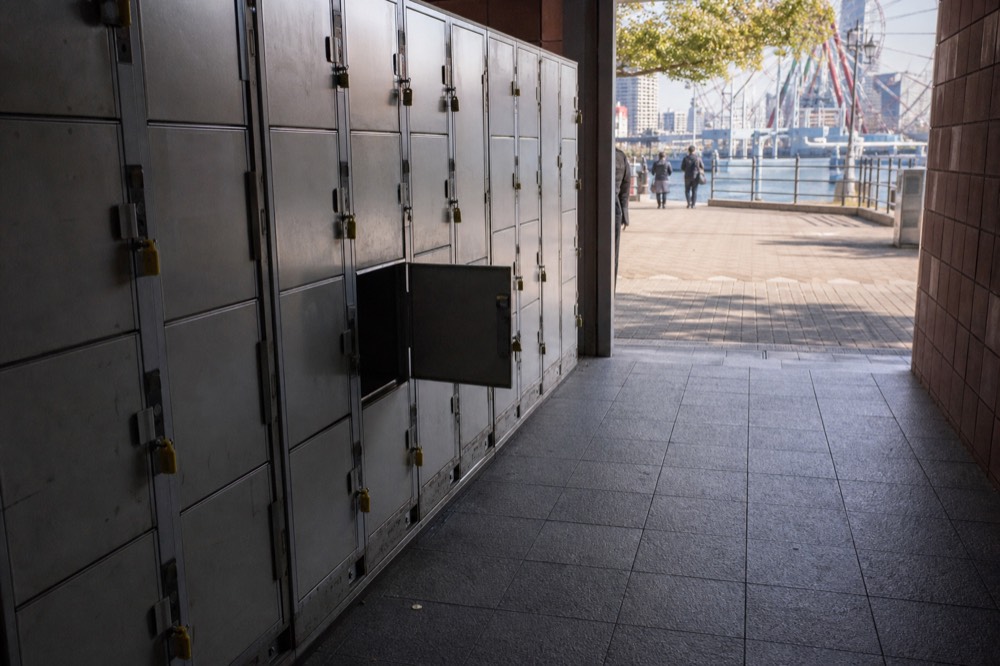
The bag rule, published on the aquarium's rules page, bans suitcases and cart-type luggage outright inside the building, plus anything with three sides totaling 120 cm or more or any single side over 70 cm, and umbrellas 120 cm or longer. Oversized bags should be left at your hotel or in the coin lockers at the entrance, in Tempozan Marketplace or under the Ferris wheel. Visitors arriving from Kansai Airport with luggage in tow are the group this catches most often.
One more date belongs on any ticket-planning calendar: Kaiyukan closes entirely on 13 and 14 January 2027 for annual maintenance, the only closure days in the twelve months of the published schedule. Opening hours otherwise vary day by day across seven distinct patterns, so check the hours guide for your specific date rather than assuming a standard opening time. Last admission is exactly one hour before closing on every day of the published calendar, a rule without exceptions.
So which ticket does your party need?
Count your party against the three tier boundaries, pick a date low on the price ladder, book a 15-minute slot inside the roughly 30-day sales window, and buy from the official site or one of the authorized resellers the aquarium names. That sentence is the whole decision; everything else on this page is detail supporting it. The tier question takes thirty seconds, the date question is where the money is, and the source question is what determines whether your ticket actually opens the gate.
For a typical family, the calculation lands like this: two adults at the date's adult price, each child placed by their age on the visit day, nothing for under-2s. On a ¥2,800 weekday, the whole family sits on the cheapest rung of every tier at once. Shift the same family to a ¥3,500 holiday date and every line item climbs to the top of its ladder. The date is the discount.
Solo adults and couples have the simplest choice and the most to gain from date flexibility, since adult pricing spans the widest absolute range, ¥2,800 to ¥3,500. Anyone adding the Santa Maria cruise or the Captain Line ferry should price the set against the standalone fares for their date before deciding, and anyone counting on a sightseeing pass to cover the aquarium should budget for the ticket separately, because no pass does.
These are the questions readers ask most often about Kaiyukan ticket prices, age tiers, timed slots and where to buy, answered with the aquarium's own published figures rather than the single-price summaries most ticket pages settle for.
Common questions about Kaiyukan tickets
How much are Osaka Aquarium tickets?
Adult tickets run ¥2,800 to ¥3,500 depending on the date, with more than three quarters of currently bookable dates at ¥2,800. Children aged 7 to 15 pay ¥1,400 to ¥1,800, ages 3 to 6 pay ¥700 to ¥900, and under 2 enters free. Kaiyukan publishes its price calendar only about two months ahead, so dates beyond that window have no published price yet.
Is there a single standard gate price for Kaiyukan?
No. Kaiyukan runs demand-based variable pricing, so the price depends on the date. The ¥2,700 figure that appears in many older guides is a real level in the historical record but does not occur on any currently bookable date, where the floor is ¥2,800.
What ages count as adults and children at Osaka Aquarium?
Adult applies to ages 16 and over, including high school students. Child covers ages 7 to 15, young child covers ages 3 to 6, and under 2 enters free. Age is measured on the day of the visit, not the day of booking.
Do I need to choose a time slot when buying a ticket?
Yes. Every ticket carries a 15-minute admission window with a capped number of tickets per slot, a system introduced to control crowding. Official e-tickets let you change the date and time later from your booking page if your plans shift.
Does the Osaka Amazing Pass cover Kaiyukan?
No. The pass's free-admission and special-offer lists both omit Kaiyukan, so pass holders pay the full gate price. The pass does cover the Tempozan Giant Ferris Wheel next door and the metro ride to Osakako Station.
Can I leave the aquarium and come back later the same day?
No. Same-day re-entry ended on 15 June 2026. A ticket is a single continuous visit, so plan meals at Tempozan Marketplace before you enter or after you finish the spiral route.