Kyoto Aquarium vs Kaiyukan: Which One to Visit
Kyoto Aquarium and Osaka Aquarium Kaiyukan sit about an hour apart by train and get compared constantly, yet they are built for different trips. One is a flat-price, compact city aquarium opened in 2012; the other is one of the largest aquariums in the world with a demand-based price calendar. Here is how they actually stack up.
Short answer
Kaiyukan is bigger on every published measure: about 620 species and 30,000 animals against Kyoto's 200 species and 10,000, and about 11,000 tons of water against Kyoto's roughly 500-ton main tank. Kyoto's edge is price certainty at 2,600 yen flat for adults, while Kaiyukan's adult price runs 2,800 to 3,500 yen depending on the date.
Two aquariums, one hour of track between them, and completely different reasons to exist. Kyoto Aquarium opened in March 2012 as an inland city aquarium a short walk from Kyoto Station; Osaka Aquarium Kaiyukan opened in July 1990 on the Osaka bay waterfront and has since passed 90 million visitors, a milestone it hit on 1 October 2025. Travellers doing a Kansai loop ask the same question in every forum: if there is time for only one, which one? The honest answer depends on what you are buying, a certain flat-price 90-minute visit or a half-day inside one of the largest tanks ever built, so this comparison sticks to stated criteria: price, scale, animals, time, access and who each one suits.
Which aquarium is bigger, Kaiyukan or Kyoto Aquarium?
Kaiyukan is larger on every axis either aquarium publishes: about 620 species and 30,000 animals against Kyoto's roughly 200 species and 10,000 animals, about 11,000 tons of total water volume against a main tank of roughly 500 tons at Kyoto, and 14 large tanks recreating 10 world regions against Kyoto's compact city-scale layout. The two are not really in the same size class, and Kyoto does not claim to be.
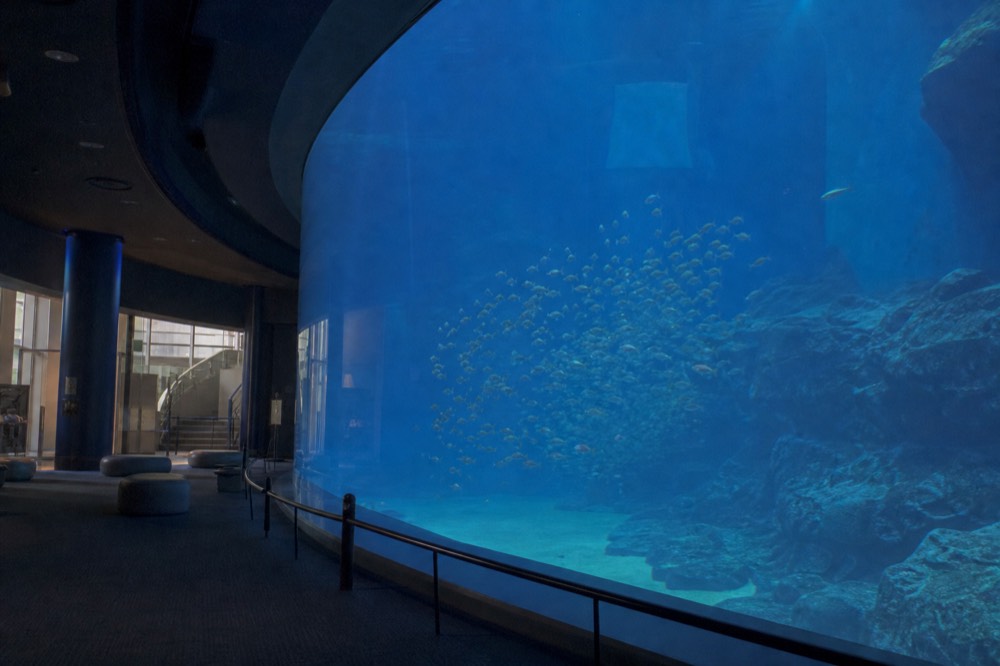
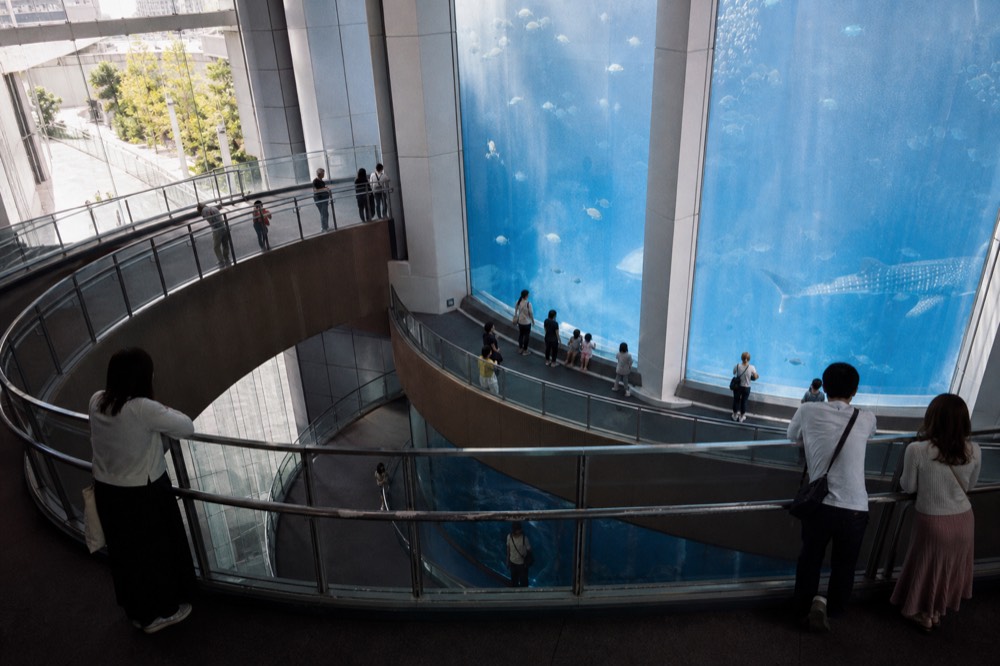
Scale is where the comparison stops being close. Kaiyukan's central "Pacific Ocean" tank alone holds 5,400 tons of water, runs to a maximum length of 34 m and reaches 9 m deep, and the building spirals eight floors down around it. Kyoto Aquarium's flagship "Kyoto Sea" tank holds about 500 tons of artificial seawater with about 50 species. Put plainly: Kaiyukan's central tank holds roughly ten times more water than Kyoto's main tank.
One caveat on Kyoto's numbers, because a careless search will trip you up. Kyoto Aquarium's own 2022 press release said about 250 species and 15,000 animals, while the operator's live overview page says about 200 species and 10,000 animals. This article uses the current page figures throughout and never mixes the two, which is exactly what Kyoto's own materials force you to choose between.
For a fuller picture of how Kaiyukan's size ranks in Japan, see our guide to the best aquariums in Japan.
How do the admission prices compare?
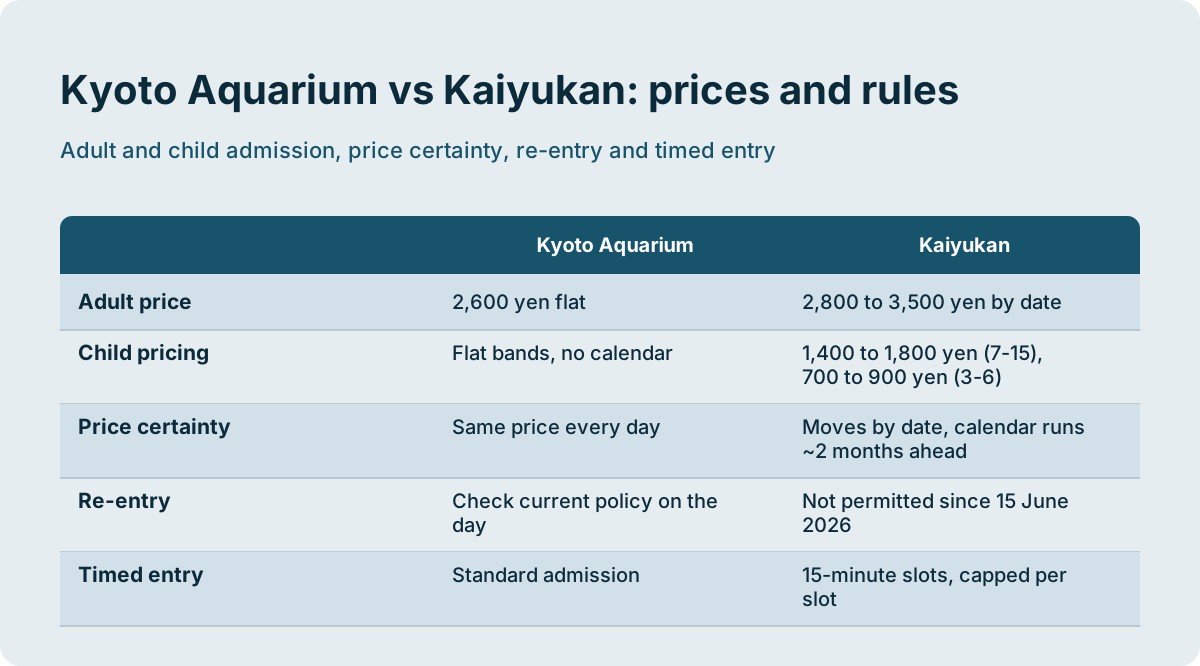
Kyoto Aquarium charges a flat 2,600 yen for adults with no date-based variation, while Kaiyukan runs a demand-based calendar: on currently bookable dates, adult admission runs 2,800 to 3,500 yen, with more than three quarters of bookable dates at 2,800 yen. Kyoto is cheaper than every bookable Kaiyukan date, and unlike Kaiyukan, its price never moves.
Kaiyukan is the outlier here. It introduced variable pricing (a "price fluctuation system," in its own words) so that the price you pay depends on the date you pick, per its official ticket page. On the dates you can actually book today, the distribution looks like this:
| Adult price | Child (7-15) | Preschool (3-6) | How often it comes up |
|---|---|---|---|
| 2,800 yen | 1,400 yen | 700 yen | The most common level, 83% of the 59 bookable dates |
| 2,900 yen | 1,500 yen | 700 yen | A handful of moderately busy dates |
| 3,200 yen | 1,650 yen | 800 yen | A few high-demand dates |
| 3,500 yen | 1,800 yen | 900 yen | Peak dates only, clustered on public holidays |
Kyoto Aquarium, by contrast, publishes a single adult figure of 2,600 yen flat, with annual passes at 5,800 yen. There is no calendar to game and no bad day to accidentally overpay on.
Two wrinkles worth knowing. First, Kaiyukan's published price calendar only runs about two months ahead, so past the end of the published window, currently 3 October 2026 to 30 November 2026, nobody outside the aquarium knows what its dates will cost; Kyoto's flat price makes planning beyond that window frictionless. Second, both venues offer discounts for disability booklet holders: Kaiyukan gives half price to the holder plus one carer, and Kyoto has its own concession structure on its price page.
One more thing travellers often get wrong: the Osaka Amazing Pass does not include Kaiyukan admission or any Kaiyukan discount, so a pass holder still pays the full gate price. We cover that in detail in Osaka Amazing Pass and Kaiyukan.
If you are leaning Kaiyukan, the ticket tiers are age-based and the entry slots are capped:
Children under 2 enter Kaiyukan free, and the preschool tier covers ages 3 to 6. The headline "from" price on the operator's live listing is the young-child tier, not the adult ticket, so read the age table carefully before comparing it against Kyoto's flat 2,600 yen adult figure.
Is Kyoto Aquarium or Kaiyukan better value for families?
For families with children aged 3 to 15, Kaiyukan's tiered child pricing usually wins on out-of-pocket cost: a preschooler pays 700 to 900 yen and a child 7 to 15 pays 1,400 to 1,800 yen, while Kyoto's child bands sit above those on most dates. For adults travelling without kids, Kyoto's 2,600 yen flat is unbeatable among the two. Family value at Kaiyukan also buys whale sharks and a touch pool.
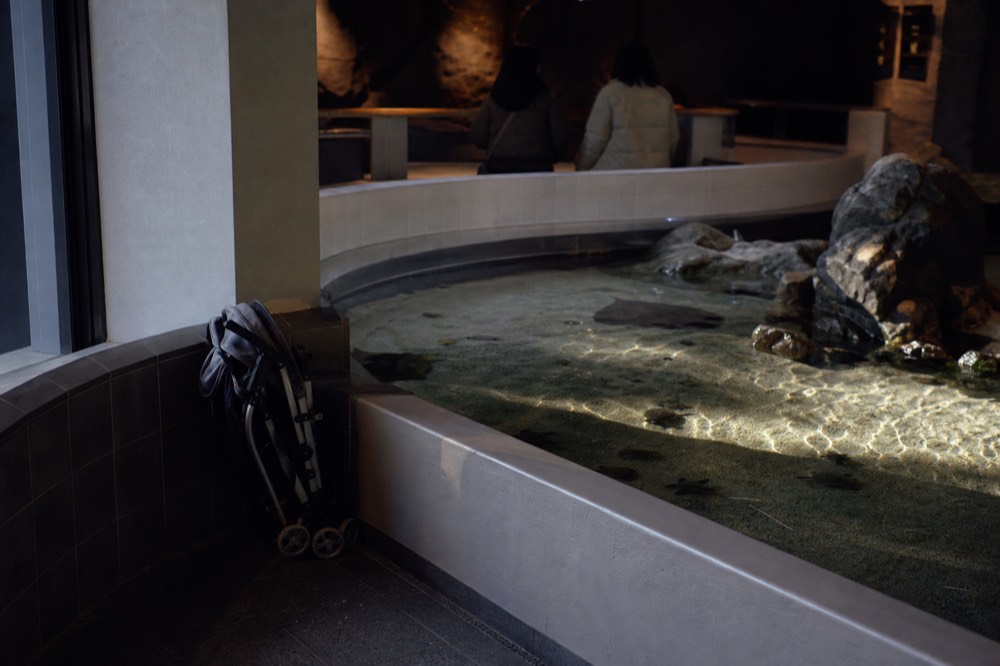
Kyoto's advantage is certainty. One price, every day, no slot-hunting, and a compact building that suits short attention spans and stroller logistics. It is the kind of aquarium you can enter on impulse on a rainy afternoon in Kyoto without consulting a price calendar first.
Kaiyukan's advantage is spectacle per yen. The extra few hundred yen an adult pays over Kyoto buys two whale sharks, a 5,400-ton central tank, ringed seals, penguins, dolphins and one of Japan's larger touch pools in the Maldives Zone, where visitors can touch sharks and rays. Kaiyukan also has a baby care room on the Entrance Building 2F with a nursing room, diaper-changing bed and formula preparation device, plus a nursing-only room behind the Aqua Gate tank inside the paid area. For more on visiting with little ones, see our guide to Kaiyukan with toddlers and young kids.
Note that Kaiyukan has no stroller rentals, and since 15 June 2026 it no longer permits same-day re-entry, timed-slot tickets and crowding measures being the stated reasons. Kyoto, being smaller and flat, is easier to exit and re-enter in practice, though you should check its current policy on the day. That re-entry change is one of several rules Kaiyukan updated in 2026, along with new bag-size limits from 24 April 2026: nothing inside with three sides totalling 120 cm or more, or any single side over 70 cm.
| Criterion | Kyoto Aquarium | Kaiyukan |
|---|---|---|
| Adult price | 2,600 yen flat | 2,800 to 3,500 yen by date |
| Child pricing | Flat bands, no calendar | 1,400 to 1,800 yen (7-15), 700 to 900 yen (3-6) |
| Price certainty | Same price every day | Moves by date, calendar runs ~2 months ahead |
| Re-entry | Check current policy on the day | Not permitted since 15 June 2026 |
| Timed entry | Standard admission | 15-minute slots, capped per slot |
How long does each visit take?
Kaiyukan itself budgets 90 to 120 minutes for a visit, though many families with feeding schedules to chase spend half a day there. Kyoto Aquarium, being compact, typically takes around 60 to 90 minutes at a relaxed pace. If your itinerary is tight, Kyoto gives you a complete aquarium experience inside a smaller time box; Kaiyukan rewards the opposite approach.
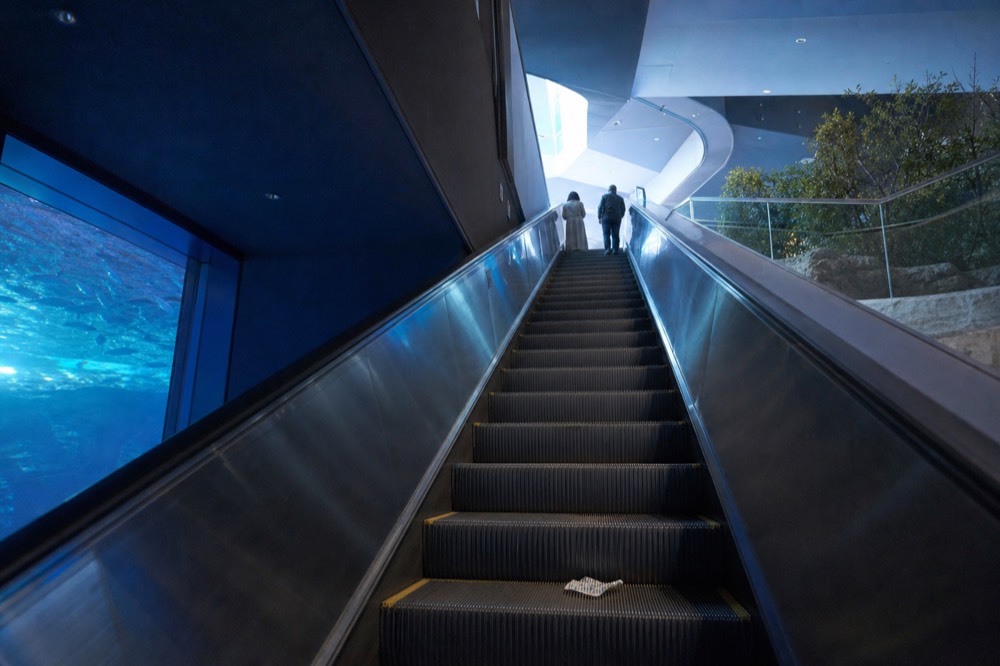
The 90 to 120 minute figure for Kaiyukan comes from the aquarium's own school-group FAQ, which is the only official duration it publishes. The route is a top-down spiral: enter on 3F, ride the escalator to 8F, then wind down floor by floor around the Pacific Ocean tank until you exit at 3F again. There is no shortcut that skips the spiral, so the building enforces its own minimum pace. Our how long to spend at Kaiyukan guide breaks down timing by travel style.
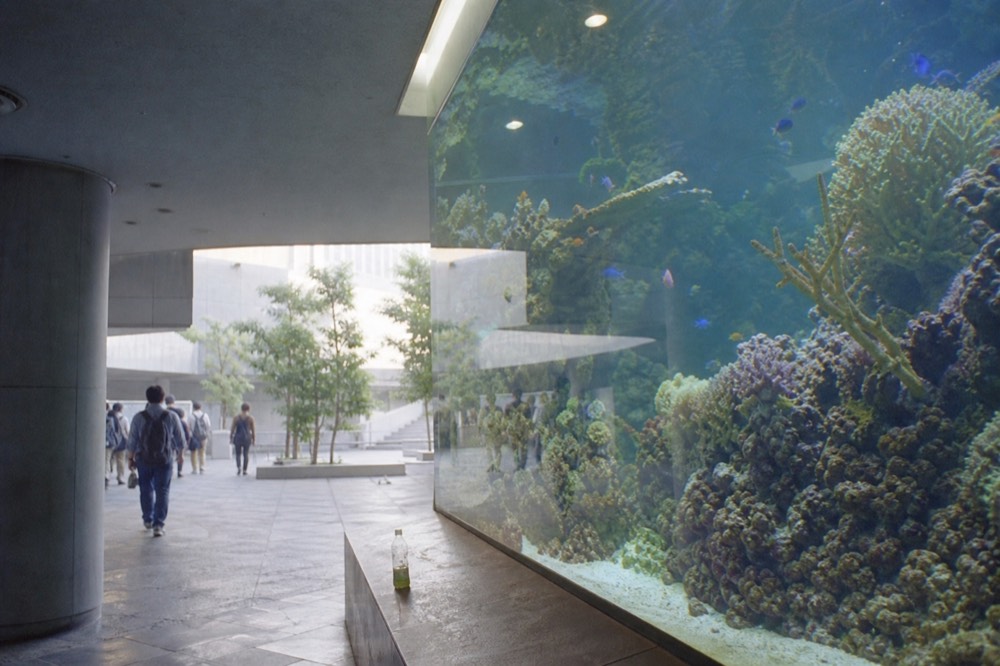
Kyoto's compactness cuts both ways. You can see the whole thing, including the dolphin pool and the Kyoto Sea tank, in about an hour without rushing, which makes it a natural add-on to a Kyoto Station morning rather than a destination in itself.
Kaiyukan also has a published feeding timetable that stretches a visit if you plan around it: otters at 11:30, 13:30 and 15:30 in Japan Forest, penguins at 10:00 and 14:20 in Antarctica, Pacific white-sided dolphins at 11:40, 14:00 and 16:30 in the Tasman Sea, and ringed seals at 10:50 and 15:35 in the Arctic Region. Kyoto runs its own presentation schedule, posted on site each day. Chasing two or three feedings at Kaiyukan easily turns a 90-minute visit into three hours.
Which aquarium has more impressive animals and tanks?
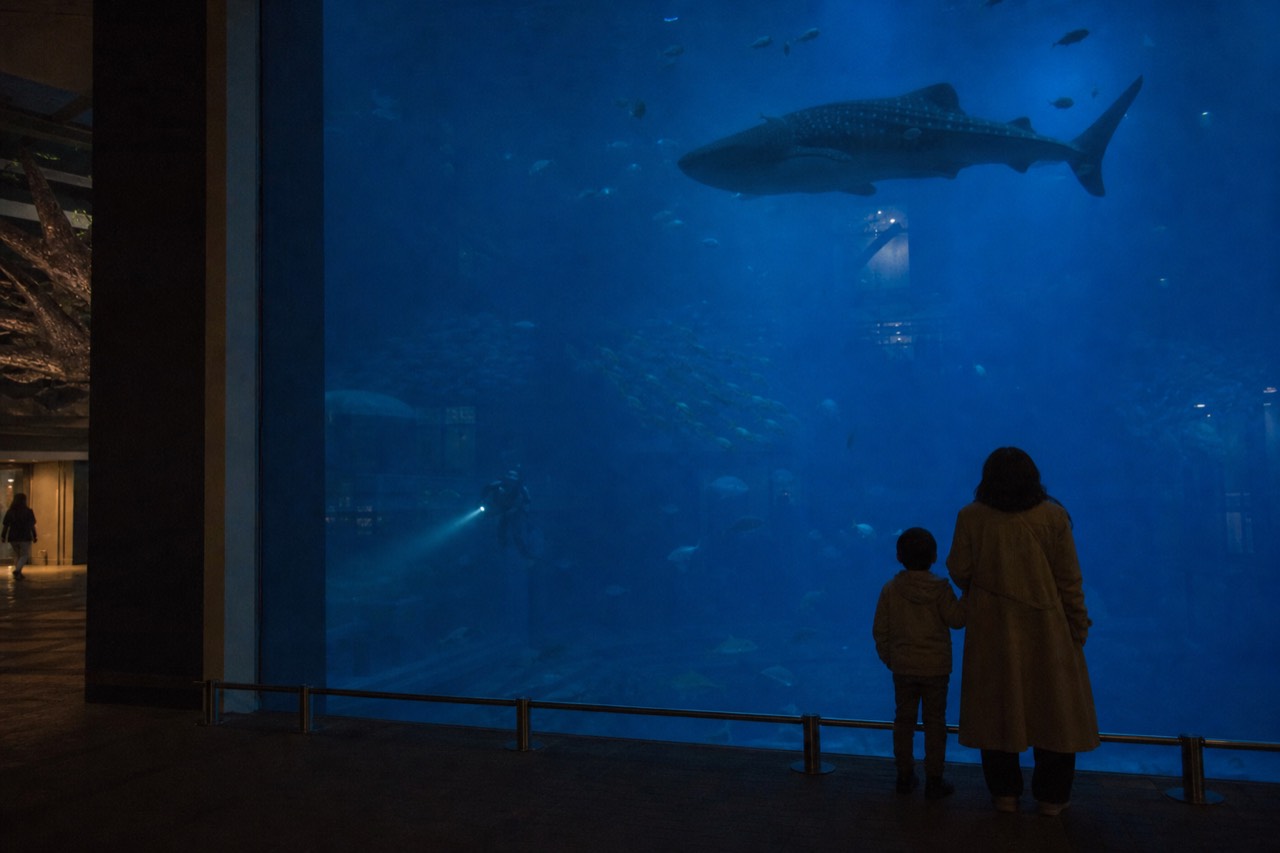
Kaiyukan's signature is two whale sharks, Kai and Yu, in a 5,400-ton, 9-metre-deep Pacific tank; Kyoto has no whale sharks and its largest tank holds roughly 500 tons. Kyoto counters with a dolphin pool and a strong regional focus on Kyoto's rivers and the Sea of Japan. On pure animal spectacle, Kaiyukan wins; on intimacy and pacing, Kyoto holds its own.
The whale sharks are the honest tiebreaker. At Kaiyukan's last published measurement, taken 31 October 2025, the tank held exactly two: Kai, a male at 5 m 30 cm and about 1,100 kg, and Yu, a female at 6 m 20 cm and about 1,800 kg. Kai arrived on 2 October 2024 and had grown 60 cm and about 400 kg by that measurement. Because Kaiyukan rotates individuals, the count deserves its date, but no 2026 news item announces any change. We cover them in depth in whale sharks at Kaiyukan.
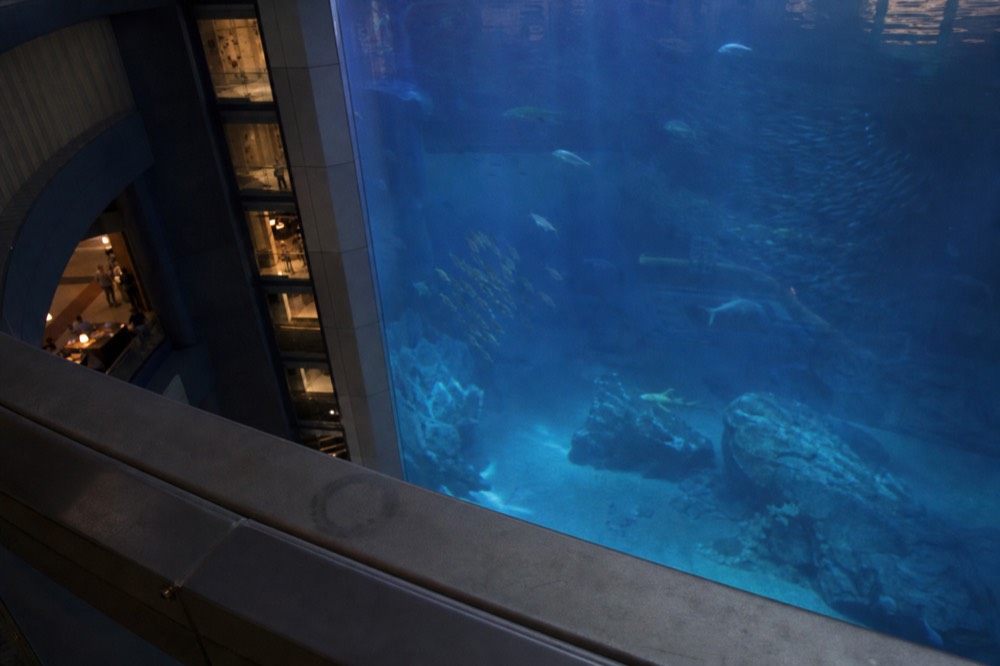
Recent arrivals keep the Pacific tank changing. Two sand tiger sharks (a 2.7 m female and a 2.5 m male) arrived in May 2025 from Tokai University Marine Science Museum, the first time Kaiyukan has exhibited the species, and a 97 cm male ocean sunfish arrived in July 2025. The viral ringed seal Yuki was alive and on exhibit in the Arctic tank when Kaiyukan's keeper blog last wrote about her in June 2026.
One honest minus for Kaiyukan: its Aleutian Islands tank is closed for renovation, with its animals moving to Aquaworld Ibaraki Oarai Aquarium. Kyoto's exhibits are all in normal operation.
Which aquarium is easier to reach?
Kaiyukan is a 5 to 10 minute walk from Osakako Station on the Osaka Metro Chuo Line, per the aquarium's own directions, with the honest caveat that the five-minute figure assumes Exit 1; Kyoto Aquarium is a 15 minute walk from Kyoto Station's central exit, which matters if you are arriving by shinkansen. Both are simple, but Kyoto wins for rail-first travellers staying near Kyoto Station.
Kaiyukan's own access page says Exit 1 of Osakako Station, about a five-minute walk. An independent route measurement from the station to the aquarium comes out at 798 m, closer to ten minutes at a normal pace if you exit on the wrong side, so allow a buffer. The station is signed "Kaiyukan-mae" and you simply head toward the giant Ferris wheel. Coming from Universal Studios Japan, the Captain Line shuttle ferry runs from Universal City Port to Kaiyukan West Pier in about ten minutes, weather permitting.
Kyoto Aquarium sits in Umekoji Park, a flat 15 minute walk west of Kyoto Station. For most Kansai itineraries the choice is really about where you are sleeping: Osaka-based visitors reach Kaiyukan by metro in under 20 minutes from central Osaka, while Kyoto-based visitors walk to Kyoto Aquarium and would need about an hour by train to reach Kaiyukan, and vice versa.
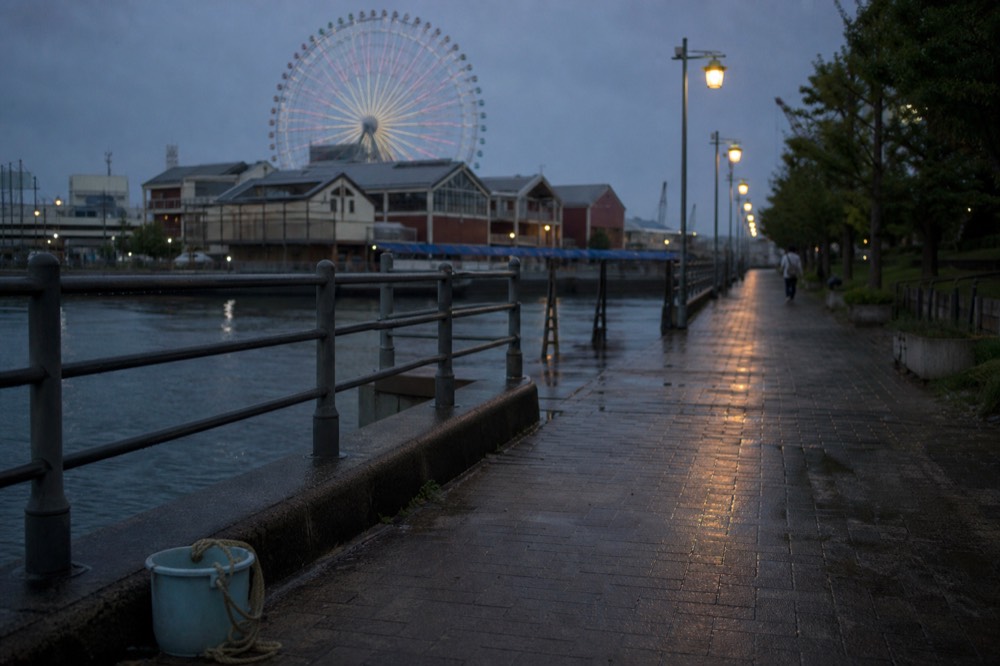
Access also shapes what else is nearby. Kaiyukan sits inside Tempozan Harbor Village with a food alley, a LEGOLAND Discovery Center, a giant Ferris wheel and a sailing-ship cruise on its doorstep, which our things to do near Kaiyukan guide covers. Kyoto Aquarium shares Umekoji Park with a railway museum, a comparable family add-on. If you are weighing other Osaka options instead, our Kyoto Aquarium vs other venues style comparisons may help.
| Access factor | Kyoto Aquarium | Kaiyukan |
|---|---|---|
| Nearest station | Kyoto Station, about 15 min walk | Osakako Station, 5 to 10 min walk |
| Line | JR and subway networks converge | Osaka Metro Chuo Line |
| From the other city | About 1 hour by train from Osaka | About 1 hour by train from Kyoto |
| Nearby extras | Umekoji Park, railway museum | Tempozan Marketplace, Ferris wheel, LEGOLAND, Santa Maria cruise |
| Parking | Local city lots | About 1,000 spaces on site, 200 yen/30 min weekdays, 2,000 yen daily max |
Which aquarium should you actually choose?
Choose Kyoto Aquarium if you want price certainty, a compact 60 to 90 minute visit, and an aquarium that fits inside a Kyoto sightseeing day without a calendar or a time slot. Choose Kaiyukan if the point of the visit is scale: whale sharks, a 5,400-ton tank, 620 species, and a half-day waterfront outing. Doing both is reasonable if your trip spans both cities.
The decision rarely comes down to quality. Both are well-run, modern, accredited operations, and Kyoto Aquarium being smaller does not make it lesser; it makes it a different product. Kyoto is a member of the Japanese Association of Zoos and Aquariums (JAZA), as is Kaiyukan. Neither is a member of the World Association of Zoos and Aquariums, so do not let any listing tell you otherwise.
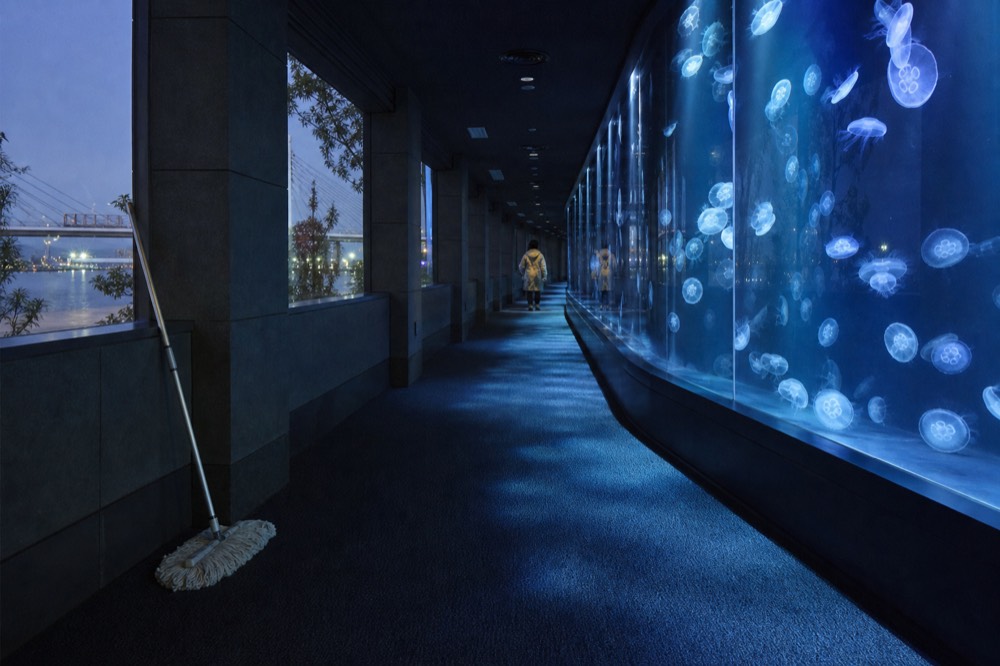
For most international travellers, the practical tiebreaker is geography plus schedule. Staying in Kyoto with one free morning: Kyoto Aquarium, no booking stress, done by lunch. Based in Osaka, or combining the bay area with Universal Studios Japan: Kaiyukan, with a timed e-ticket booked ahead because slots are capped and the aquarium itself recommends advance purchase. The official e-ticket's date and time can be changed later from the operator's My Page, which softens the planning commitment.
A family's out-of-pocket total moves with Kaiyukan's calendar: at the most common bookable level each child's ticket sits at the bottom of their band, while at the top level every tier climbs together. Check Kyoto's current child bands on its price page for the exact comparison on your date. The gap between the two venues is real but small relative to a Kansai trip's budget, and the two experiences are not substitutes.
Whichever you pick, book the slot you want early: Kaiyukan's timed tickets go on sale roughly 30 days before the visit date, and same-day counter tickets are sold only until last admission, which is exactly one hour before closing on every day of the published calendar.
The verdict, city by city
Travellers who can only visit one should default to Kaiyukan unless their itinerary never leaves Kyoto: it is bigger on every published measure and holds the region's only whale sharks. Travellers staying in Kyoto with limited time should choose Kyoto Aquarium and not lose an afternoon to a round trip. The strongest Kansai plan, if time allows, is Kyoto Aquarium on a Kyoto morning and Kaiyukan paired with the Tempozan waterfront on an Osaka day.
Budget the two visits differently. Kyoto Aquarium is a walk-in attraction for most of the year; buy at the door or online and go. Kaiyukan rewards planning: pick your date against the price calendar, book the timed slot, arrive near your slot time, and build in the feeding timetable if the kids want to see the otters or dolphins eat. Both venues accept credit cards; Kaiyukan also takes PayPay, with iD, PiTaPa and Rakuten Pay at the counter only.
The final word from the numbers: if the question is "which aquarium is better," the fair answer is that Osaka Aquarium is bigger, older, more famous and priced by demand, while Kyoto Aquarium is smaller, newer, flat-priced and easier to slot into a day. Decide what your trip needs and the choice makes itself.
The short answers: Kyoto is cheaper and easier to plan, Kaiyukan is bigger and more spectacular, each visit needs between an hour and a half a day, and yes, seeing both on one trip works if you are staying in both cities. The detailed questions below cover price, size, whale sharks, timing and booking so you can decide quickly.
Common questions about Kyoto Aquarium vs the aquarium in Osaka Bay
Is Kyoto Aquarium or Kaiyukan cheaper?
Kyoto Aquarium is cheaper for adults: 2,600 yen flat against Kaiyukan's 2,800 to 3,500 yen on currently bookable dates. For children, Kaiyukan's tiered pricing (700 to 900 yen for ages 3-6, 1,400 to 1,800 yen for ages 7-15) can come in below Kyoto's child bands depending on the date. Kaiyukan's price moves with its demand calendar; Kyoto's never does.
Which aquarium is bigger, Kyoto or Osaka?
Kaiyukan is bigger on every published measure: about 620 species and 30,000 animals against Kyoto's roughly 200 species and 10,000 animals, about 11,000 tons of total water volume against Kyoto's roughly 500-ton main tank, and a building that spirals down eight floors around a 5,400-ton central tank.
Can you see whale sharks at Kyoto Aquarium?
No. Kaiyukan is the only one of the two with whale sharks: two individuals, Kai and Yu, in the Pacific Ocean tank at the aquarium's last measurement. Kyoto Aquarium's signature exhibits are its dolphin pool and the Kyoto Sea main tank.
How long does each aquarium take to visit?
Kaiyukan budgets 90 to 120 minutes officially, and families chasing feeding times often stay longer. Kyoto Aquarium, being compact, typically takes 60 to 90 minutes at a relaxed pace.
Is it worth visiting both aquariums on one trip?
Yes, if your trip spans both cities, since they are different experiences rather than duplicates. A common plan is Kyoto Aquarium on a Kyoto morning and Kaiyukan paired with the Tempozan waterfront on an Osaka day. If you only visit one, default to Kaiyukan unless your itinerary never leaves Kyoto.
Do I need to book Kaiyukan tickets in advance?
It is strongly recommended. Kaiyukan sells timed-entry e-tickets in 15-minute slots with a capped number of tickets per slot, and the aquarium itself recommends advance purchase. Official e-tickets go on sale roughly 30 days before the visit date, and the date and time can be changed later from the operator's My Page.