Kaiyukan opening hours, last admission and closure dates
Kaiyukan's hours change by date across seven distinct opening patterns, last admission is always exactly one hour before closing, and the aquarium closes only twice in twelve months, on 13 and 14 January 2027. Here is the whole schedule as a set of tables, not guesswork.
Short answer
Kaiyukan is open from as early as 08:00 and as late as 10:30 depending on the date, and closes at 20:00 on most days, 21:00 on peak days. Last admission is exactly one hour before closing, every day with no exceptions. The only closures in twelve months are 13 and 14 January 2027.
Kaiyukan does not have one opening time. That single sentence is the most useful thing to know before you plan a visit, because almost every summary page you will read gets it wrong by printing a flat "10:00 to 20:00" and leaving it there. The aquarium's own business-hours data, drawn from its scheduling API day by day, shows seven distinct daily opening patterns across the year, ranging from a 10:30 weekday start to an 08:00 peak-season start with a 21:00 close.
The good news is that the variation is structured, not random, and once you know the patterns you can read any date's hours in seconds. This guide lays out every pattern, the last-admission rule that never breaks, the only two closure dates in twelve months, and how the schedule interacts with the aquarium's timed-entry ticket system. If you are still deciding whether the visit justifies the ticket price, the companion piece on whether Kaiyukan is worth visiting covers that question in depth.
What are the aquarium in Osaka Bay's opening hours?
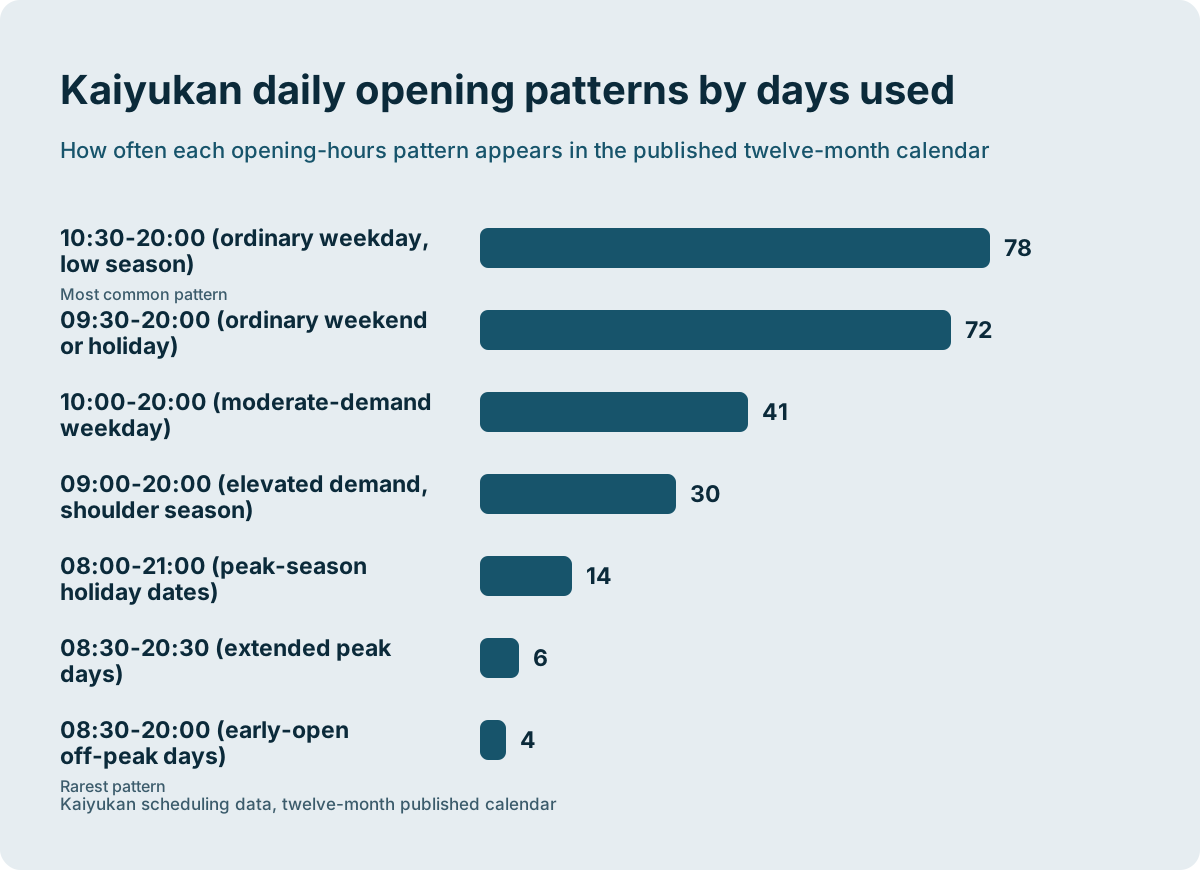
Kaiyukan's hours change by date across seven distinct daily patterns: 10:30-20:00, 09:30-20:00, 10:00-20:00, 09:00-20:00, 08:30-20:30, 08:30-20:00 and 08:00-21:00. The typical weekday in September 2026 runs 10:30 to 20:00, and the typical weekend runs 09:30 to 20:00. Closing is 20:00 on most days, with 21:00 reserved for the busiest peak dates.
The pattern distribution matters more than any single entry. Across the twelve months of published scheduling data, the 10:30-20:00 pattern is the most common by far, covering 78 dated days, followed by 09:30-20:00 on 72 days. The rarest is 08:30-20:00, which appears on just four days. What this means practically: if you are visiting on an ordinary weekday outside a Japanese school holiday, expect a late-morning opening and a full evening inside; if you are visiting on a summer peak weekend, expect the aquarium to open much earlier and close later than you assumed.
The peak-season extremes are worth naming. On a run of consecutive public-holiday days, Kaiyukan opens at 08:00 and closes at 21:00, the widest operating window anywhere in the published calendar. Those are also among the most expensive admission days, priced at the top of the aquarium's variable pricing ladder at ¥3,500 for an adult, which is covered in detail on the Kaiyukan tickets page.
Here is the full pattern table, covering every daily schedule that has turned up in the published calendar:
| Daily pattern | How common it is | What it usually means |
|---|---|---|
| 10:30-20:00 | The most common pattern by a wide margin | Ordinary weekday, low season |
| 09:30-20:00 | The next most common | Ordinary weekend or holiday |
| 10:00-20:00 | Regular | Moderate-demand weekday |
| 09:00-20:00 | Occasional | Elevated demand, shoulder season |
| 08:00-21:00 | Rare | Peak-season holiday dates |
| 08:30-20:30 | Rare | Extended peak days |
| 08:30-20:00 | Rare | Early-open off-peak days |
One more nuance that trips people up: the hours are set per calendar date, not per day of week. A Tuesday in August can open at 09:00 while a Tuesday in November opens at 10:30. The only way to know your date is to check the official hours calendar on the aquarium's own site, which publishes day-by-day times alongside the price calendar. Osaka Aquarium visitors who skip that check are the ones standing at a closed gate at 10:15 on an 08:00 day, or worse, arriving at 10:00 on a date that opens at 10:30.
When is last admission at Kaiyukan?
Last admission is exactly one hour before closing, on every single dated day in the published calendar, with zero exceptions. A 20:00 close means 19:00 last admission; the rare 21:00 close means 20:00 last admission. This is a fixed first-party rule of the schedule, not a general guideline, and you can rely on it for any date you book.
That consistency is unusual among big attractions, many of which quietly move their cut-off by season. Kaiyukan's scheduling data carries a dedicated last-admission field for each date, and across all 61 dated days checked in the September and October 2026 window it reads exactly 60 minutes before closing time, every time. So if your plan is "arrive at 18:50 for a 20:00 close," you are fine. If your plan is "arrive at 19:15," you are not, and no amount of queue-standing changes it.
There is a second rule layered on top that matters just as much for late arrivals. Since the move to timed-entry tickets, admission is sold in 15-minute slots with a capped number of tickets per slot, a system the aquarium introduced explicitly to control crowding and cut queueing. Arriving inside your slot window is what guarantees smooth entry; arriving near the last-admission line with a same-day counter ticket means gambling on which slots still have capacity. The aquarium's own recommendation is advance purchase of the e-ticket, and the date and time can be changed later from the ticket page.
When is Kaiyukan closed?
Kaiyukan closes on exactly two days in the twelve-month published calendar: 13 and 14 January 2027. There are no other closure dates in that window, not even over the New Year holidays, when the aquarium instead extends its hours. The two January days are the annual maintenance closure and the only dates a visitor needs to route around.
The closure dates come straight from the aquarium's own holiday schedule, which lists precisely those two dates and nothing else across the full year. It is worth being precise about them because several third-party summaries circulate a different pair, 12 and 13 January, which does not match the official data. If you are planning a January trip, plan around the 13th and 14th.
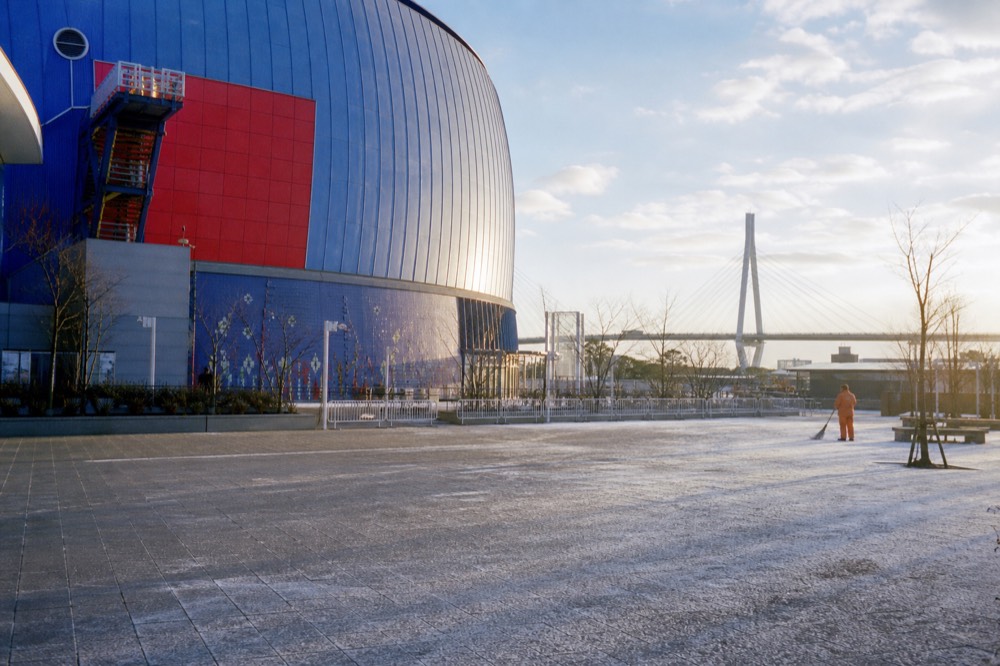
The New Year period is the opposite of a closure. Far from shutting for the holidays, Kaiyukan typically opens earlier than usual: the 2026 New Year operations began with a 09:30 opening on 1 January. The peak-season early-start pattern, including the 08:00 openings, is the aquarium's answer to holiday demand, so the dates a first-time visitor might assume are rest days are in fact the longest operating days of the calendar.
| Date or period | Status | Hours or note |
|---|---|---|
| 13 January 2027 | Closed | Annual maintenance closure |
| 14 January 2027 | Closed | Annual maintenance closure |
| New Year holidays | Open, extended hours | Early opening, e.g. 09:30 on 1 January 2026 |
| Golden Week (late April to early May) | Open | Peak crowds, expect the widest hours and highest prices |
| Obon (mid-August) | Open | Peak crowds, early opens and late closes |
| Every other published date | Open | One of the seven daily patterns applies |
A related scheduling change to know about: re-entry ended on 15 June 2026. Previously you could leave and come back the same day; now a ticket admits you once. The official announcement on the Kaiyukan news page ties the change directly to the timed-slot system. For hours planning, this means you cannot split your visit across an afternoon exit and an evening return, so budget your whole visit in one block.
What are the quietest hours to visit?
Weekday mornings right at opening are the quietest periods at Kaiyukan, and Tuesday and Wednesday are typically the least crowded days of the week. The last-admission window from 19:00 is the other genuinely quiet stretch, since most tour groups and families have long gone. Midday on weekends and any day during Golden Week, Obon or Japanese school vacations is the busiest.
The crowd logic follows directly from the hours table. The 10:30 weekday openings coincide with the lowest demand, so the first hour after the doors is when the spiral route around the central Pacific Ocean tank is at its most walkable. By early afternoon the same floors can be three-deep at the popular tanks, and on peak dates the aquarium is running its 08:00 opening precisely because it expects to absorb a very large daily crowd.
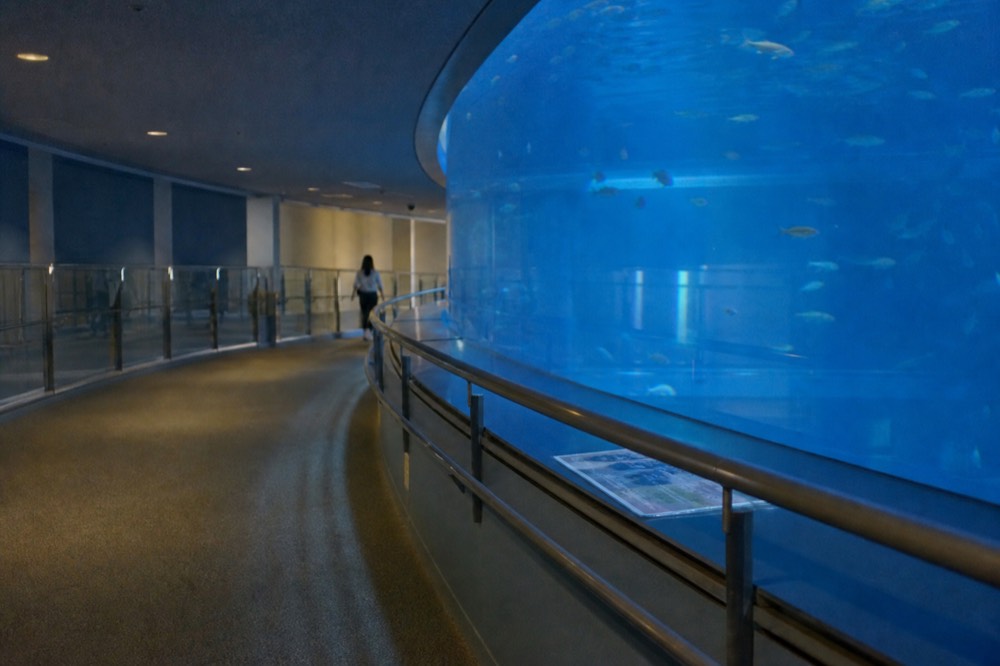
The evening is the insider's slot, and it pairs with the aquarium's "Night Kaiyukan" programme, which begins at 17:00 daily when the interior lighting and music shift to a moonlit deep-blue effect. With last admission at 19:00 and closing at 20:00 on most days, an evening ticket bought for a 17:00 or 17:30 slot gives you the dimmed tanks, the lighter crowds and the whale sharks under blue light, in the two hours Kaiyukan itself budgets for a full visit. The deeper comparison of morning, afternoon and evening slots is laid out on the best time of day to visit Kaiyukan page.
| Time window | Typical crowd level | Notes |
|---|---|---|
| Opening to one hour after | Lowest on weekdays | Quietest overall; arrive before the slot time |
| Mid-morning to mid-afternoon | Highest | School groups and tour buses peak here |
| 16:00 to 17:00 | Easing | Families with young children start leaving |
| 17:00 to 19:00 | Low to moderate | Night Kaiyukan lighting from 17:00 |
| After 19:00 last admission | Low | Only pre-booked evening visitors remain |
One crowd-management detail worth folding into your timing: because each 15-minute slot is capped, the queue at the entrance moves in waves rather than as a continuous line. Booking an off-peak slot, say 15:45 on a Tuesday rather than 11:00 on a Saturday, changes both your crowd experience inside and your wait at the gate.
How long should you plan inside?
Kaiyukan itself budgets 90 to 120 minutes for a visit, publishing that figure on its own school-group FAQ page, and the practical range for most visitors is two to three hours. Feeding sessions are scheduled across the day from 09:50 to 16:30, so a visit timed around the feeding timetable can stretch comfortably past the two-hour mark.
The route is a fixed spiral: enter on the 3rd floor of the entrance building, ride the escalator to the 8th floor, then walk down around the central tank until you exit back where you began. There is no way to shorten it without skipping floors, and the 19 exhibition zones, about 620 species and roughly 30,000 animals, give the descent a natural pace. The full breakdown of how the time distributes across floors is on the how long to spend at Kaiyukan page.
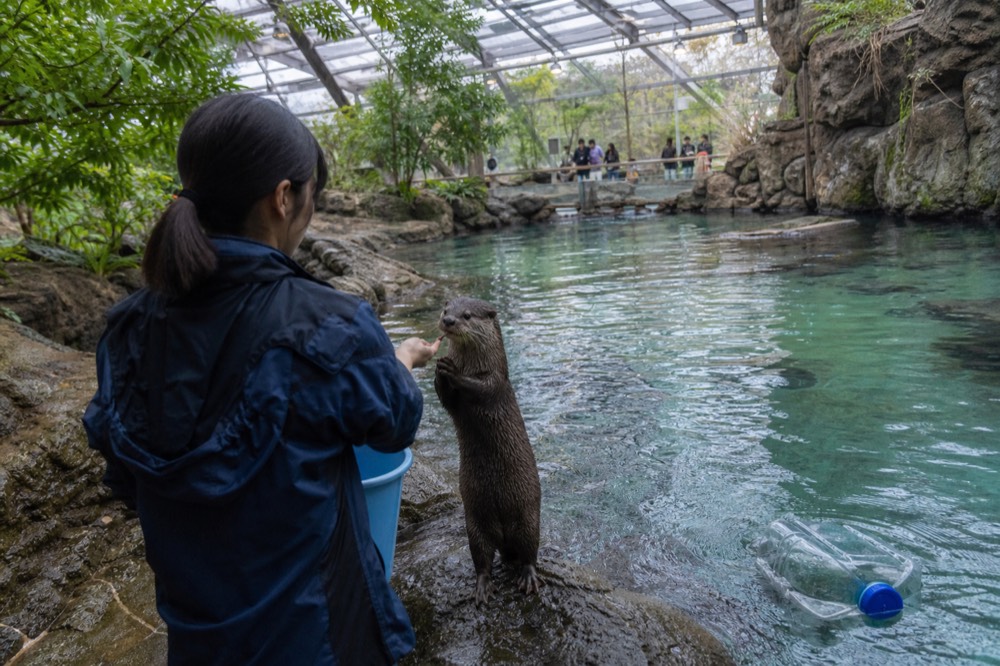
The feeding timetable is the single best tool for turning hours into an itinerary, because it anchors your visit to specific times and floors:
| Floor | Zone | Animal | Feeding times |
|---|---|---|---|
| 7F | Japan Forest | Otter | 11:30, 13:30, 15:30 |
| 7F | Monterey Bay | Sea lion and seal | 09:50, 13:20, 14:50 |
| 7F | Gulf of Panama | Coati | 11:15, 15:30 |
| 7F | Antarctica | Penguins | 10:00, 14:20 |
| 7F | Tasman Sea | Pacific white-sided dolphin | 11:40, 14:00, 16:30 |
| 6F | Pacific Ocean | Pacific fish | 10:30, 15:00 |
| 4F | Arctic Region | Ringed seal | 10:50, 15:35 |
| 4F | Falkland Islands | Rockhopper penguin | 10:50, 15:10 |
The aquarium's own caveat applies: times may be cancelled or changed without notice depending on the animals' condition. Treat the table as a planning spine, not a guarantee. Note that the earliest feeding is 09:50, which only exists inside a morning visit on an early-opening day; the latest is 16:30, which means evening visitors get the lighting and the calm, not the feedings.
What time should you arrive to make the most of your slot?
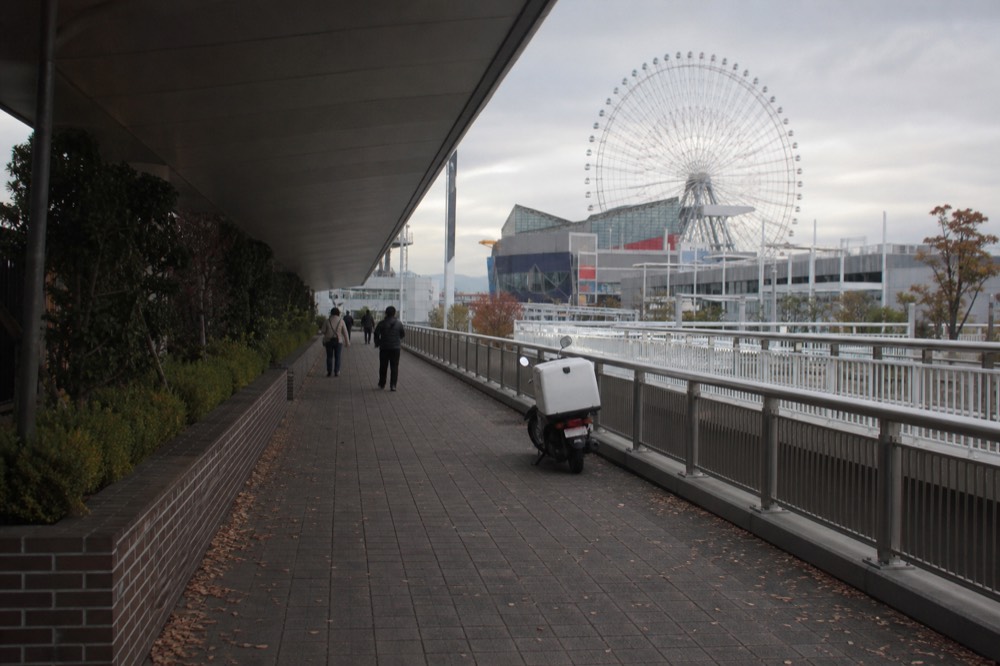
Arrive 10 to 15 minutes before your booked 15-minute slot, and treat the aquarium's entrance flow as part of your schedule rather than a delay. The walk from Osakako Station is about five minutes from Exit 1 per the aquarium's own access page, though a measured route from the station to the building runs roughly 800 metres, closer to ten minutes at a normal pace.
That honest framing of the walk matters, because plenty of itineraries are built on a bare "five minutes from the station" that only holds if you exit at Exit 1 and walk directly. Come out of a different exit, or arrive with a stroller and a crowd, and the approach to the Tempozan Harbour Village complex takes twice as long. The full transport picture, including the Captain Line shuttle from the Universal Studios Japan side, buses from Osaka and Namba stations, and the 1,000-space car park under the aquarium, is covered on the getting to Kaiyukan page.
Two timing traps sit around the arrival window. First, the car park under the aquarium operates from 08:00 to 23:00 with exit by midnight, which is fine for any visit length but catches drivers who assume overnight parking exists; there is none. Second, the same-day re-entry policy that ended in June 2026 means a mid-visit exit to the Tempozan Marketplace food court, Naniwa Kuishinbo Yokocho, is a one-way door. If you want lunch, build it in before entry or after your spiral descent, not in the middle.
The escalator-to-8th-floor start also shapes arrival timing. Everyone enters at the same point and rides to the top, so the first minutes of any slot are spent in the thickest crowd of the visit, at the Aqua Gate tunnel and the top-floor introduction. Waiting five minutes at the entrance hall rather than joining the surge can mean starting the route with clear glass instead of shoulders.
Do the hours affect which ticket you should buy?
Yes: your time slot, the date's opening pattern and the price you pay are all one calendar, so picking hours is also picking price. Adult admission runs ¥2,800 to ¥3,500 across currently bookable dates, and the ¥3,500 days are precisely the 08:00-to-21:00 peak-opening days. The cheapest bookable days, ¥2,800, cover more than three quarters of the bookable calendar.
This is the part of hours planning most guides miss. Kaiyukan runs demand-based variable pricing on a date-by-date calendar, and demand drives both the price and the opening pattern. The wide-window holiday days with the most hours of access are also the most expensive and the most crowded. A quiet Tuesday with a 10:30 opening is the cheapest and emptiest combination on the board, and the official ticket page is where the live calendar shows both numbers together.
| Bookable adult price | How often it comes up | Typical hours context |
|---|---|---|
| ¥2,800 | The most common level, 83% of the 59 bookable dates | Ordinary weekdays and many weekends |
| ¥2,900 | A handful of dates | Moderately busy dates |
| ¥3,200 | A few dates | Elevated-demand dates |
| ¥3,500 | Peak dates only | Public-holiday clusters, widest opening hours |
The child tiers follow the same calendar: ¥1,400 to ¥1,800 for ages 7 to 15 and ¥700 to ¥900 for ages 3 to 6, with under 2 free. Because the cheapest tier sits at the bottom of every date's ladder, families can shave a surprising amount by shifting a visit a day or two, a comparison worked through on the tickets guide. The booking window itself is also hours-related: e-tickets go on sale roughly 30 days before the visit date, so the calendar you can read today covers about two months ahead and nothing beyond it.
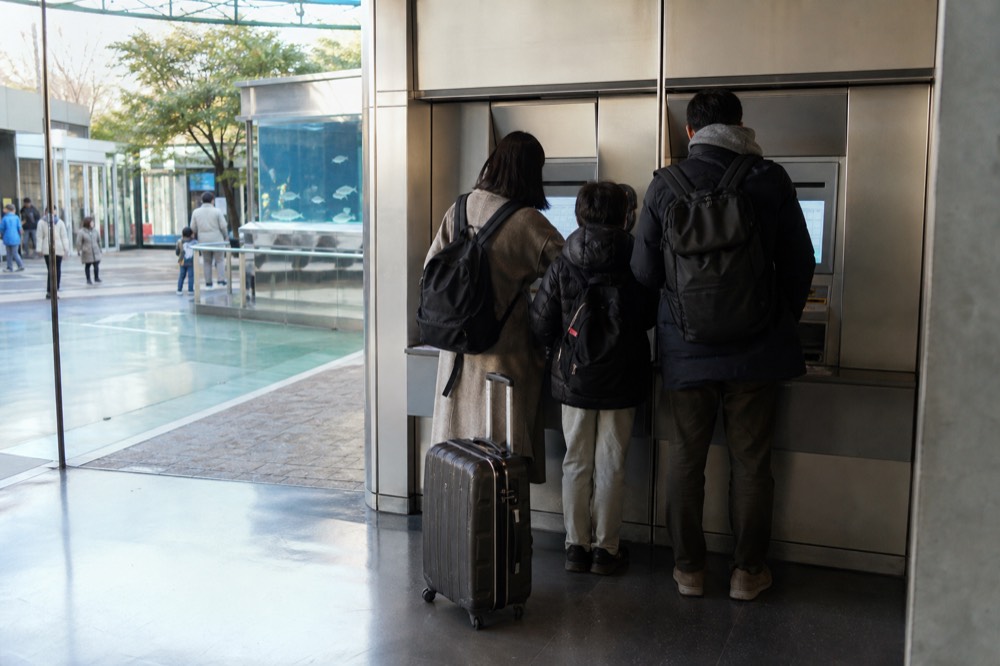
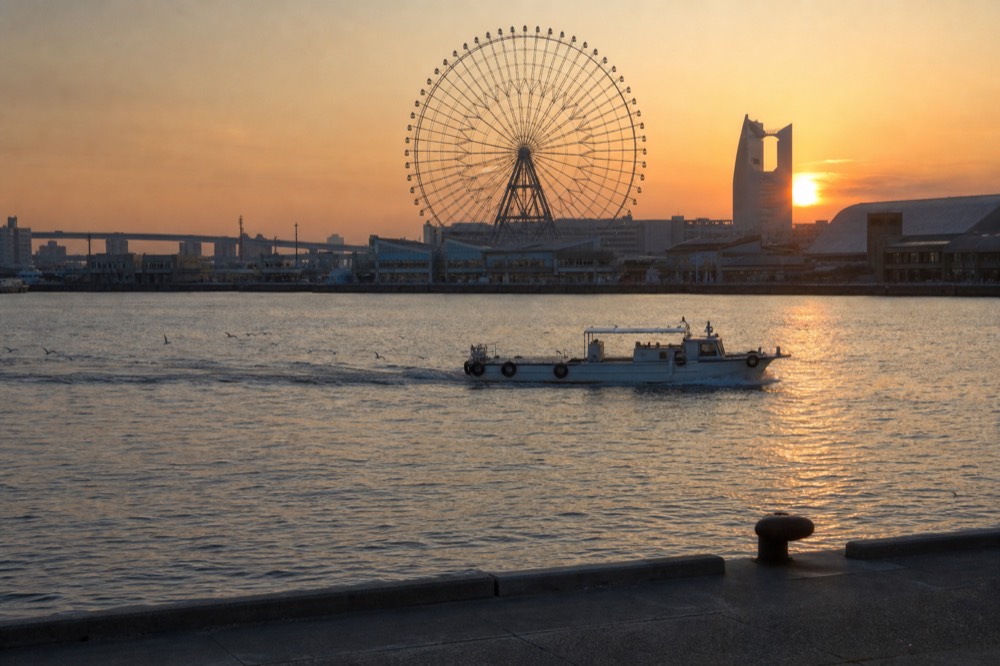
A note on other tickets and the hours calendar. The Osaka Amazing Pass does not include Kaiyukan admission and gives no discount there, though it does cover the Tempozan Giant Ferris Wheel next door and the metro ride to Osakako station; that relationship is unpacked on the Osaka Amazing Pass and Kaiyukan page. The set tickets Kaiyukan sells, pairing admission with the Santa Maria cruise, LEGOLAND Discovery Center or the Captain Line ferry, are priced as the day's admission plus a fixed add-on, so they also move with the calendar.
The questions below cover the four facts visitors most often get wrong: the opening time varies by date across seven patterns, last admission is always exactly one hour before closing, the only annual closures are 13 and 14 January 2027, and hours are published only about two months ahead. Each answer restates the rule in one or two sentences so you can check a date without rereading the whole guide.
Common questions about Kaiyukan opening hours
What time does Osaka Aquarium open?
It depends on the date. Kaiyukan uses seven distinct daily patterns, from a 10:30 weekday opening to an 08:00 peak-season opening. The typical weekday runs 10:30 to 20:00 and the typical weekend 09:30 to 20:00, but only the official day-by-day calendar for your date is authoritative.
What time is last admission at Kaiyukan?
Exactly one hour before closing, on every dated day in the published calendar, with no exceptions. A 20:00 close means 19:00 last admission; the rare 21:00 close means 20:00.
Is Kaiyukan open on New Year's Day?
Yes. The aquarium stays open through the New Year holidays and typically opens earlier than usual, with 09:30 opening on 1 January 2026. The only closures in twelve months are the two annual maintenance days, 13 and 14 January 2027.
Can you enter Kaiyukan in the evening?
Yes, up to the last-admission cut-off of 19:00 on a 20:00 day. Evening visits from 17:00 onward coincide with the Night Kaiyukan programme, when lighting and music shift to a moonlit deep-blue effect, and crowds are much lighter than midday.
Does Kaiyukan have the same hours every day?
No. Hours are set per calendar date, not per day of week, across seven patterns. A Tuesday in a school holiday can open hours earlier than a Tuesday in low season, so always check the date you hold a ticket for.
How far ahead are Kaiyukan's hours published?
About two months, the same rolling window as the price calendar. E-tickets go on sale roughly 30 days before the visit date, and dates beyond the published window show neither hours nor prices until they are released.