Does Kaiyukan have English signs and audio guides?
A practical look at English signage, audio guides, English ticketing and language support at Osaka Aquarium Kaiyukan, based on what the aquarium itself publishes.
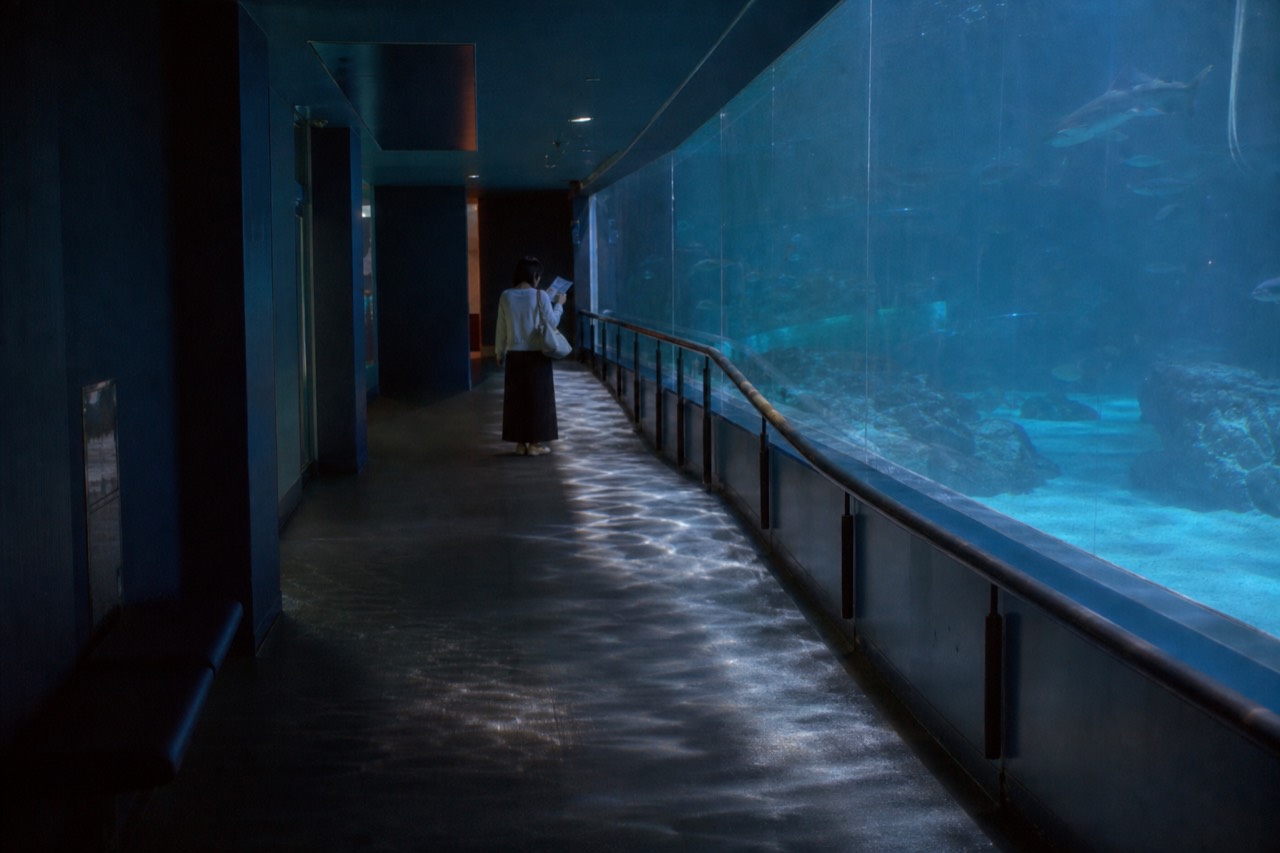
Does Kaiyukan have English signs and audio guides?
Yes. Kaiyukan prints English names alongside Japanese on its own exhibition headings, publishes an English version of its website and ticket pages, and offers a paid audio guide as an optional add-on alongside an "Expedition team stamp notebook" for the self-guided route. You will not read Japanese to find the whale sharks. Between the bilingual zone headings, the top-down spiral route that is nearly impossible to get lost on, and English ticketing through the aquarium's authorized sellers, an English-only visitor can plan, enter and tour the building without a phrasebook, with a few caveats around staff conversation and temporary exhibits.
That is the short answer, and it is worth stating plainly because a surprising amount of online advice on this question is vague or out of date. Kaiyukan's own exhibition pages list English names for its zones, from the Japan Forest to the Falkland Islands, printed as the aquarium itself headings them in English. The aquarium's program pages list the audio guide as an optional enhancement. And the 2026 shift to timed-entry tickets has made English-language advance booking more useful than ever, because entry is now sold in 15-minute admission slots with a capped number of tickets per slot.
One thing has changed recently that matters to international visitors in a different way: same-day re-entry ended on 15 June 2026. If you plan to exit for lunch at Tempozan Marketplace and come back, you cannot, whatever language you speak. We cover that and the April 2026 bag rules further down, because those two policies trip up more overseas visitors than any signage gap does.
If you are still choosing a date, the ticket situation is straightforward. Adult admission on currently bookable dates runs ¥2,800 to ¥3,500 depending on the day, children aged 7 to 15 pay ¥1,400 to ¥1,800, preschoolers aged 3 to 6 pay ¥700 to ¥900, and under 2 enters free. More than three quarters of the bookable dates sit at the ¥2,800 adult level, and Kaiyukan only publishes its price calendar about two months ahead.
The three tiers above are the same single product, the Osaka Aquarium Kaiyukan Ticket, split by age. Picking the right tier matters more than it might seem, because the from-price you see advertised anywhere is usually the young-child tier, not the adult one, and mixing them up is the most common booking mistake at this aquarium.
What English signage can you actually expect inside?
Kaiyukan's 19 exhibition areas carry English names on the aquarium's own English exhibition headings, and the building's fixed route, a single spiral descent from the 8th floor around the central Pacific Ocean tank, needs almost no reading at all to follow. Zone names, floor numbers and directional arrows are the signage you rely on for wayfinding, and those are the elements Kaiyukan provides in English. Where you should expect Japanese-first content is the smaller interpretive panels, the temporary exhibition text and the keeper talks, which are aimed at a domestic audience and are not translated in full.
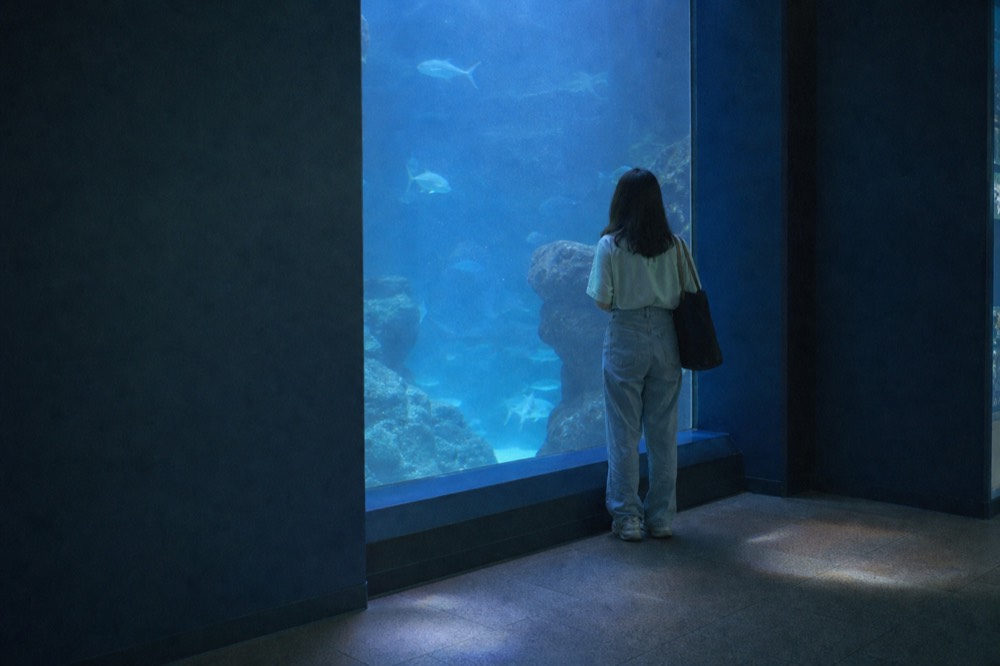
The zone names themselves are a good illustration of how the aquarium handles bilingual labeling. Its own encyclopedia data lists the areas with both Japanese and English titles, and the English versions are the names the aquarium prints on its own English pages. The full list includes Japan Forest, Aleutian Islands, Monterey Bay, Gulf of Panama, Ecuador Rainforest, Antarctica, Tasman Sea, Great Barrier Reef, Pacific Ocean, Seto Inland Sea, Coast of Chile, Cook Strait, Japan Deep, Aqua Gate, Jellyfish, Arctic Region, Falkland Islands and the seasonal exhibits, plus the current temporary show. That is the official naming, per the aquarium's own exhibition introduction page.
Two caveats keep this honest. First, the Aleutian Islands tank is closed for renovation right now, so its signage is not something you will be reading on a current visit, and the aquarium has said its animals are moving to Aquaworld Ibaraki Oarai Aquarium. Second, temporary exhibitions, including the current compact-cute special show, are produced for the Japanese market first, and detailed exhibit text there is generally Japanese-only. Neither affects wayfinding, but if you like reading every panel in depth, temper expectations on the smaller screens.
For orientation, the route itself does most of the work that signs would do elsewhere. You enter through the Entrance Building 3F and the Aqua Gate tunnel tank, ride an escalator to the 8th floor, then walk down and around the central tank, floor by floor, until you exit at Entrance Building 3F again. The aquarium describes the structure in its own words as a spiral descent where you walk the route from the upper floors downward. Getting lost requires real effort. This is one reason Osaka Aquarium works so well for international guests compared with museums that front-load their information into dense wall text.
Here is a practical summary of what is and is not in English, based on what the aquarium publishes and what its own pages promise:
| Element | English available? | What to expect |
|---|---|---|
| Zone names (19 areas) | Yes | Bilingual headings; official English names on the aquarium's own pages |
| Floor and route signage | Yes | Numbers, arrows and the one-way spiral descent |
| Main tank labels (Pacific Ocean, Aqua Gate) | Yes | English headings on the aquarium's English exhibition list |
| Feeding schedule displays | Partial | Published timetable is Japanese-first; times are readable as numbers |
| Temporary exhibition panels | Mostly no | Produced for the domestic audience |
| Keeper talks and announcements | Mostly no | Japanese-language delivery |
| Website and ticket pages | Yes | Full English versions, including the dynamic-price calendar |
How does the audio guide work, and is it worth it for English speakers?
Kaiyukan lists an audio guide as an optional add-on for the self-guided tour on its official Tours and Experiences page, alongside the "Expedition team stamp notebook", which gives international visitors a narrated layer on top of the bilingual headings. The audio guide is a rental enhancement rather than something bundled with admission, and the aquarium's own program page is where the current offering and its terms live. For an English-only visitor, it is the single most useful paid extra, because it converts the Japanese-first interpretive panels into a spoken commentary you can actually follow.
What the research file verifies is the offering itself: the audio guide and the stamp notebook are the two named optional enhancements on the official program page. Exact rental pricing and the number of supported languages are not published in the verified research, so we will not quote a figure here. Treat language availability and price as "on the listing" and check the program page or the ticket counter when you arrive. What can be said firmly is that the aquarium deliberately built its self-guided experience with add-ons aimed at visitors who want more than the panels give, which is the bracket most English speakers fall into.
The stamp notebook deserves a mention even though it is not a language tool, because families report it as the thing that structures a visit for kids who cannot read either language. It turns the 19-zone spiral into a checklist, and a checklist needs no translation. Between the audio guide for adults and the stamp route for children, the aquarium has effectively published its own workaround for its own Japanese-first panels.
Timing your commentary matters, because the building has a rhythm. Kaiyukan publishes a feeding timetable per zone, and the whale sharks are fed at the surface, so the upper floors give the better view when a whale shark upends into a vertical position to feed. An audio guide that tells you what you are looking at, combined with the published feeding times, is the difference between watching fish and understanding the tank. The timetable the aquarium publishes, with the caveat that times can be cancelled or changed without notice depending on the animals' condition:
| Floor | Zone | Animal | Feeding times |
|---|---|---|---|
| 7F | Japan Forest | Otter | 11:30, 13:30, 15:30 |
| 7F | Monterey Bay | Sea lion / seal | 09:50, 13:20, 14:50 |
| 7F | Gulf of Panama | Coati | 11:15, 15:30 |
| 7F | Antarctica | Penguins | 10:00, 14:20 |
| 7F | Tasman Sea | Pacific white-sided dolphin | 11:40, 14:00, 16:30 |
| 6F | Pacific Ocean | Pacific fish | 10:30, 15:00 |
| 4F | Arctic Region | Ringed seal | 10:50, 15:35 |
| 4F | Falkland Islands | Southern rockhopper penguin | 10:50, 15:10 |
If an English-language visit is the goal, buying the timed ticket in advance is part of the language story too, because it removes the one interaction that genuinely requires spoken Japanese: the counter transaction on a busy day. The Osaka Aquarium Kaiyukan Ticket is rated 4.8 across about 14,894 reviews, and it is sold through channels Kaiyukan itself names as legitimate. In June 2026 the aquarium published a fraud warning listing its only authorized sales routes as its own official website plus three authorized resellers, and warning that tickets from anywhere else, including a fake site impersonating it, will not admit you. Booking through an authorized channel is not just convenience, it is the difference between a valid QR code and a worthless one.
Will you need to change plans at the door? Sometimes, and that is worth preparing for in any language.
Do Kaiyukan staff speak English?
Treat staff English as limited and transactional rather than conversational: front-of-house staff handle ticketing, directions and safety through the tools above, but there is no verified published promise of English-speaking staff, and the aquarium's own help channels are Japanese-first. The honest position is that Kaiyukan does not publish an English-conversation guarantee, so plan around gestures, the bilingual signage and your e-ticket QR code rather than around fluent dialogue. In practice, the touchpoints an international visitor actually has, scanning a ticket, finding a toilet, locating the nursing room, are exactly the ones the building's signage and layout already answer.
A few concrete anchors help. The aquarium's information line, 06-6576-5501, is staffed from opening until 19:00, and its FAQ pages are published in Japanese with English versions available for the core visitor information. The barrier-free provisions, free wheelchair rental at the information desk, accessible toilets at multiple locations and staff elevator guidance, work through demonstration rather than dialogue. And the coin lockers inside the paid zone and across Tempozan Marketplace, near the escalators and under the Ferris wheel, operate on coins and touchscreens, not conversation.
The one interaction where a language gap can cost real money is the disability discount, and it is worth flagging precisely. Holders of the relevant Japanese disability booklets, or the Mirairo ID app or a MynaPortal record, plus one carer, pay half the day's admission price, but screenshots and printouts are not accepted and a My Number card alone does not qualify. If that applies to your group, sort the documentation before you travel, because explaining an edge case at a busy counter in a second language is the hardest version of this question.
For everything else, the pattern holds: the building is designed to be walked, not negotiated. The route uses slopes for most of its length, and staff provide elevator assistance where stairs or escalators exist. If you arrive knowing your slot time, holding an e-ticket, with bags inside the size rules, you can complete the entire visit without needing more than "sumimasen" and a point.
Are tickets, prices and the website available in English?
Yes. Kaiyukan maintains English versions of its core visitor pages, including hours, access and ticketing, and its authorized resellers sell the timed e-ticket entirely in English with a QR code for entry, so the planning side of a visit is fully doable before you leave your hotel. The aquarium's own FAQ page and ticket pages carry English content, and the authorized-reseller route is English-first by design. This is the part of the language question that has improved most, hand in hand with the move to timed entry.
The pricing system itself rewards a little English-language homework, because Kaiyukan uses demand-based variable pricing on a date-by-date calendar and there is no single "the price". Adult admission on the dates you can currently book runs ¥2,800 to ¥3,500; children aged 7 to 15 pay ¥1,400 to ¥1,800; preschoolers aged 3 to 6 pay ¥700 to ¥900; under 2 is free. On the bookable calendar, more than three quarters of dates sit at the ¥2,800 adult level, with the rest spread up to ¥3,500. Kaiyukan publishes prices only about two months ahead, so beyond the current window nobody, including us, can tell you what a date costs.
| Tier | Ages | Price range by date | Notes |
|---|---|---|---|
| Adult | 16 and over | ¥2,800 to ¥3,500 | 16+ counts as adult even if in high school |
| Child | 7 to 15 | ¥1,400 to ¥1,800 | Elementary and junior high ages |
| Young child | 3 to 6 | ¥700 to ¥900 | The tier behind most advertised "from" prices |
| Infant | Under 2 | Free | Not a purchasable ticket |
Two English-language traps sit around that table. The first is the from-price: an advertised entry price of about $4.75 is the young-child tier, roughly the ¥700 preschool face value, not an adult ticket. The adult ticket on the same listing runs to about $18 at the low end. The second is the closure calendar: Kaiyukan's only scheduled closure days in the twelve months on file are 13 and 14 January 2027, and no others. Some third-party pages still print the wrong dates, so trust the aquarium's own calendar.
A note on the Osaka Amazing Pass, because it comes up constantly in English-language planning threads: Kaiyukan is not on the pass's free list and not on its discount list. The pass, ¥3,500 for one day and ¥5,000 for two, covers the Tempozan Giant Ferris Wheel next door and the metro ride to Osakako Station, but a pass holder still pays Kaiyukan's gate price in full. The pass and a Kaiyukan ticket are additive, not substitutes.
If you are weighing this against other aquariums on an Japan itinerary, our guide to the Kyoto Aquarium versus Kaiyukan comparison covers the same language and pricing questions for the Kyoto alternative, and the Osaka or Tokyo aquarium question does the same for Sumida and Tokyo Sea Life Park.
Practical tips for an English-speaking visit
Arrive with an e-ticket for a 15-minute timed slot, keep your bags within the size rules, budget 90 to 120 minutes minimum, and let the one-way spiral route carry you: those four habits remove nearly every situation at Kaiyukan where language would otherwise matter. The building's design, one continuous descent past 19 zones with about 620 species and some 30,000 animals in roughly 11,000 tons of water, is unusually forgiving for visitors who cannot read the fine print. Here is the checklist version.
First, book the timed slot in advance. E-tickets go on sale roughly 30 days before the visit date, and same-day tickets are only available at the counter from opening until last admission, which is exactly the queue you want to avoid. Entry slots run every 15 minutes with a cap on each slot, and the date and time on an official e-ticket can be changed later from My Page, so an early booking is not a straitjacket.
Second, mind the two 2026 rule changes. Re-entry ended on 15 June 2026, so see the whole loop in one pass. And from 24 April 2026, suitcases, cart-type luggage and anything whose three sides total 120 cm or more, or with any single side over 70 cm, cannot come inside; umbrellas 120 cm or longer are also banned, and anything wider than 85 cm may be refused outright. Use the lockers at the entrance, in Kaiyukan Hall, near the Museum Shop, in Tempozan Marketplace or under the Ferris wheel.
Third, time your visit to the building's quiet hours. Weekday mornings right at opening are the quietest periods, and Tuesday and Wednesday are typically the least crowded days. Avoid Golden Week, Obon in mid-August, the New Year holidays and Japanese school vacations if you can. Last admission is exactly one hour before closing on every day on record, and a typical September weekday runs 10:30 to 20:00, with weekends often 09:30 to 20:00, though hours genuinely change day by day, so check the calendar for your date.
Fourth, layer your own English onto the parts the building does not translate. The audio guide covers the commentary gap, the published feeding timetable covers the schedule, and the stamp notebook covers the kids. Between those three and the bilingual zone headings, there is very little of the visit left untranslated.
| Situation | Do this | Why it works without Japanese |
|---|---|---|
| Buying entry | Book a timed e-ticket in English in advance | QR code scan at the gate; no counter dialogue |
| Following the route | Enter at 3F, escalator to 8F, spiral down | One-way design; floor numbers are universal |
| Understanding the tanks | Rent the audio guide | Spoken commentary replaces the panels |
| Keeping kids engaged | Buy the Expedition team stamp notebook | Checklist format, no reading required |
| Large bags | Use lockers before entering | April 2026 size rules are enforced at entry |
| Leaving and returning | Do not plan to re-enter | Same-day re-entry ended 15 June 2026 |
For the wider picture of what is in the building, our page on Kaiyukan's floors and route walks the spiral floor by floor, and the guide to the whale sharks at Kaiyukan covers Kai and Yu, the two animals most international visitors are coming to see.
The short version: yes, Kaiyukan has English zone headings, an optional audio guide and fully English ticketing, so an English-only visit is realistic from booking to exit, with Japanese-first content limited to small panels, keeper talks and temporary exhibits. The questions below cover the specifics visitors ask most often, from audio guide pricing to staff English and what the whale shark information looks like at the tank itself.
Common questions about English signage and audio guides at Kaiyukan
Does Kaiyukan have English signs and audio guides?
Yes. The aquarium prints English names on its own English exhibition headings for its 19 zones, and it offers an audio guide as an optional rental alongside the Expedition team stamp notebook on its official program page. Wayfinding signage and the ticket pages are available in English; smaller interpretive panels and keeper talks remain Japanese-first.
Can I visit Kaiyukan without speaking any Japanese?
Yes. The route is a one-way spiral descent that is nearly impossible to get lost on, an advance e-ticket removes the counter transaction, and the audio guide covers the commentary the panels do not. The situations that still reward preparation are the disability discount documentation and the bag-size rules, both of which are strict.
How much does the audio guide cost?
The verified research confirms the audio guide exists as an optional add-on but does not record its rental price, so we will not quote one. Check the aquarium's official program page or the counter on arrival for the current fee and available languages.
Are the ticket prices and booking available in English?
Yes. Kaiyukan's core visitor pages have English versions, and the authorized resellers named by the aquarium sell the timed e-ticket entirely in English with QR-code entry. Adult admission on bookable dates runs ¥2,800 to ¥3,500, children 7 to 15 pay ¥1,400 to ¥1,800, and preschoolers 3 to 6 pay ¥700 to ¥900, with under 2 free.
Do Kaiyukan staff speak English?
Kaiyukan does not publish any promise of English-speaking staff, so assume limited, transactional English. In practice the building's signage, the one-way route and QR-code entry mean most visits need no real conversation beyond greetings and pointing.
Is the whale shark information available in English?
The zone names and the main exhibit headings are in English, and the aquarium's own news about its whale sharks, including the October 2025 measurement of Kai and Yu, is published in Japanese with an official English translation available. Detailed panel text at the tank itself is Japanese-first, which is where the audio guide earns its rental fee.
Kaiyukan earns its place on an international itinerary partly because it does not make you work for it in a foreign language. The signs you need are in English, the route walks itself, and the audio guide fills the gap the panels leave. Pick your tier, pick a quiet weekday slot, and the rest of the visit takes care of itself.