Which aquarium is better, Osaka or Tokyo?
Comparing Kaiyukan in Osaka with Tokyo Sea Life Park and Sumida Aquarium on price, species, whale sharks, and family-friendliness to help you decide.
Which aquarium is better, Osaka or Tokyo?
Osaka Aquarium Kaiyukan is the better choice, offering a singular, immersive journey with whale sharks in a massive 5,400-ton tank and a descending spiral design. While Tokyo provides two affordable alternatives, the bargain ¥700 Tokyo Sea Life Park and the compact Sumida Aquarium near Skytree, Osaka’s scale and star attractions make it the superior aquarium experience.
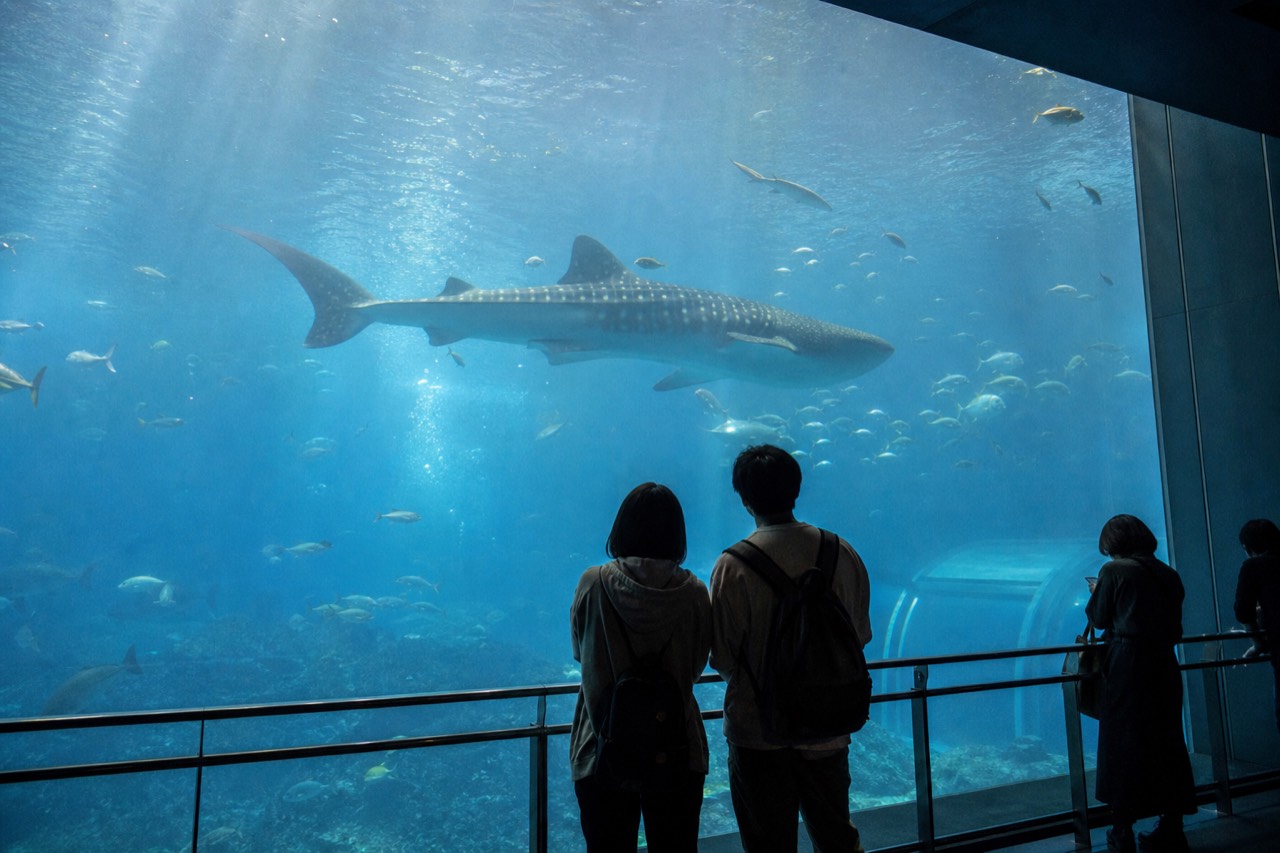
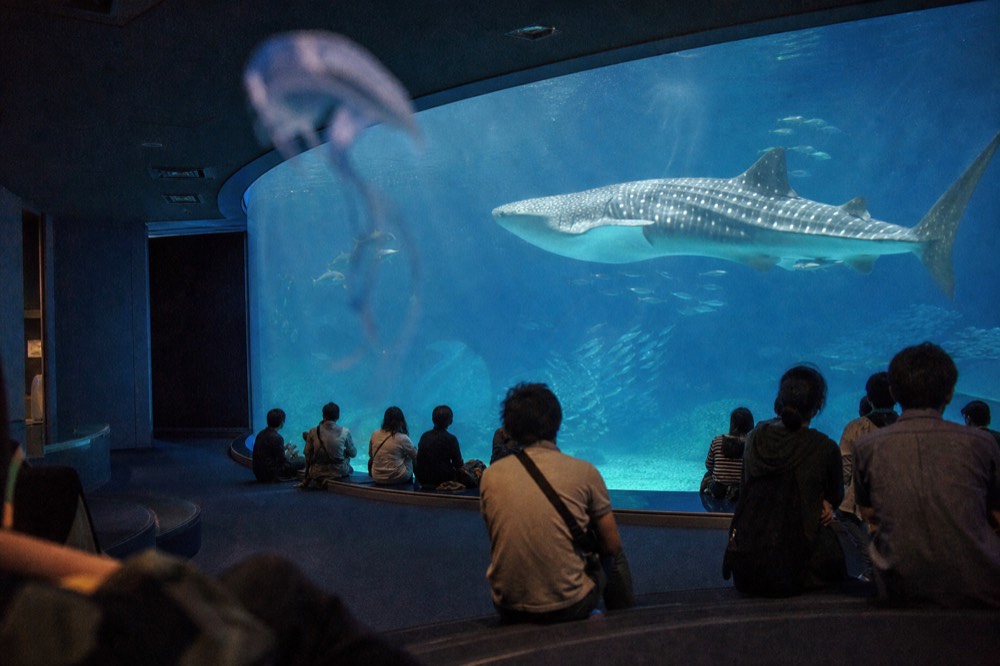
Kaiyukan is the heavyweight. It holds about 620 species and roughly 30,000 animals across 14 tanks, with a total water volume of about 11,000 tons. The centerpiece Pacific Ocean tank stretches to a maximum length of 34 meters and drops nine meters deep, giving visitors a top-down spiral descent that feels like diving. Two whale sharks, Kai and Yu, were measured at 5.3 and 6.2 meters respectively in October 2025, and the aquarium runs a behind-the-scenes Jinbei Backyard tour for an extra close look. The timed-entry system, introduced to manage crowds, means you book a 15-minute admission slot in advance, and same-day re-entry ended in June 2026.
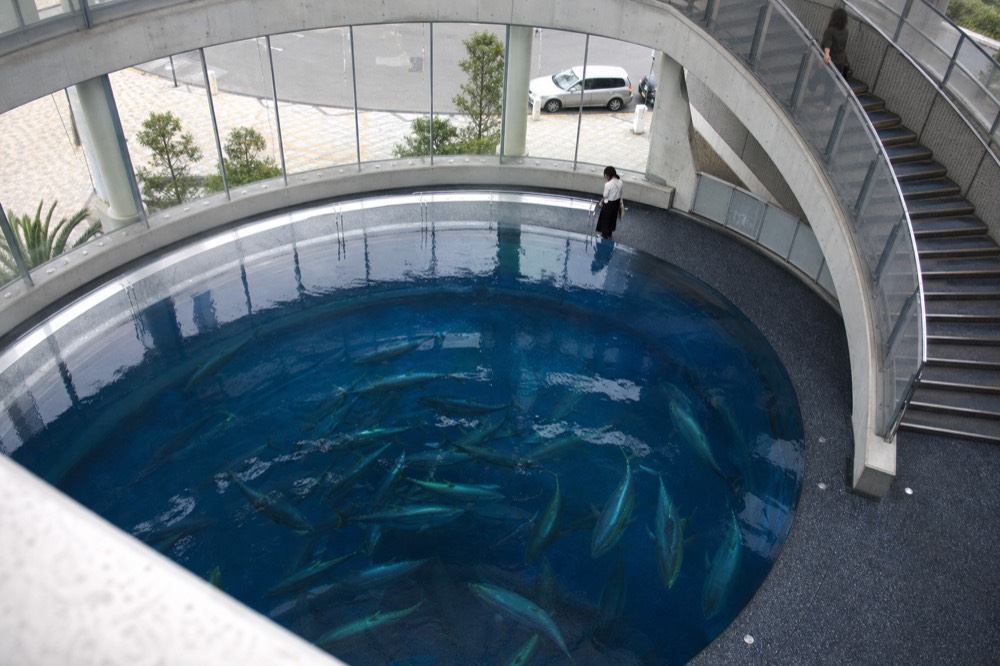
Tokyo Sea Life Park, on the other hand, is a different kind of giant. It houses over 500 species and its signature doughnut-shaped bluefin tuna tank holds 2,200 cubic meters of water. The park opened in 1989 on the edge of Tokyo Bay, a short train ride from the city center, and charges a flat ¥700 for adults, making it one of Japan's best-value large aquariums. Children of primary-school age and younger enter free, so a family outing costs remarkably little.
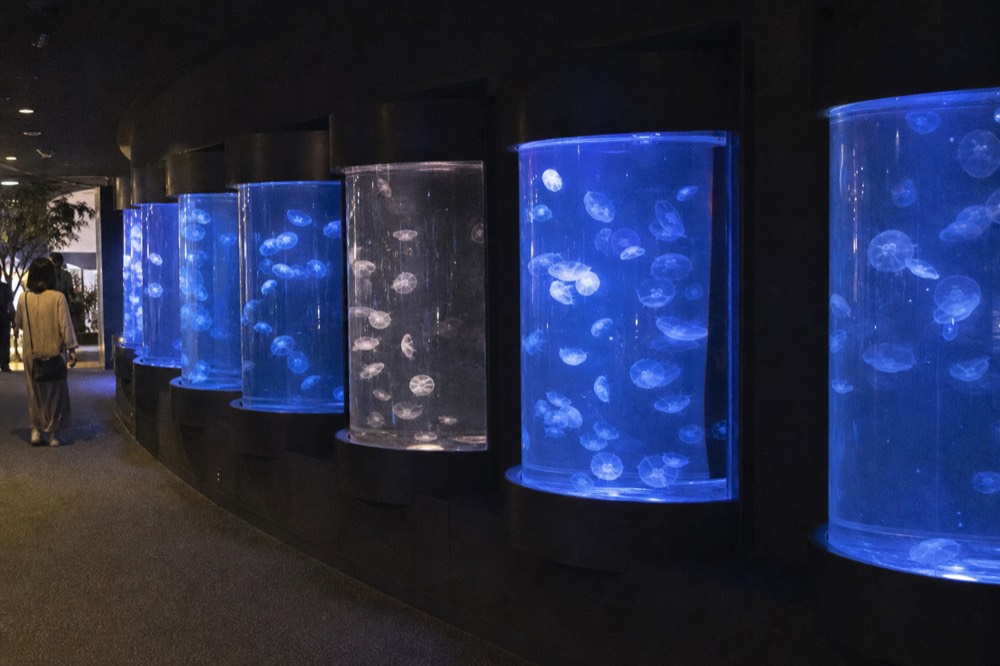
Sumida Aquarium is the trip-planning counterpart. It sits next to Tokyo Skytree, so you can combine it with the tower in a single half-day. It charges ¥2,700, exactly the same ballpark as Kaiyukan's lower band, but it is a compact indoor facility with no whale sharks. Its penguin pool holds about 350 tons of water, and its jellyfish exhibits are a highlight. The aquarium is a polished, modern space that rewards a relaxed pace rather than a checklist approach.
How does Kaiyukan compare to Tokyo Sea Life Park?
Kaiyukan is the larger and more immersive choice, centered on a 5,400 ton Pacific tank that is the largest single aquarium tank in Japan and home to the only whale sharks on Honshu, while Tokyo Sea Life Park is dramatically cheaper and still offers a huge variety of marine life in its 2,200 cubic meter bluefin tuna tank.
The scale difference is real but not overwhelming. Kaiyukan's 5,400-ton Pacific tank is the largest single aquarium tank in Japan by volume, while Tokyo Sea Life Park's 2,200-cubic-meter tuna tank is about a third of that. Kaiyukan also has more species, about 620 versus over 500. However, 500 species is still a major collection, and the park's open-air penguin exhibit is one of the country's largest. The visitor experience differs too. Kaiyukan's spiral route is a deliberate, almost cinematic journey from the eighth floor down, with the central tank visible at multiple depths. Tokyo Sea Life Park is a sprawling outdoor campus with separate buildings and a more traditional zoo-aquarium layout. The park's location on the bay means you can walk to the redeveloped Kasai Rinkai Park after your visit.
| Kaiyukan (Osaka) | Tokyo Sea Life Park | |
|---|---|---|
| Adult admission | ¥2,800–¥3,500 (variable) | ¥700 (flat) |
| Opening year | 1990 | 1989 |
| Species | About 620 | Over 500 |
| Signature tank | Pacific Ocean, 5,400 t, 34 m max length | Bluefin tuna, 2,200 m³ |
| Whale sharks | Two (as of Oct 2025) | None |
| Location | Tempozan, Osaka | Kasai, Tokyo Bay |
The price gap is the most striking difference. At ¥700, Tokyo Sea Life Park is a quarter of Kaiyukan's cheapest adult day. Even adding a few hundred yen for the train from central Tokyo, it remains one of the best-value large aquariums in Japan. Kaiyukan's variable pricing means you might pay ¥3,500 on a peak Sunday, more than five times the price. If your priority is a big-aquarium experience on a tight budget, the choice is clear. For more detail on how Kaiyukan's pricing works, see our guide to Kaiyukan tickets.
How does Kaiyukan compare to Sumida Aquarium?
Sumida Aquarium is a sleek, indoor attraction that costs the same as Kaiyukan's lower band but offers a completely different scale and atmosphere. It wins on convenience if you are already visiting Tokyo Skytree, but it cannot match Kaiyukan's size, species count, or whale sharks, and its published capacity figures are limited to its penguin pool rather than a main tank.
Sumida is modern and beautifully designed. It opened in 2012 inside the Tokyo Skytree Town complex, and its jellyfish gallery and indoor penguin pool are genuinely striking. The penguin pool holds about 350 tons of water, not the main tank, and the aquarium does not publish a total water volume figure. The focus is on curated, intimate exhibits rather than epic scale.
Kaiyukan is the opposite. It is a destination in its own right, a half-day commitment that anchors a trip to the Tempozan waterfront. Sumida is something you add to a Skytree ticket, and you can comfortably see it in 90 minutes. The two aquariums sit in the same price band, adult ¥2,800 to ¥3,500 at Kaiyukan and ¥2,700 flat at Sumida, so the decision is really about scale versus convenience. If you want the biggest and most memorable marine experience, Kaiyukan. If you want a polished, air-conditioned hour with jellyfish and penguins before your Skytree slot, Sumida.
One detail that often gets misreported: Sumida's 350-ton figure is its penguin pool, not its main tank. Sumida does not publish a main tank volume, so any comparison that claims a specific number for the Ogasawara tank is guessing. Kaiyukan's 5,400-ton Pacific tank is a verified, first-party figure, and the aquarium publishes its total water volume of about 11,000 tons. That transparency is a mark of Kaiyukan's confidence in its scale.
Which aquarium is better for families?
Kaiyukan is the better family aquarium for a full-day outing, with touch pools, stroller-friendly slopes, a free baby-care room on the second floor, and children under 3 entering free. Tokyo Sea Life Park is also excellent with kids thanks to its open spaces and low price, but Sumida is more suited to a short visit with older children and lacks a touch pool.
Kaiyukan was built with families in mind. Children under 3 enter free, and the spiral route is mostly sloped, so strollers are manageable although the aquarium encourages leaving them at the entrance to ease crowding. There is a baby-care room on the second floor of the entrance building with a nursing room, diaper-changing bed, and formula preparation device. A second nursing room sits behind the Aqua Gate tunnel inside the paid area. The Maldives Zone touch pool, where visitors can feel sharks and rays, is a proven hit with young children, and hand-washing stations are placed nearby.
Tokyo Sea Life Park is also family-friendly, but in a different way. Its wide outdoor paths and grassy areas make it easy to run around, and the ¥700 admission means a family of four can visit for less than a single adult ticket at Kaiyukan. The penguin and seabird exhibits are crowd-pleasers, and the park's location next to Kasai Rinkai Park gives you a full day of green space. The park does not charge for primary-school children, which makes a meaningful difference for families with younger kids.
Sumida Aquarium is the least family-oriented of the three. It is compact, indoors, and geared toward a quiet, grown-up atmosphere. There is no touch pool, and the penguin tank is best viewed from a seated bench. It works well as a 60-minute stop with older children, but toddlers may lose interest quickly. The aquarium does not publish details of baby-care facilities, and its stroller policy is less accommodating than Kaiyukan's.
Which aquarium is better value?
Tokyo Sea Life Park is the clear winner on price alone, at ¥700 for adults and free entry for primary-school children. But value is more than the ticket cost. Kaiyukan's whale sharks, nine-meter-deep tank, and 14 distinct habitats justify its higher price, especially if you book a timed-entry slot on a weekday and avoid peak-day surcharges.
Kaiyukan's variable pricing means the cheapest adult day currently bookable is ¥2,800, and more than three-quarters of the currently bookable dates sit at that level. The highest price, ¥3,500, falls on a handful of peak days like the September and October holiday weekends. The difference between ¥2,800 and ¥3,500 is ¥700, which is the entire cost of a Tokyo Sea Life Park ticket. So timing your Kaiyukan visit to a weekday morning can save you the equivalent of a second aquarium.
Sumida Aquarium is the least flexible on value. Its ¥2,700 flat fee is reasonable, but it does not offer a discounted twilight or off-peak rate. The aquarium is small enough that some visitors feel the price is steep for the size. However, if you buy a combined Skytree ticket, the overall package can be a good deal.
| Kaiyukan | Tokyo Sea Life Park | Sumida Aquarium | |
|---|---|---|---|
| Adult price | ¥2,800–¥3,500 | ¥700 | ¥2,700 |
| Child (7–15) | ¥1,400–¥1,800 | ¥250 (junior high) | ¥1,200 (ages 7–15) |
| Young child (3–6) | ¥700–¥900 | Free (primary & under) | ¥700 (ages 3+) |
| Under 3 | Free | Free | Free |
| Annual pass | Not sold | N/A | ¥6,000 |
If you are traveling with young children, Tokyo Sea Life Park's free admission for primary-school age and younger is a massive advantage. A family of four with two young children pays as little as ¥1,400 at Tokyo Sea Life Park. At Kaiyukan, the same family would pay ¥7,700 to ¥9,700 depending on the date, a gap of over five times the cost. The gap widens further on peak days when Kaiyukan's adult price reaches ¥3,500.
Which aquarium is better for whale sharks and big-tank fans?
Kaiyukan is the only one of the three with whale sharks, and its 5,400-ton Pacific Ocean tank is the largest single aquarium tank in Japan by volume. Neither Tokyo Sea Life Park nor Sumida Aquarium can compete on this front, and Kaiyukan offers a paid behind-the-scenes Jinbei Backyard tour for an even closer look at the sharks from the water's surface.
Kaiyukan's two whale sharks, Kai and Yu, live in the 5,400-ton Pacific tank, which is visible from four different floors. The sharks are fed at the surface, and the upper floors give the best view of them upending to suck in plankton. The aquarium also offers a paid Jinbei Backyard ticket that takes you behind the tank to see the sharks from the water's surface, a rare experience. For a deeper look at these animals, read our guide to Kaiyukan's whale sharks.
Tokyo Sea Life Park's signature tank is the bluefin tuna exhibit, a 2,200-cubic-meter ring that holds a single species. It is impressive in its own way, but it is not a multi-species ecosystem like Kaiyukan's Pacific tank. Sumida's largest tank, the Ogasawara exhibit, is a modest community tank with about 45 species and 450 fish. The aquarium does not publish its volume, but it is clearly a fraction of Kaiyukan's.
If whale sharks are the reason you are considering an aquarium, the choice is between Kaiyukan and the Okinawa Churaumi Aquarium, not Tokyo. Kaiyukan is the only place on Japan's main island of Honshu where you can see whale sharks indoors, and the tank's scale makes it a justified detour even if you are based in Tokyo.
Which aquarium is easier to reach?
All three are reachable by public transport, but Kaiyukan and Sumida are the most straightforward for visitors. Kaiyukan is a five-minute walk from Osakako Station on the Chuo Line with clear signage pointing toward the Ferris wheel, and Sumida is directly beneath the Skytree complex. Tokyo Sea Life Park requires a longer train ride from central Tokyo and a 15-minute walk through the park, though it is still easy to navigate.
Kaiyukan is a five-minute walk from Osakako Station on the Osaka Metro Chuo Line, Exit 1. The station is clearly signed "Kaiyukan-mae," and the route follows the big Ferris wheel. From Osaka Station, the journey takes about 35 minutes. The aquarium is also accessible by the Captain Line shuttle boat from Universal City Port, a 10-minute ride that drops you at the west pier. One-way fares on the Captain Line are ¥900 for adults, ¥500 for children aged 7 to 12, and ¥400 for preschoolers.
Sumida Aquarium is the easiest of the three for most Tokyo visitors. It sits directly beneath Tokyo Skytree, which is a major transport hub served by the Tobu Skytree Line, Tokyo Metro Hanzomon Line, and several other lines. You can walk from the station to the aquarium entrance in under five minutes without ever stepping outside.
Tokyo Sea Life Park is a little further out. It is located in Kasai, a 15-minute walk from Kasai-Rinkai-Koen Station on the JR Keiyo Line. From Tokyo Station, the train ride is about 15 minutes, so the total journey is around 30 minutes. The park is well signposted, and the walk takes you through Kasai Rinkai Park, which is a pleasant stretch.
| Kaiyukan | Tokyo Sea Life Park | Sumida Aquarium | |
|---|---|---|---|
| Nearest station | Osakako (Chuo Line) | Kasai-Rinkai-Koen (JR Keiyo Line) | Tokyo Skytree (multiple lines) |
| Walk from station | About 5 min from Exit 1 | About 15 min | Under 5 min, indoors |
| From main station | 35 min from Osaka Sta. | 30 min from Tokyo Sta. | 15 min from Tokyo Sta. |
| Alternative access | Captain Line ferry | None | Part of Skytree complex |
Kaiyukan's location in Tempozan Harbor Village also means you can spend a full day there. The Tempozan Giant Ferris Wheel, the Santa Maria sightseeing cruise, and the Naniwa Kuishinbo Yokocho food alley are all within a two-minute walk. Tokyo Sea Life Park is next to Kasai Rinkai Park, a large waterfront green space with a Ferris wheel and an aquarium-themed bird sanctuary. Sumida is part of the Skytree complex, so your post-aquarium options are the tower, the shopping mall, and the area's restaurants.
Which aquarium is better for a full-day trip?
Kaiyukan is the best full-day trip, with a 90- to 120-minute visit, surrounding attractions, and the Night Kaiyukan program that changes the atmosphere after 5 p.m. Tokyo Sea Life Park can also fill a full day if you combine it with the adjacent park, but Sumida is firmly a half-day activity best paired with the Skytree observation deck.
Kaiyukan itself budgets 90 to 120 minutes for a visit, and most visitors spend closer to two hours. Afterward, the Tempozan Marketplace has shops, restaurants, and the retro food alley. The Giant Ferris Wheel, the Santa Maria cruise, and LEGOLAND Discovery Center are all on the same plaza. On a clear day, you can ride the Ferris wheel at sunset and see Osaka Bay and the city skyline. The Night Kaiyukan program, which starts at 5 p.m. with a different lighting and music atmosphere, gives you a reason to stay until closing. If you are planning your schedule, check our guide on how long to spend at Kaiyukan.
Tokyo Sea Life Park is in a large waterfront park, so you can easily spend a full day outdoors. The park has a Ferris wheel, a bird sanctuary, and walking paths along the bay. The aquarium itself is a two-to-three-hour experience, and the park's grassy areas are perfect for a picnic. There is no on-site dining other than a small café, so bring food or plan to eat in Kasai.
Sumida Aquarium is not designed for a full day. A thorough visit takes about 90 minutes, and the Skytree complex offers plenty of shopping and dining, but the aquarium itself is a single attraction. If you plan to visit the Skytree observation deck and the aquarium on the same day, you can stretch it to a half-day. But as a standalone destination, it is the weakest of the three.
| Feature | Kaiyukan | Tokyo Sea Life Park | Sumida Aquarium |
|---|---|---|---|
| Best for | Whale sharks, immersive route | Budget, outdoor space | Convenience, jellyfish |
| Visit duration | 90–120 min | 2–3 hours | 60–90 min |
| Touch pool | Yes (Maldives Zone) | Not verified | No |
| Combo tickets | Santa Maria, LEGOLAND, Captain Line | N/A | Skytree combo available |
| Baby care room | Yes (2F, Entrance Bldg.) | Not verified | Not verified |
Common questions about Osaka and Tokyo aquariums
Which aquarium is better, Osaka or Tokyo?
The answer depends on what you value most. Kaiyukan in Osaka is the largest and most immersive, with whale sharks, a 5,400-ton tank, and about 620 species. Tokyo offers two alternatives: Tokyo Sea Life Park, a massive oceanfront aquarium with over 500 species and a ¥700 adult ticket, and Sumida Aquarium, a compact indoor attraction at the Skytree with a ¥2,700 flat fee. For scale and whale sharks, Kaiyukan wins. For budget, Tokyo Sea Life Park. For a quick, stylish visit, Sumida.
Does Kaiyukan have whale sharks?
Yes. As of Kaiyukan's last measurement in October 2025, two whale sharks, Kai and Yu, live in the Pacific Ocean tank. The tank holds 5,400 tons of water and is visible from multiple floors. Kaiyukan is the only aquarium on Honshu that exhibits whale sharks, and the upper floors offer the best view when they feed at the surface.
Is Tokyo Sea Life Park worth the trip from central Tokyo?
Yes, especially for families. The adult ticket is ¥700 and primary-school children enter free. The aquarium has over 500 species, a large bluefin tuna tank, and one of Japan's biggest penguin exhibits. The 30-minute train ride from Tokyo Station is straightforward, and the adjacent Kasai Rinkai Park adds a full day of outdoor activities.
Is Sumida Aquarium as big as Kaiyukan?
No. Sumida is a compact, indoor aquarium designed as a complement to the Tokyo Skytree. It does not publish a total water volume, but its exhibits are intimate and its largest tank holds about 45 species. Kaiyukan is roughly ten times larger in water volume and has over ten times the number of species. Sumida is a one-hour stop, while Kaiyukan is a half-day destination.
Which aquarium is cheapest for families?
Tokyo Sea Life Park is the cheapest by a wide margin. Adult admission is ¥700, and children of primary-school age and younger enter free. A family of four with two young children can visit for just ¥1,400. Kaiyukan's adult tickets start at ¥2,800 and children aged 7 to 15 pay ¥1,400 to ¥1,800, so the same family would pay ¥7,700 to ¥9,700 depending on the date. Sumida charges ¥2,700 for adults and ¥1,200 for children, making it a middle option for families with older kids.